

Haiti has been mired in a constant cycle of insecurity for years. A patchwork of armed groups vies for territorial control of the capital, Port-au-Prince, and other areas of the country, where violence has left more than four thousand dead so far this year. Opposing these criminal gangs are law enforcement forces that are also fragmented and not always well coordinated, among them international forces.
In this context, El Salvador sent a contingent of more than two thousand soldiers to rescue four military personnel who went missing after a clash with one of those gangs. For Salvador Sánchez Tapia, a professor of International Relations at CEU San Pablo University in Madrid, it is not unusual for a country to send a rescue mission like this to a combat zone where its nationals are missing. “They are within their rights,” he sums up. And, moreover, “if there is an invitation from the Government of Haiti, it is perfectly legitimate.”
The United Nations was quick to clarify, however, that this Salvadoran contingent is not part of the Gang Suppression Force (GSF) and therefore falls outside its mandate. The GSF is the international force deployed in Haiti with the approval of the UN Security Council, and its mission was extended this very month. It is made up of 2,181 police officers and military personnel from seven countries, including El Salvador. In fact, the four missing Salvadoran military personnel were members of the GSF.
Just a rescue operation?
“There does not seem to be a willingness on the part of the gangs to hand them over, so the prospect of finding these people seems increasingly remote,” admits Diego Da Rin, a Haiti specialist at Crisis Group. Nevertheless, the scope of the Salvadoran troops’ mission in the country appears to have expanded, even after the first casualties were recorded among their ranks.
For example, they seized a stadium from the gangs and turned it into their headquarters, even though it was in an area far from where the missing military personnel had been attacked. They also destroyed a gang’s “headquarters.” And the Salvadoran president, Nayib Bukele, reported the destruction of a gang leader’s mansion and presented it as “a gift” from him to the Haitian people in a message on X in Haitian Creole, accompanied by images of the attack.
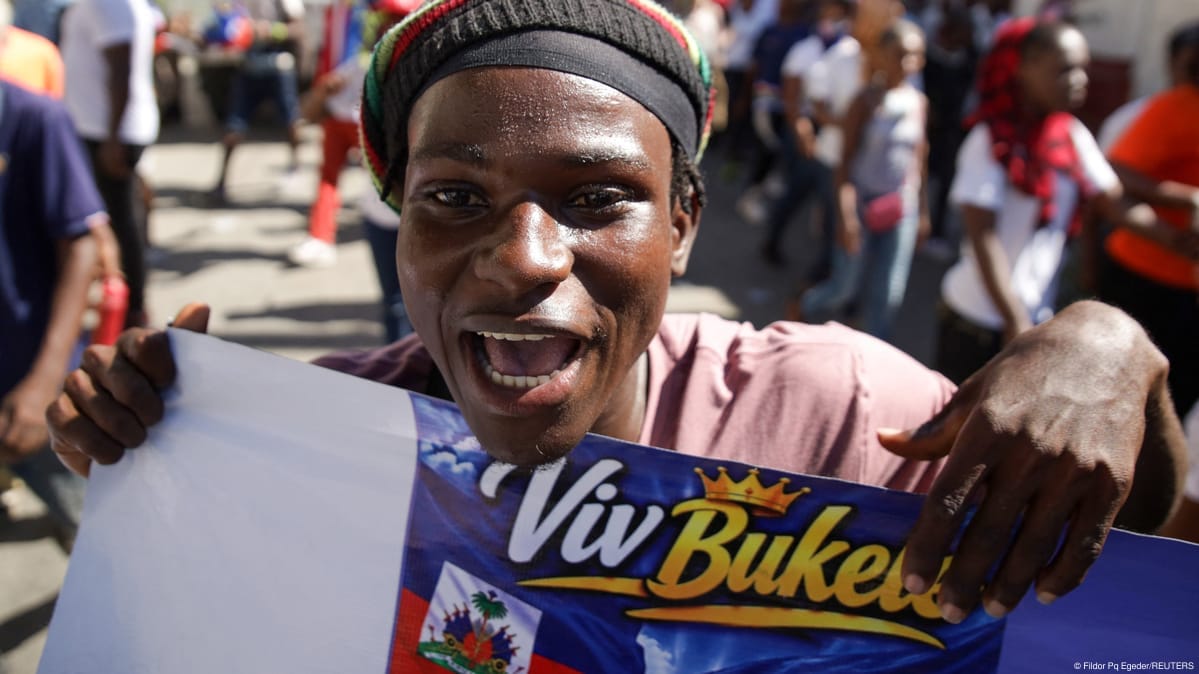
Although the Salvadoran government had been insisting that, once the mission to recover its men was completed, the contingent would return, both the Government of Haiti and the people themselves, who have demonstrated in favor of Bukele, are asking for it to stay.
“The Haitian population was desperate to see a change in the situation, at least for the gangs to feel threatened,” says Da Rin, for whom “the deployment of Salvadoran troops in Haiti has been a catalyst for all the forces on the ground to begin going on the offensive against the gangs.”
A reading in domestic terms
Last week, Bukele formalized his candidacy in the elections for a third term in El Salvador. His policy against organized crime is beginning to be imitated in other countries, and it would not be surprising if he, who handles political communication so well, tried to reap political gain from the mission in Haiti.
“Clearly, especially if the operation concludes successfully, it is obvious that Bukele’s domestic prestige will come out strengthened,” says Sánchez Tapia, who is also a reserve general in the Spanish Army and has experience in international missions. “All Salvadorans would look favorably on those soldiers being recovered, although I don’t think he did it out of that electoral calculation,” he qualifies.
On El Salvador’s side, Da Rin observes, “a certain ambiguity has been maintained about the objectives and scope of this deployment, maintaining, on the one hand, that it is a rescue mission, but also leaving the door open, on the other hand, to a more prolonged intervention to help the Haitian state rid itself of the gangs as the country did.”
For Bukele, “while this may increase his popularity, not only in El Salvador but also at the regional level, standing out as a kind of hero against organized crime, it may also have negative repercussions,” adds the Crisis Group expert. And he points out that it is “a mission with many risks and a very complicated one,” in which, moreover, neither “the details of the cooperation agreement established with Haiti, nor under what legal framework or rules of engagement they are operating on the ground” have been made public.
Carlos Pérez Ricart, an international relations expert and researcher at Mexico’s CIDE, agrees that “this type of intervention clearly has a reading on several levels, and one is always domestic.” But, for him, “in the dictatorship that El Salvador has become, the fact that the operation coincides with the electoral calendar is irrelevant: what Bukele is trying to do is internationalize his brand, because the country, in his eyes, has become too small for the potential and ambitions of a figure like him.”
Human rights concerns
As soon as the dispatch of Salvadoran troops to Haiti was announced, Amnesty International issued a statement asking both the Haitian government and El Salvador for human rights to be respected in the fight against the gangs. “The response to gang violence cannot reproduce the abuses and impunity that have marked previous interventions in Haiti,” said Ana Piquer, the organization’s regional director for the Americas.
This is a concern shared by Pérez Ricart, especially given the track record that precedes Bukele. “Enough already of justifying Bukele solely by his ends,” protests Pérez Ricart. For him, it is an “illegal” mission that has only “the telephone approval of Donald Trump.”
“If the ends are the only thing that matters, then let’s stop discussing important things like human rights or like democracy… I am not willing to do that,” adds the international relations specialist. And he highlights that there is “little clarity about what the Salvadoran military personnel can do over there and who answers for the human rights violations that may occur.”
Diego Da Rin, on a less abstract level, points out that the military operations are going to be carried out “in very densely populated neighborhoods with precarious housing, where there are enormous risks that the gangs will use civilians as human shields.”
“There must be a particular emphasis on the protection of the civilians who live in these gang-controlled areas, who are also perhaps the ones who have suffered most from them,” urges the Crisis Group expert. And he concludes: “The protection of civilians cannot be a secondary consideration.”
Presencia de militares de El Salvador en Haití plantea interrogantes
Luis García Casas
Haití vive sumida en un bucle constante de inseguridad desde hace años. Un mosaico de grupos armados se disputan el control territorial de la capital, Puerto Príncipe, y otras zonas del país, donde la violencia ha dejado más de cuatro mil muertos en lo que va de año. Contra estas bandas criminales se oponen unas fuerzas del orden también fragmentadas y no siempre bien coordinadas, entre las que se incluyen fuerzas internacionales.
En este contexto, El Salvador envió un contingente de más de dos mil soldados para rescatar a cuatro militares desaparecidos tras un enfrentamiento con una de esas pandillas. Para Salvador Sánchez Tapia, profesor de Relaciones Internacionales en la Universidad CEU San Pablo, en Madrid, no es algo inhabitual que un país mande una misión así de rescate a una zona de combate donde hay connacionales desaparecidos. “Están en su derecho”, resume. Y, además, “si media una invitación del Gobierno de Haití, es perfectamente legítimo”.
Naciones Unidas se apresuró a aclarar, no obstante, que este contingente salvadoreño no forma parte de la Fuerza de Supresión de Pandillas (GSF, por sus siglas en inglés) y, por tanto, escapa a su mandato. Las GSF son las fuerzas internacionales desplegadas en Haití con el visto bueno del Consejo de Seguridad de la ONU, cuya misión fue prolongada este mismo mes. Están integradas por 2.181 policías y militares de siete países, entre ellos El Salvador. De hecho, los cuatro militares salvadoreños desaparecidos eran miembros de las GSF.
¿Solo una operación de rescate?
“No parece haber una voluntad de las pandillas de entregarlos, así que la perspectiva de encontrar a estas personas parece cada vez más lejana”, admite Diego Da Rin, especialista en Haití de Crisis Group. No obstante, el alcance de la misión de las tropas salvadoreñas en el país parece haberse ampliado, incluso después después de registrarse las primeras bajas entre sus filas.
Por ejemplo, arrebataron un estadio a las pandillas y lo convirtieron en su cuartel general, aunque estaba en una zona alejada de donde fueron atacados los militares desaparecidos. También destruyeron el “cuartel general” de una pandilla. Y el presidente salvadoreño, Nayib Bukele, informó de la destrucción de la mansión de un líder pandillero y lo presentó como “un regalo” suyo al pueblo haitiano en un mensaje en X en criollo haitiano, acompañado de imágenes del ataque.
Aunque el Gobierno salvadoreño había venido insistiendo en que, una vez cumplida la misión de recuperar a sus hombres, el contingente regresaría, tanto el Gobierno de Haití como la propia gente, que se ha manifestado a favor de Bukele, piden que se mantenga.
“La población haitiana estaba desesperada por ver un cambio en la situación, al menos que las pandillas se sintieran amenazadas”, afirma Da Rin, para quien “el despliegue de tropas salvadoreñas en Haití ha sido un catalizador para que todas las fuerzas en el terreno comiencen a pasar a la ofensiva contra las pandillas”.
Una lectura en clave interna
Bukele formalizó la semana pasada su candidatura a las elecciones para un tercer mandato en El Salvador. Su política contra el crimen organizado empieza a ser imitada en otros países y no sería extraño que él, que tan bien maneja la comunicación política, intente sacar rédito político de la misión en Haití.
“Evidentemente, sobre todo si la operación concluye con éxito, es obvio que el prestigio doméstico de Bukele saldrá reforzado”, afirma Sánchez Tapia, quien además es general en la reserva del Ejército de Tierra español y tiene experiencia en misiones internacionales. “Todos los salvadoreños verían con buenos ojos que esos soldados sean recuperados, aunque no creo que lo haya hecho por ese cálculo electoral”, matiza.
Desde El Salvador, observa Da Rin, “se ha mantenido una cierta ambigüedad sobre los objetivos y el alcance de este despliegue, manteniendo, por una parte, que es una misión de rescate, pero dejando la puerta abierta también, por otra parte, a una intervención más prolongada para ayudar al Estado haitiano a deshacerse de las pandillas como hizo el país”.
Para Bukele, “si bien esto puede aumentar su popularidad, no solo en El Salvador, sino también a nivel regional, destacando como una especie de héroe contra el crimen organizado, también puede tener repercusiones negativas”, añade el experto de crisis Group. Y recuerda que es “una misión con muchos riesgos y muy complicada”, en la que, además, no se han hecho públicos “los detalles del acuerdo de cooperación establecido con Haití, ni bajo qué marco legal o reglas de combate están operando en el terreno”.
Carlos Pérez Ricart, experto en relaciones internacionales e investigador del CIDE mexicano, coincide en que “este tipo de intervenciones tienen evidentemente una lectura en varios planos y una es siempre doméstica”. Pero, para él, “en la dictadura en que se ha convertido El Salvador, que la operación coincida con el caledario electoral es irrelevante: lo que Bukele intenta es internacionalizar su marca, porque el país, a sus ojos, se le ha quedado pequeño para el potencial y las ambiciones de un personaje como él”.
Preocupaciones por los derechos humanos
Nada más anunciarse el envío de tropas salvadoreñas a Haití, Amnistía Internacional emitió un comunicado pidiendo tanto al Gobierno haitiano como a El Salvador que se respeten los derechos humanos en la lucha contra las bandas. “La respuesta a la violencia de las bandas no puede reproducir los abusos y la impunidad que han marcado anteriores intervenciones en Haití”, decía Ana Piquer, directora regional para las Américas de la organización.
Esta una preocupación compartida por Pérez Ricart, sobre todo con el historial que precede a Bukele. “Basta ya de justificar a Bukele a través únicamente de sus fines”, protesta Pérez Ricart. Para él, se trata de una misión “ilegal” que únicamente tiene “la aprobación telefónica de Donald Trump”.
“Si los fines son lo único que importa, entonces dejemos de discutir cosas relevantes como derechos humanos o como democracia… Yo no estoy dispuesto a hacerlo”, añade el internacionalista. Y destaca que hay “poca claridad sobre lo que pueden hacer allá los militares salvadoreños y quién responde por las violaciones a los derechos humanos que puedan darse”.
Diego Da Rin, en un plano menos abstracto, recuerda que las operaciones militares se van a llevar a cabo “en barrios muy densamente poblados con casas precarias, en los que hay enormes riesgos de que las pandillas usen a los civiles como escudos humanos”.
“Hay que tener un énfasis particular en la protección de los civiles que viven en estas zonas controladas por las pandillas, que además son quizás quienes más las han sufrido”, pide el experto de Crisis Group. Y concluye: “La protección de los civiles no puede ser una consideración secundaria”.
(rml)