

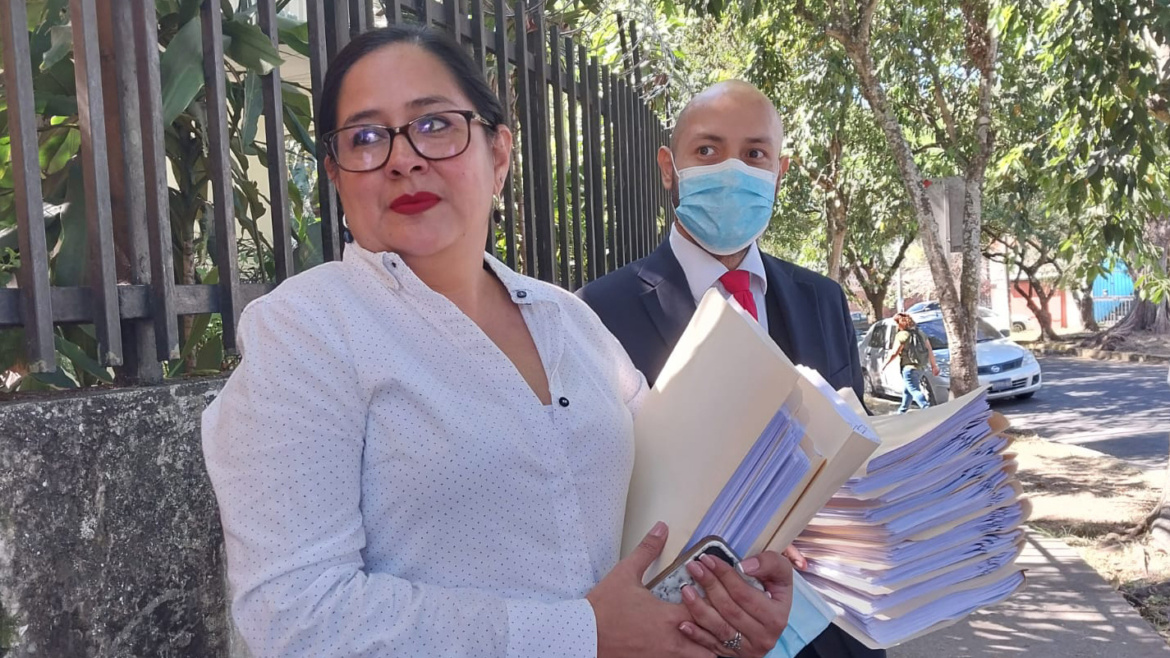
It has been 18 months since lawyer and human rights defender Ruth López was detained, but the Office of the Attorney General of the Republic (FGR) is still investigating her, and her family still does not know when the judicial proceedings will begin. The preliminary hearing—which will determine whether Ruth is released or sent to trial—still has no date, and there is no official notification that it will take place in January 2027, when the last extension of the investigation period expires. “There is no guarantee,” says Claudia López, the lawyer’s sister, in an interview with FOCOS.
The uncertainty extends to other aspects of her detention. On November 24, her family confirmed to FOCOS that a new mass had been found in her right breast, in the same area where she had previously had another. So far, neither a biopsy nor a mammogram has been performed on her; there is no diagnosis, and the family does not know whether it is a benign lesion. Her next medical exam is not scheduled until April 2027.
In this interview, her sister Claudia López stated that the family still has not received official information about Ruth’s health, despite the requests submitted to various institutions. She says that the only details they know come from the conversations they have with her during visits. The State did not allow contact between Ruth and her family until the Inter-American Commission on Human Rights (IACHR) intervened and ordered measures to protect her.
Claudia maintains that during a visit on September 14 they learned that her sister’s triglyceride levels had risen again and that she had also experienced episodes of hypertension. The family fears that these conditions will worsen without adequate medical care. They also question the fact that they are no longer asked for the medications they previously delivered for Ruth’s treatment and which, according to what Ruth herself told them, are now supplied by the public health system.
The lawyers’ access also faces restrictions. According to Claudia, the legal team’s visits take place without privacy and in the presence of prison staff, a condition that makes it difficult for them to discuss the judicial proceedings. For that reason, she says, the lawyers have limited their visits. The family considers that these conditions violate Ruth’s right to an effective defense and contradict the precautionary measures issued by the IACHR, which seek to guarantee access for both her relatives and her legal representatives.
Added to this is the silence of State institutions. Claudia says that the family has submitted requests to the Office of the Human Rights Ombudsman (PDDH), but has received no response. She also questions the secrecy of the proceedings, which remain under judicial seal. That condition, she says, makes it impossible to clearly know the authorities’ actions and to fully exercise the right of defense.
During the interview, Ruth’s family also responds to the allegations regarding the lawyer’s assets, which circulated in a publication on a website linked to employees of the president of the Legislative Assembly, Ernesto Castro. The publication attributed to the lawyer an alleged unjustified increase in assets of $170,000, based on bank deposits, cash payments, and property acquisitions.
Claudia maintains that the increase in assets attributed to Ruth comes mainly from a bank loan and financial contributions from her mother. “Most of it is completely justified,” she says. Because of the seal, the family has no way to respond publicly with documentation.
What she did explain is that Ruth’s home was initially acquired through a bank loan that she and her husband began paying off with their salaries. Later, her mother sold a property and gave the money to Ruth as a living inheritance to help her complete the payment. The explanation coincides on some points with the reconstruction published by Divergentes on November 11. The outlet reported that the purchase of the home was financed with a $148,500 loan from Banco Agrícola and another of $16,500 granted by a relative. It also detailed subsequent payments and a $75,000 contribution from the sale of a house owned by Ruth’s mother.
In this interview with FOCOS, Claudia López also talks about international lawyer Jared Genser’s efforts before the United Nations and why the family considers international pressure decisive in securing a public trial with guarantees. “We are not seeking Ruth’s release without first having proven her innocence, but with judicial guarantees,” she says.

Saúl Hernández Alfaro: I would like to begin with an update on Ruth’s state of health. What recent information do you have? Have you been able to access more details of her medical history since she has been in prison?
Claudia López: So far, Ruth remains unstable as far as her health situation is concerned.
At the time, we made it public that we had found out through the media that a procedure had been performed on her to check whether or not she had breast cancer. We never received official information about that procedure. Thank God, she does not have breast cancer, but there was another issue that worried us and that we have always followed up on: the elevation of her triglycerides and her cholesterol levels.
This worried us enormously because she had numbers that were far too high and could put her life at risk and cause her complications before reaching a point at which the situation would be harder to manage.
At that time we warned that complications such as pancreatitis, brain disorders, or a heart attack could arise. My dad had a heart attack, so there is a family history. Ruth is hypertensive, and all of these factors, added to the conditions she was in, could harm her and jeopardize her life.
In response to the pressure we exerted, a certain degree of stabilization was achieved, but we recently learned that those levels rose again. At that time they were at 600, they went down a little, and now they have gone back up to figures of 500. These are still values that can represent a risk to Ruth’s life.
None of this information is official. We have submitted requests to the Ministry of Health, the Ministry of Justice, and the judges, but as a family we have never received information from any institution of the Salvadoran State. We know these details through Ruth.
During visits, she tells us what is happening. She does not even have access to her medical file, which also violates a right: the patient has the right to know the results of their tests. Ruth is only notified and informed.
We have reached a situation in which the complaints we have made about her state of health and our concern have caused information to be restricted even further. At first, when Ruth had a medical problem, they at least asked the family for the medications: the one for blood pressure and the one for triglycerides and cholesterol. Now they no longer ask us for those medications, and we do not know what is happening with her health.
SH: What happened with Ruth’s medication? Could you explain to us how the procedure changed?
CL: We have also faced a lack of information regarding Ruth’s medication. At first they asked us for the medications, both those for blood pressure and those for triglycerides, and the family brought them. Now they have stopped asking for them, and we know that the medications come from Mazzini Hospital.
What guarantee do we have that they are the right ones, when we also know that there is a shortage of medications in the health system? We really have no guarantee at all.
That is why we maintain constant denunciation and monitoring of Ruth’s situation. It is the only way to generate a bit of pressure, because unfortunately that is how the Salvadoran State works.
SH: When did the way her medications were provided to her change? I understand that before, you delivered them to the prison system so that they would administer them to her, and that now they receive them directly from the public system. Did they notify you of that change?
CL: We really did not receive any notification. They simply stopped requesting the medications and, during one of the visits to Ruth, they told us that they were administering them to her through the national health system. This happened following the complaints the family made.
When we began pushing on the issue of her health and pointing out the State’s negligence, access to her medical information was restricted even further.
I always say that this is important: if it happens with Ruth, which is a case we have tried to make visible and denounce, what must be happening to the rest of the people detained in El Salvador? We know that many have complications related to the conditions they are in, that they do not have access to the health system or to medications. That is why there have been deaths in custody. That is precisely the fear we have for Ruth.
SH: You mentioned that during the most recent visits you learned that her triglyceride levels had risen again and that there were also problems with the administration of her medications. When was the last time her relatives were able to see her? What did you observe about her physical and emotional state?
CL: The last visit was on September 14. I will take this opportunity to mention that the visits are taking place as a result of the demands we have raised before the Inter-American Commission on Human Rights.
We have managed to get at least one visit per month established, but it is not regular. It depends a lot on the family requesting it and on them taking the time to authorize it.
During the last visit we were able to learn that Ruth once again had elevated triglyceride levels. Added to that, she had experienced spikes in hypertension because there was carelessness in the administration of her medications: they changed the schedule, and that variation caused her blood pressure to rise.
As for her state of mind, I have to say that Ruth is a very strong woman. She has a fighting spirit and is combative. That allows her to remain very strong. She also has a great deal of spiritual strength.
Those things keep Ruth strengthened, keep her from weakening, and allow her to emotionally preserve that fighting spirit.
SH: Has the legal team assisting Ruth been able to visit her with the same frequency as you as relatives? What has access been like for her lawyers?
CL: The legal team has the right to make visits, but if there is a visit from the lawyers, there is no visit from the family. Part of what the Commission established was that the visits had to be periodic and that one could not depend on the other. However, that is what happens.
As for the legal matter, the lawyers have made the decision not to make visits because there is no privacy. They cannot talk about the case. Making a social visit, as they themselves say, really makes no sense.
They need to talk about Ruth’s case and about how the proceedings are progressing, but that is not possible because the visits take place under surveillance, with a person present who constantly takes photographs. We also know that on multiple occasions everything that happens around those visits has been manipulated.
Ruth’s case file is under seal. Therefore, the lawyers cannot talk about certain information or exchange it with her if they have a person next to them, regardless of whether it is someone from the prison system. We no longer trust.
We definitely do not trust, because from within the prison system itself there have been too many leaks of information that did not come from us, but from them. To avoid that, although the lawyers have gone to see her to clarify a few things, they cannot conduct a visit as it should be: with the privacy that corresponds to a legal consultation.
It is like going to the doctor and having three people watching everything the doctor is doing to you without you wanting them to be there. It is a matter of respect for the process and for the privacy to which she has a right.
SH: How does the court respond when it is informed about these difficulties for Ruth to have adequate legal assistance during pretrial detention? Has there been any statement or notification?
CL: We have not received any position from the Judicial Branch, because these visits do not happen because the State wants to facilitate them or because the Judicial Branch has intervened. They take place within the framework of the measures of the Inter-American Commission on Human Rights and through another ministry: the Ministry of Foreign Affairs.
Therefore, the Ministry of Justice does not take part in this situation, and the judicial system does not issue any statement either.
The visits do not take place under the mandate of the judicial system, but through the Foreign Ministry. Therefore, the judicial system does not take part in this situation and does not issue any statement.
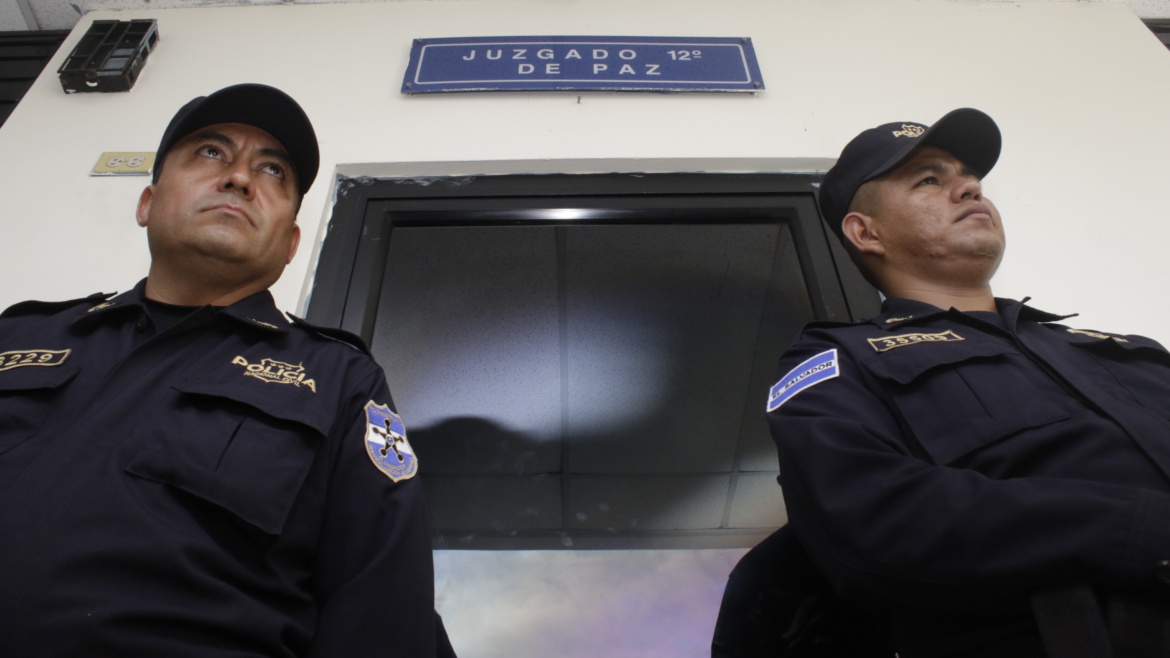
Let us remember that visits are prohibited in El Salvador. No prisoner even has the right to see their lawyers, much less their family. In Ruth’s case, these visits happen because there are precautionary measures issued by the Inter-American Commission on Human Rights.
SH: Has the court issued any notification about Ruth’s pending second hearing? The deadline by which it should be held expires in December. Is there any notification or expectation regarding the date?
CL: No, there is no notification.
It is very difficult when this happens, because we are always waiting to see what is going to happen and we never receive direct information.
The case is under seal, and the deadlines are also subject to that seal. Therefore, the family is not notified if the timeframe is going to be extended. We have faith and hope that the hearing will take place in January, but there is no guarantee.
We have seen it in other cases: they start requesting extensions and postponing. So there is no guarantee that it is really going to take place in January. A complicated process is approaching for El Salvador, with the February elections. Although we have faith and hope that the hearing can be held in January, we believe that it really is not going to happen.
The silence of the PDDH
SH: As a family, you have filed complaints and requested the support of the Office of the Human Rights Ombudsman over the irregularities you have mentioned surrounding Ruth’s case. Have you received any response? What do you expect from the work of that institution?
CL: I believe that the ombudswoman, although hers is an office we must turn to because we have that right as Salvadorans, maintains a very biased stance toward what the Salvadoran State dictates.
We have never had a response. No matter how many petitions we have submitted, we have received no reply. We have very little trust in the institution and in the ombudswoman. I believe this is a widespread opinion.
Salvadorans know, regardless of their position, that the Ombudsman’s Office is a body that at this moment is not fulfilling any function.
SH: Throughout the process, then, the Ombudsman’s Office has not given you a favorable response either. The response has been silence: there has been neither a statement nor a report on the follow-up of the case. Is that right?
CL: It really has not responded to us. Yes, we know that they have gone to visit Ruth.
The ombudswoman has also made statements—very regrettable ones, by the way—about her. Speaking about a detained person who has not yet been convicted and who, moreover, is unjustly imprisoned, and referring to her in the way she has, says a lot about the person who holds that office.
But she has not responded to us as a family. All we know of are her statements that they have gone to visit her and that they see her doing very well.
SH: What is your reading, as a family and together with the legal team, of the Salvadoran State’s secrecy surrounding the judicial proceedings against Ruth? One of your demands is that she have a public trial in accordance with the law. There is also the lack of information about her medical history, the inaction of the Ombudsman’s Office, and the difficulties her lawyers face in adequately assisting her. Eighteen months after the detention, how do you interpret this opacity?
CL: I have no doubt that the case file is riddled with irregularities. I always say that those irregularities are going to come to light someday. They have to come out.
No matter how much time passes before the judicial proceedings end, once they conclude and that case file is closed, there will no longer be any reason to maintain the secrecy that exists to date.
Then we will be able to speak and tell what we know, as well as the many things that, unfortunately, we do not know, but that we are convinced are part of the irregularities in the case file. Not only on the health issue, but also in the judicial proceedings against Ruth.
That is the only reason we find for the State to maintain this situation. And I do not say the Judicial Branch, because we know and are certain that it is not independent. Since it is not independent, it cannot act as such.
The State has to hide the information in order to keep the case in uncertainty and speculation. Every day it becomes harder for it to sustain the narrative it has tried to establish about Ruth’s guilt.
Time works much more, or is working much more, in our favor. I believe that little by little things will come to light, and we have nothing to hide. We want to tell and are willing to tell everything we can when the time comes.
SH: I would also like to ask you about the situation of the family circle, both in El Salvador and outside the country. Have you recently recorded any pattern of persecution, intimidation, or harassment against you, people close to Ruth, or her legal team? Is there any incident that makes it possible to identify that pattern?
CL: Without a doubt. One of the people we are constantly worried about is Ruth’s husband, Louis. He has made the decision to stay because he is the one who serves as an intermediary and helps with many things in the process: he takes care of Ruth’s food, of taking her the packages, and of making the deposits. If Louis were not there, I really do not know how our family could hold up the way it is doing.
But he is at risk because he continues to be under surveillance. If Louis goes off his route, there are always police officers and a patrol car following him. There are also police officers circling the house.
Yes, we continue to face this situation of persecution against Louis. However, as a family we have established that our love is much greater than any fear they may want to make us feel.
The people most exposed are Louis and I. We receive threats through messages. They intimidate us and tell us to keep quiet, to stop making denunciations, and that this could make Ruth’s proceedings easier. That is how brazenly the situation has been handled.
But we are not willing to keep quiet. We have nothing to hide. We have a lot to say and, as I have said, thanks to everything we have denounced up to today, we have been able to guarantee Ruth’s health and life.
SH: Where do those threats come from? Are they messages on social media, or have you received physical notifications? Have you identified any recurring sender?
CL: They are threats on social media. They always arrive that way, but we take the precaution of blocking the accounts when we receive those messages. They might try to contact us again, but we do not allow them to.
It is better not to give those people a voice and to let them know that the family is not going to keep quiet. Ruth did not, and that is not what she wants either. We keep fighting and remaining consistent with the struggle she has maintained up to now.
Ruth’s case in international litigation
SH: One of the milestones of the process has been the addition of lawyer Jared Genser, who has extensive experience in cases of arbitrary detention and political prisoners around the world. What progress has there been since he joined? How do you assess these months of work?
CL: He is handling the process at the international level. At the national level we have our team of lawyers, in whom we have full confidence. But we know that the internal situation in the country is very complicated. It works heavily against us that the State is not willing to recognize Ruth’s innocence. Proving it in a process as irregular and hidden as the one they have been conducting so far is very difficult.
That is why other actions had to be taken. Among them is the addition of Jared to litigate at the international level everything that arises from now on.
The first action he took was to submit the case to the United Nations, in the area of arbitrary detention. This takes time; international litigation always takes time.
We have faith and patience that, at some point, we will be able to end this nightmare we are living through and prove Ruth’s innocence. I believe that is very important both for her and for us.
SH: I understand that Genser’s actions have brought the case before the United Nations Working Group on Arbitrary Detention. Could you explain this strategy a little more? In an interview with El Faro, the lawyer spoke of the possibility that a pronouncement by that group could influence the actions of the Salvadoran State. What expectations does the family have regarding this action?
CL: As a family, our expectation is to achieve Ruth’s release; at least, that the process not continue to drag on, that we can get to trial and prove her innocence. That is our main expectation.
Among the actions Jared is carrying out is seeking mechanisms that generate pressure on the State. I insist again: this does not depend on the Judicial Branch, but on the will of the State. That is part of what he is working on from the international sphere to achieve Ruth’s release through that pressure.
For the moment we cannot provide many details, but we have great confidence in all the actions that are being carried out through him.
SH: In September, when El Faro interviewed the lawyer, he described the response of the Government of El Salvador as intransigent and said he had not managed to communicate with State authorities. Is the situation still the same, or has he managed to speak with any Salvadoran authority?
CL: I think you have been able to confirm this with different people who have tried to approach the State to talk about Ruth: the State is closed off and does not want to talk about her.
Talking about Ruth represents a problem for them. They would have to acknowledge the irregular path they have followed up to now, and they are not willing to do so. Since they do not have an answer, it is easier for them to evade the issue. We have seen it with the Commission, with Amnesty, and now with lawyer Jared Genser.
For the moment they have no intention of engaging in dialogue, neither to convict her nor to acquit her. There is no willingness to resolve the problem they have created with Ruth’s case.
And I say problem because I insist: they know that Ruth is innocent. I know it. The Salvadoran people know it.
If evidence of her guilt really existed, as they try to make it seem on some occasions, Ruth would already have been put on trial and judged, as has happened in other cases that have ended in convictions.
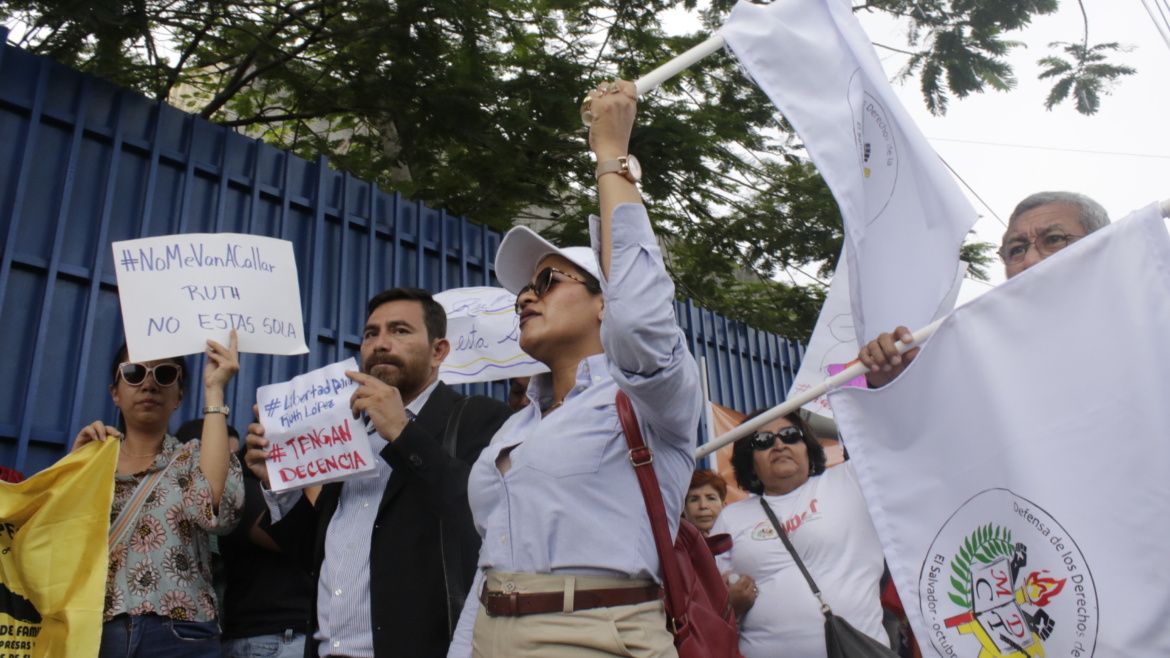
SH: You have referred to the motives that could be behind the detention and to the lack of transparency in the proceedings. Amnesty International also spoke out a few weeks ago, on the occasion of Ruth’s birthday, about the need to enter the prison to verify her well-being. Do you consider that international pressure from human rights organizations has been sufficient? What would you demand of governments and international authorities regarding your sister’s situation?
CL: I want to say that we are grateful to the organizations that have made efforts to speak out and take a stance on Ruth’s situation. There are also many people who, independently, have done great work trying to find mechanisms to achieve her release.
It is true that, as a family, we always expect more. We are not going to rest until we achieve Ruth’s release. That is why we believe there are still many things that can be done.
Some States maintain an overly wait-and-see position and have not acted forcefully enough, even though they could do so.
El Salvador depends on their loans and, often, on international cooperation. There could be limitations on that cooperation to also pressure the Salvadoran State, and not only for Ruth, but for the thousands of innocent people who are in El Salvador’s prisons.
This constitutes a violation of rights. Countries have signed a charter and have taken on commitments. However, they are not taking a forceful enough stance to demand that the State respect those rights.
Part of our concern is that in El Salvador there are people who have been detained for many years without even having had a trial. That is one of our fears: that the years go by and we do not manage to have Ruth’s trial held, as we have seen happen in other cases.
The torture that takes place inside the prisons is documented. So is the emotional and psychological torture that we relatives suffer: the uncertainty and everything we live through day by day when we have a loved one detained. That also represents emotional torture, even if they do not want to acknowledge it.
We know that in Latin America we have a complex landscape, but I believe that other countries could exert pressure on the State to generate a commitment to respecting the most basic rights.
SH: In an interview with Agencia Ocote, Ruth’s husband said that the only path he saw to bring about her release was international and diplomatic pressure. Do you agree with that assessment? Do you consider that this factor could be decisive for Ruth to regain her freedom soon?
CL: Yes, definitely. Only international pressure can achieve Ruth’s release.
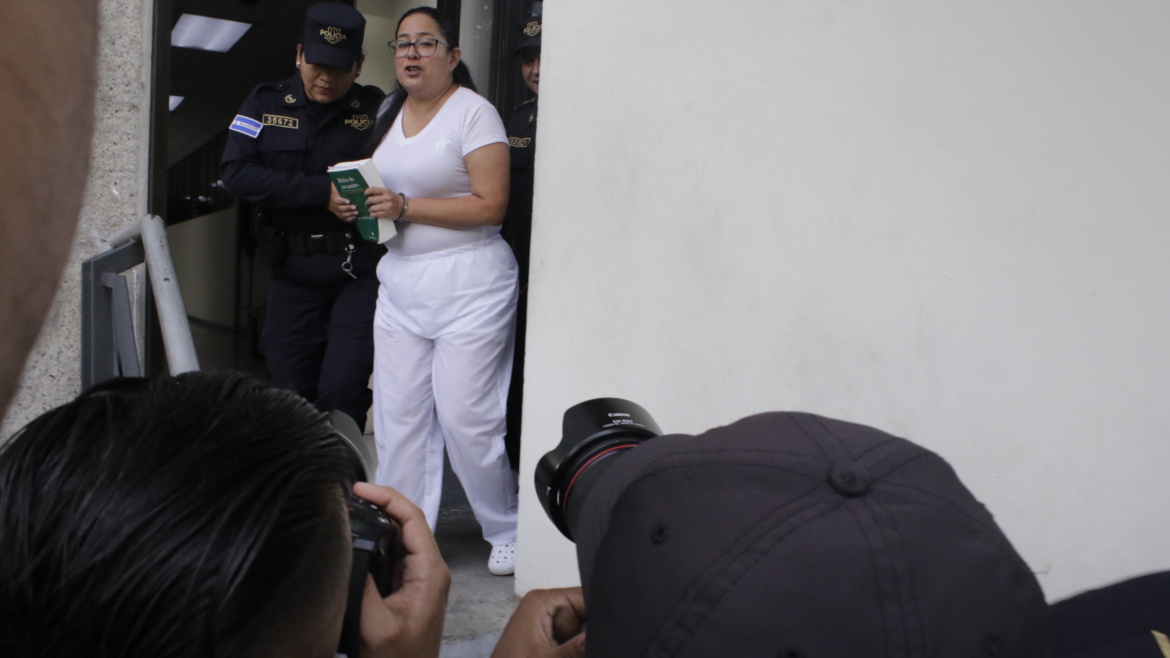
Let us analyze the situation: Ruth has been detained for 18 months. There has been no willingness to review a change of measures, even though among the Inter-American Commission’s precautionary measures is the request to review her detention and replace it with another measure. There has been no willingness to make that change, so Ruth is facing the investigation process in detention.
Let us imagine what happens when Ruth is declared innocent. Months will have passed during which an innocent person was detained without a trial being held. That, anywhere in the world, implies economic and moral reparation.
For the State it becomes complicated: convicting Ruth is very difficult because there is really no evidence against her, but releasing her is also difficult. That is why, internally, within the country’s judicial sphere, we are not going to get this to happen, much less if the proceedings remain under seal.
Only international pressure can cause the proceedings, at least, to no longer be under seal. That is one of the demands of Ruth and of the family. Having the trial no longer be sealed and having what is happening become known is the only thing that would truly guarantee that she has a fair trial. That was what she said she wanted: a fair trial.
We have always stressed that we are not seeking Ruth’s release without her innocence having first been proven, but we want that to happen with all judicial guarantees. So far we have not had them.
The assets of Ruth and her family
SH: El Faro published an investigation into a website linked to people close to the president of the Legislative Assembly, Ernesto Castro. That portal made a series of allegations about Ruth’s financial situation. It claimed to have had access to a document that would apparently be a prosecutorial charging document. We cannot confirm that it is that document, but the publication offers details suggesting that it had access to information related to the judicial proceedings.
It speaks of an alleged unjustified increase in assets of $170,000, supposedly stemming from bank deposits and cash payments that had allegedly not been duly justified. What is the family’s reaction to that publication?
CL: The first thing I want to point out is that any information coming from people close to or linked to the State is definitely biased and distorted.
It is very delicate because, moreover, they do not give Ruth or the family something to which we also have a right: the right of reply. Why do we not have that right? Because the proceedings are under seal. The court file is sealed, and we have few opportunities to speak.
What I can say, as I have said in other interviews, is that when Ruth was detained I traveled to El Salvador and had contact with her. When the formal accusation was first presented to her, she was informed of what she was being accused of. At that time the case was not yet under seal, so Ruth asked Louis and me to gather all the information to back up the case.
What I can say is that the increase (in assets) refers to her house. She initially bought it with a bank loan, and my mother later decided to give her an advance on her inheritance to help pay for it. My mother sold one of her assets and gave the money to my sister.
They submit the prosecutorial charging document, but that document can say anything; it does not necessarily mean that what it contains reflects reality. That is also what our team of lawyers is there for; they must prove Ruth’s innocence.
Here they do not even recognize her right to the presumption of innocence. We have no choice but to prove Ruth’s innocence, because that is how the judicial situation works in El Salvador: it is not the prosecutors who have to look for all the information to prove that someone is guilty, but rather one has to gather all the information to defend the innocence of one’s loved ones.
As I was telling you, my mother sold that house and gave the money to Ruth. That is documented, and I have that information. I can provide it. I always say it: I can provide it. The thing is that I do not know whether, since it is included in the case file, disclosing it could cause me to commit some offense.
It is not that I am afraid. That is not the reason. I do not want to cause a situation that could disrupt the lawyers’ defense strategy or put them at risk.
But we do have documents on how that loan was made, on the cashier’s checks, and on the deposits.
Ruth and her husband also paid for part of that house with their salaries. Something very ridiculous is that they make it look as though Ruth acquired that property through her work at the Supreme Electoral Tribunal, when it has nothing to do with it.
Ruth acquired her house a few years after leaving the Tribunal. She bought it while she was working at Social Security. She decided to acquire it, began paying the installments, and later my mother helped her complete the payment so that she could buy the property. We have all of that documented.
SH: There are also allegations about deposits whose origin is supposedly unclear. What can you tell us about those transactions?
CL: I cannot say whether that is so or how it is actually set out in the case file, because we have never had access to it.
But I think they have not taken into account that Ruth has two children and that their father gives each of them a monthly allowance. Moreover, I lived with Ruth for many years, and obviously we shared household expenses.
I think it is not that they do not know where Ruth’s resources come from, but rather that they have no interest in conducting a proper investigation into them.
Most of it, as I was telling you, is completely justified and comes from the sale of a house that my mother carried out.
SH: To close this topic, that same publication mentions the purchase of a property on the island of El Espino, in Usulután, for $8,500 in 2012. What information do you have about that acquisition? Was that property in fact purchased?
CL: Yes, that property was acquired. Part of that loan was also made by my mom.
I want to tell you something that I think people do not know. My family, in this case my mom, has always had businesses. Although we lived in Cuba for many years, we did not really experience a situation like that of a Cuban citizen. We lived with the status of foreigners.
We arrived in Cuba in 1992 and had no ties. My mom always had businesses. She says she does not even owe the bank a smile. She has worked very hard to provide for us and give us what we needed.
The life we led and the living costs in the place where we lived were very low. My mom always had the possibility of earning in dollars, and that allowed her to save. We have had houses and cars. At some point, when they decided to return to El Salvador, those cars were sold, and with that money—that is also documented—this $8,000 plot of land in El Espino was bought.
Later, unfortunately, they found themselves needing to sell it because it was on the waterfront and the water began to come in. It was a plot of land on which it was no longer possible to build, because the rising water level reached right up to where it was located.
SH: To close the interview, I would like to ask you what message you would give, as a family, to the people who know about the case, even though they may not be completely aware of its details. In El Salvador there is a situation in which rights are restricted, and there are detained people whom you consider political prisoners. What message would you leave the population about Ruth’s case and the harm you have experienced as a family?
CL: I urge the Salvadoran people to, at least, question things and ask themselves questions. Not to believe blindly, especially when the person they are believing is hiding a lot of information from them.
And I am not talking only about the people who are detained. I am talking, in general terms, about the entire budget and all the information that is kept classified within the State. At least let us question why. Why has the State decided to hide information?
It is important that, despite the fear that may exist in our hearts—and which is completely valid—we confront a situation that becomes more complicated every day. I am also talking about the economic situation, health, the lack of medications, and the neglect of El Salvador’s public system.
It is important that we make demands, that we have a voice, that we give a voice, and that we tell our story.
To the international media and to countries, I say that pressure must be put on the Salvadoran State. I know that too many things are happening in the world; there are many wars and many eyes focused on different parts of the world. But over there, in Latin America, there is a very small country where very serious crimes are being committed. We must not lose sight of it; we must not stop looking. Every life counts.
FocosTV: https://focostv.com/hablar-de-ruth-lopez-es-un-problema-para-el-estado-claudia-lopez/
“Hablar de Ruth representa un problema para el Estado”: Claudia López, hermana de Ruth
Saúl Hernández Alfaro/Gabriela Villarroel
Han pasado 18 meses desde que la abogada y defensora de derechos humanos Ruth López fue detenida, pero la Fiscalía General de la República (FGR) sigue investigándola y su familia todavía no sabe cuándo iniciará el proceso judicial. La audiencia preliminar —que permitirá saber si Ruth es liberada o enviada a juicio— sigue sin fecha y no existe una notificación oficial de que ocurra en enero de 2027, cuando vence la última prórroga al plazo de instrucción. “No hay ninguna garantía”, dice Claudia López, hermana de la abogada, en una entrevista con FOCOS.
La incertidumbre se extiende a otros aspectos de su detención. Este 24 de noviembre, su familia confirmó a FOCOS que se le encontró un nuevo tumor en la mama derecha, en la misma zona donde antes había presentado otro. Hasta ahora no se le han realizado biopsia ni mamografía; no existe un diagnóstico y la familia no sabe si se trata de una lesión benigna. Su próximo examen médico está programado hasta abril de 2027.
En esta entrevista, su hermana Claudia López aseguró que la familia sigue sin recibir información oficial sobre la salud de Ruth, pese a las solicitudes presentadas ante distintas instituciones. Asegura que los únicos datos que conocen provienen de las conversaciones que mantienen con ella durante las visitas. El Estado permitió el contacto entre Ruth y su familia hasta que intervino la Comisión Interamericana de Derechos Humanos (CIDH), que decretó medidas para protegerla.
Claudia sostiene que en una visita el 14 de septiembre visita supieron que los niveles de triglicéridos de su hermana habían vuelto a elevarse y que también había experimentado episodios de hipertensión. La familia teme que estas condiciones se agraven sin una atención médica adecuada. También cuestiona que ya no se les soliciten los medicamentos que antes entregaban para el tratamiento de Ruth y que, según les comentó la misma Ruth, ahora son suministrados por el sistema público de salud.
El acceso de los abogados también enfrenta restricciones. Según Claudia, las visitas del equipo legal se realizan sin privacidad y bajo la presencia de personal penitenciario, una condición que dificulta que puedan conversar sobre el proceso judicial. Por esa razón, afirma, los abogados han limitado sus visitas. La familia considera que estas condiciones vulneran el derecho de Ruth a una defensa efectiva y contradicen las medidas cautelares dictadas por la CIDH, que buscan garantizar tanto el acceso de sus familiares como el de sus representantes legales.
A esto se suma el silencio de las instituciones del Estado. Claudia afirma que la familia ha presentado solicitudes ante la Procuraduría para la Defensa de los Derechos Humanos (PDDH), pero no ha recibido respuesta. También cuestiona el hermetismo del proceso, que permanece bajo reserva judicial. Esa condición, afirma, impide conocer con claridad las actuaciones de las autoridades y ejercer plenamente el derecho de defensa.
Durante la entrevista, la familia de Ruth también responde a los señalamientos sobre el patrimonio de la abogada, que circularon en una publicación de un sitio web vinculado a empleados del presidente de la Asamblea Legislativa, Ernesto Castro. La publicación atribuía a la abogada un supuesto incremento patrimonial injustificado por $170,000, basándose en depósitos bancarios, pagos en efectivo y adquisición de propiedades.
Claudia sostiene que el incremento patrimonial que se le atribuye a Ruth proviene, principalmente, de un préstamo bancario y de aportaciones económicas de su madre. “La mayor parte está totalmente justificada”, afirma. Debido a la reserva, la familia no tiene posibilidad de responder públicamente con documentación.
Lo que sí explicó es que la vivienda de Ruth fue adquirida inicialmente mediante un préstamo bancario que ella y su esposo comenzaron a pagar con sus salarios. Posteriormente, su madre vendió una propiedad y entregó el dinero a Ruth como una herencia en vida para ayudarla a completar el pago. La explicación coincide en algunos puntos con la reconstrucción publicada por Divergentes el 11 de noviembre. El medio reportó que la compra de la vivienda se financió con un crédito de $148,500 del Banco Agrícola y otro de $16,500 otorgado por un familiar. También detalló pagos posteriores y una aportación de $75,000 procedente de la venta de una casa propiedad de la madre de Ruth.
En esta entrevista con FOCOS, Claudia López habla además sobre las gestiones del abogado internacional Jared Genser ante Naciones Unidas y por qué la familia considera que la presión internacional es determinante para conseguir un juicio público y con garantías. “Nosotros no buscamos la liberación de Ruth sin antes haber probado su inocencia, pero con las garantías judiciales”, afirma.
Saúl Hernández Alfaro: Quisiera comenzar con una actualización sobre el estado de salud de Ruth. ¿Qué información reciente tiene? ¿Ha podido acceder a más detalles de su historial médico desde que está en prisión?
Claudia López: Hasta el momento, Ruth se mantiene con inestabilidad en cuanto a su situación de salud.
En su momento hicimos público que, a través de los medios, nos enteramos de que se le había practicado un procedimiento para verificar si tenía o no cáncer de mama. Nunca recibimos información oficial sobre ese procedimiento. Gracias a Dios, no tiene cáncer de mama, pero había otro tema que nos preocupaba y al que siempre hemos dado seguimiento: la elevación de los triglicéridos y de sus niveles de colesterol.
Esto nos preocupaba muchísimo porque tenía cifras demasiado altas que podían poner en riesgo su vida y provocarle complicaciones antes de llegar a un punto en el que fuera más difícil manejar la situación.
En aquel momento advertimos que podían presentarse complicaciones como pancreatitis, trastornos cerebrales o un infarto. Mi papá tuvo un infarto, así que hay antecedentes familiares. Ruth es hipertensa y todos estos factores, sumados a las condiciones en las que se encontraba, podían perjudicarla y comprometer su vida.
Ante las presiones que realizamos, se logró cierto grado de estabilización, pero recientemente supimos que esos niveles volvieron a elevarse. En aquel momento estaban en 600, bajaron un poco y ahora han vuelto a subir hasta cifras de 500. Siguen siendo valores que pueden representar un riesgo para la vida de Ruth.
Nada de esta información es oficial. Hemos presentado solicitudes al Ministerio de Salud, al Ministerio de Justicia y a los jueces, pero como familia nunca hemos recibido información de ninguna institución del Estado salvadoreño. Estos datos los conocemos a través de Ruth.
En las visitas, ella nos cuenta lo que ocurre. Ni siquiera tiene acceso a su expediente médico, lo cual también vulnera un derecho: el paciente tiene derecho a conocer los resultados de sus exámenes. A Ruth únicamente le notifican e informan.
Hemos llegado a una situación en la que las denuncias que realizamos por su estado de salud y nuestra preocupación han provocado que se restrinja todavía más la información. Al principio, cuando Ruth tenía algún problema médico, al menos le solicitaban los medicamentos a la familia: el de la presión y el de los triglicéridos y el colesterol. Actualmente ya no nos piden esos medicamentos y no sabemos qué está sucediendo con su salud.
SH: ¿Qué ocurrió con la medicación de Ruth? ¿Podría explicarnos cómo cambió el procedimiento?
CL: También hemos tenido desinformación respecto a la medicación de Ruth. Al principio nos solicitaban los medicamentos, tanto los de la presión como los de los triglicéridos, y la familia los llevaba. Ahora dejaron de pedirlos y sabemos que los medicamentos provienen del Hospital Mazzini.
¿Qué garantía tenemos de que sean los adecuados, cuando sabemos que además existe un déficit de medicamentos en el sistema de salud? Realmente no tenemos ninguna garantía.
Por eso mantenemos una denuncia y observación constantes sobre la situación de Ruth. Es la única forma de generar un poco de presión, porque lastimosamente es así como funciona el Estado salvadoreño.
SH: ¿Desde cuándo cambió la forma en que se le proporcionaban los medicamentos? Entiendo que antes ustedes los entregaban al sistema penitenciario para que se los administraran y que ahora los reciben directamente del sistema público. ¿Les notificaron ese cambio?
CL: Realmente no recibimos ninguna notificación. Simplemente dejaron de solicitar los medicamentos y, durante una de las visitas a Ruth, nos comentaron que se los estaban administrando desde el sistema nacional de salud. Esto ocurrió a partir de las denuncias que hizo la familia.
Cuando comenzamos a presionar por el tema de su salud y a señalar la negligencia del Estado, se restringió todavía más el acceso a su información médica.
Siempre digo que esto es importante: si ocurre con Ruth, que es un caso que hemos tratado de visibilizar y denunciar, ¿qué no pasará con el resto de las personas detenidas en El Salvador? Sabemos que muchas tienen complicaciones relacionadas con las condiciones en las que se encuentran, que no tienen acceso al sistema de salud ni a los medicamentos. Por eso ha habido muertes bajo custodia. Ese es precisamente el miedo que tenemos con Ruth.
SH: Usted comentaba que en las últimas visitas supieron que sus niveles de triglicéridos habían vuelto a elevarse y que también había problemas con la administración de sus medicamentos. ¿Cuándo fue la última vez que sus familiares pudieron verla? ¿Qué observaron sobre su estado físico y emocional?
CL: La última visita fue el 14 de septiembre. Aprovecho para comentar que las visitas están ocurriendo a partir de las exigencias que hemos planteado ante la Comisión Interamericana de Derechos Humanos.
Hemos logrado que se establezca al menos una visita al mes, pero no es regular. Depende mucho de que la familia la solicite y de que ellos se tomen el tiempo para autorizarla.
En la última visita pudimos saber que Ruth nuevamente tenía elevados los niveles de triglicéridos. A eso se sumaba que había tenido picos de hipertensión porque hubo un descuido en la administración de sus medicamentos: cambiaron el horario y esa variación provocó que se le elevara la presión.
En cuanto a su estado de ánimo, tengo que decir que Ruth es una mujer muy fuerte. Tiene un espíritu de lucha y es combativa. Eso le permite mantenerse con mucha fortaleza. También tiene mucha fortaleza espiritual.
Esas cosas hacen que Ruth se mantenga fortalecida, que no se debilite y que emocionalmente conserve ese espíritu de lucha.
SH: ¿El equipo legal que asiste a Ruth ha podido visitarla con la misma frecuencia que ustedes como familiares? ¿Cómo ha sido el acceso de sus abogados?
CL: El equipo legal tiene derecho a realizar visitas, pero si hay una visita de los abogados, no hay visita de la familia. Parte de lo que establecía la Comisión era que las visitas debían ser periódicas y que unas no podían depender de las otras. Sin embargo, eso es lo que ocurre.
En cuanto al tema jurídico, los abogados han tomado la decisión de no realizar visitas porque no hay privacidad. No pueden hablar del caso. Hacer una visita social, como ellos mismos dicen, realmente no tiene sentido.
Ellos necesitan hablar sobre el caso de Ruth y sobre cómo avanza el proceso, pero eso no es posible porque las visitas se realizan bajo vigilancia, con una persona presente que constantemente toma fotografías. Sabemos que, además, en múltiples ocasiones se ha manipulado todo lo que sucede alrededor de esas visitas.
El expediente de Ruth está bajo reserva. Por tanto, los abogados no pueden hablar de cierta información ni intercambiarla con ella si tienen a una persona al lado, independientemente de que sea alguien del sistema penitenciario. Ya no confiamos.
Definitivamente no confiamos, porque desde el propio sistema penitenciario ha habido demasiadas filtraciones de información que no han provenido de nosotros, sino de ellos. Para evitarlo, los abogados, aunque han ido a verla para puntualizar algunas cosas, no pueden realizar una visita como debería ser: con la privacidad que corresponde a una consulta legal.
Es como ir al médico y tener tres personas mirando todo lo que el doctor te está haciendo sin que tú quieras que estén ahí. Es un asunto de respeto al proceso y a la privacidad a la que ella tiene derecho.
SH: ¿Qué responde el juzgado cuando se le informa sobre estas dificultades para que Ruth tenga un acompañamiento legal adecuado durante la detención provisional? ¿Ha habido algún pronunciamiento o notificación?
CL: No hemos recibido ninguna postura del Órgano Judicial, porque estas visitas no ocurren porque el Estado quiera facilitarlas ni porque el Órgano Judicial haya intervenido. Se realizan en el marco de las medidas de la Comisión Interamericana de Derechos Humanos y a través de otro ministerio: el Ministerio de Relaciones Exteriores.
Por tanto, el Ministerio de Justicia no toma parte en esta situación y el sistema judicial tampoco se pronuncia.
Las visitas no ocurren bajo el mandato del sistema judicial, sino a través de Cancillería. Por tanto, el sistema judicial no toma parte en esta situación y no se pronuncia.
Recordemos que las visitas están prohibidas en El Salvador. Ningún preso tiene derecho siquiera a ver a sus abogados, mucho menos a su familia. En el caso de Ruth, estas visitas ocurren porque hay medidas cautelares dictadas por la Comisión Interamericana de Derechos Humanos.
SH: ¿El juzgado ha notificado algo sobre la segunda audiencia pendiente de Ruth? En diciembre vence el plazo en el que debería desarrollarse. ¿Hay alguna notificación o expectativa sobre la fecha?
CL: No, no hay ninguna notificación.
Es muy difícil cuando esto ocurre, porque siempre estamos a la expectativa de qué va a pasar y nunca recibimos información directa.
El caso está bajo reserva y los plazos también están sujetos a esa reserva. Por tanto, a la familia no se le notifica si se va a prorrogar el tiempo. Tenemos la fe y la esperanza de que la audiencia ocurra en enero, pero no hay ninguna garantía.
Lo hemos visto en otros casos: comienzan a pedir prórrogas y a postergar. Así que no hay garantía de que realmente vaya a ocurrir en enero. Se aproxima un proceso complicado para El Salvador, con las elecciones de febrero. Aunque tenemos la fe y la esperanza de que la audiencia pueda celebrarse en enero, creemos que realmente no va a ocurrir.
El silencio de la PDDH
SH: Como familia, ustedes han presentado denuncias y solicitado el acompañamiento de la Procuraduría para la Defensa de los Derechos Humanos por las irregularidades que han mencionado alrededor del caso de Ruth. ¿Han recibido alguna respuesta? ¿Qué esperan del trabajo de esa institución?
CL: Creo que la procuradora, aunque es una instancia a la que debemos recurrir porque tenemos ese derecho como salvadoreños, mantiene una postura muy parcializada hacia lo que dicta el Estado salvadoreño.
Nunca hemos tenido respuesta. Por más que hemos presentado peticiones, no hemos recibido contestación. Tenemos muy poca confianza en la institución y en la procuradora. Creo que esta es una opinión generalizada.
El salvadoreño sabe, independientemente de cuál sea su posición, que la Procuraduría es un órgano que en estos momentos no está cumpliendo ninguna función.
SH: A lo largo del proceso, entonces, la Procuraduría tampoco les ha dado una respuesta favorable. La respuesta ha sido el silencio: no ha habido un pronunciamiento ni un informe sobre el seguimiento del caso. ¿Es así?
CL: A nosotros, realmente, no nos ha respondido. Sí, sabemos que han ido a visitar a Ruth.
La procuradora también ha hecho declaraciones —muy penosas, por cierto— sobre ella. Hablar de una persona detenida que todavía no ha sido condenada y que, además, está injustamente encarcelada, y referirse a ella de la manera en que lo ha hecho, dice mucho de la persona que está al frente de ese cargo.
Pero a nosotros, como familia, no nos ha respondido. Lo único que conocemos son sus declaraciones sobre que han ido a visitarla y que la ven muy bien.
SH: ¿Qué lectura hacen ustedes, como familia y junto con el equipo legal, del hermetismo del Estado salvadoreño alrededor del proceso judicial contra Ruth? Una de sus exigencias es que tenga un juicio público y apegado a derecho. También está la falta de información sobre su historial clínico, la inacción de la Procuraduría y las dificultades para que sus abogados puedan acompañarla adecuadamente. A 18 meses de la detención, ¿cómo interpretan esta opacidad?
CL: No tengo ninguna duda de que el expediente está plagado de irregularidades. Siempre digo que esas irregularidades algún día van a salir a la luz. Tienen que salir.
Sin importar cuánto tiempo pase antes de que termine el proceso judicial, una vez que concluya y se cierre ese expediente, ya no habrá ninguna razón para mantener el hermetismo que existe hasta el momento.
Entonces podremos hablar y contar lo que sabemos y también las muchas cosas que, lastimosamente, desconocemos, pero que estamos convencidos de que forman parte de las irregularidades del expediente. No solo en el tema de salud, sino también en el proceso judicial contra Ruth.
Esa es la única razón que encontramos para que el Estado mantenga esta situación. Y no digo el Órgano Judicial, porque sabemos y estamos seguros de que no es independiente. Como no es independiente, no puede actuar como tal.
El Estado tiene que ocultar la información para mantener el caso en la incertidumbre y la especulación. Cada día se le hace más difícil sostener la narrativa que ha tratado de establecer sobre la culpabilidad de Ruth.
El tiempo juega mucho más, o está jugando mucho más, a nuestro favor. Creo que poco a poco las cosas irán saliendo a la luz y nosotros no tenemos nada que ocultar. Queremos contar y estamos dispuestos a contar todo lo que podamos cuando sea el momento.
SH: Quisiera preguntarle también por la situación del entorno familiar, tanto en El Salvador como fuera del país. ¿Han registrado recientemente algún patrón de persecución, intimidación u hostigamiento contra ustedes, las personas allegadas a Ruth o su equipo legal? ¿Hay algún incidente que permita identificar ese patrón?
CL: Sin duda. Una de las personas por las que mantenemos una preocupación constante es el esposo de Ruth, Louis. Él ha tomado la decisión de quedarse porque es quien sirve de intermediario y ayuda en muchas cosas del proceso: se encarga de la alimentación de Ruth, de llevarle los paquetes y de hacer los depósitos. Si Louis no estuviera, realmente no sé cómo nuestra familia podría mantenerse como lo está haciendo.
Pero él está en riesgo porque sigue teniendo vigilancia. Si Louis se sale de su ruta, siempre hay policías y una patrulla que le dan seguimiento. También hay policías que rondan la casa.
Sí, mantenemos esta situación de persecución hacia Louis. Sin embargo, como familia hemos establecido que nuestro amor es mucho más grande que cualquier miedo que quieran hacernos sentir.
Las personas más expuestas somos Louis y yo. Recibimos amenazas por mensajes. Nos amedrentan y nos dicen que nos callemos, que dejemos de denunciar y que eso podría facilitar el proceso de Ruth. Así, descaradamente, se ha manejado la situación.
Pero no estamos dispuestos a callarnos. No tenemos nada que esconder. Tenemos mucho que decir y, como he dicho, gracias a todo lo que hemos denunciado hasta hoy, hemos podido garantizar la salud y la vida de Ruth.
SH: ¿De dónde provienen esas amenazas? ¿Son mensajes en redes sociales o han recibido notificaciones físicas? ¿Han identificado algún remitente que se repita?
CL: Son amenazas en redes sociales. Siempre llegan por esa vía, pero tomamos la precaución de bloquear las cuentas cuando recibimos esos mensajes. Podrían intentar contactarnos nuevamente, pero no se lo permitimos.
Es mejor no darles voz a esas personas y hacerles saber que la familia no se va a callar. Ruth no lo hizo y tampoco es lo que ella quiere. Nosotros seguimos luchando y siendo consecuentes con la lucha que ella ha mantenido hasta el momento.
El caso de Ruth en litigio internacional
SH: Uno de los hitos del proceso ha sido la incorporación del abogado Jared Genser, quien tiene amplia experiencia en casos de detenciones arbitrarias y presos políticos alrededor del mundo. ¿Qué avances ha habido desde que se incorporó? ¿Cómo valoran estos meses de trabajo?
CL: Él está llevando el proceso a nivel internacional. A nivel nacional tenemos nuestro equipo de abogados, en quienes tenemos plena confianza. Pero sabemos que la situación interna del país es muy complicada. Nos juega mucho en contra que el Estado no esté dispuesto a reconocer la inocencia de Ruth. Demostrarla en un proceso tan irregular y oculto como el que llevan hasta el momento resulta muy difícil.
Por eso había que tomar otras acciones. Dentro de ellas está la incorporación de Jared para litigar a nivel internacional todo lo que vaya surgiendo de ahora en adelante.
La primera acción que realizó fue presentar el caso ante Naciones Unidas, en el ámbito de las detenciones arbitrarias. Esto lleva tiempo; los litigios internacionales siempre toman tiempo.
Tenemos fe y paciencia para que, en algún momento, podamos terminar con esta pesadilla que estamos viviendo y demostrar la inocencia de Ruth. Creo que eso es muy importante tanto para ella como para nosotros.
SH: Entiendo que las acciones de Genser han llevado el caso ante el Grupo de Trabajo sobre la Detención Arbitraria de Naciones Unidas. ¿Podría explicarnos un poco más esta apuesta? En una entrevista con El Faro, el abogado habló de la posibilidad de que un pronunciamiento de ese grupo pueda incidir en la actuación del Estado salvadoreño. ¿Qué expectativas tiene la familia sobre esta acción?
CL: Como familia, nuestra expectativa es lograr la liberación de Ruth; al menos, que el proceso no siga dilatándose, que podamos llegar a juicio y demostrar su inocencia. Esa es nuestra principal expectativa.
Dentro de las acciones que está realizando Jared está buscar mecanismos que generen presión sobre el Estado. Vuelvo a insistir: esto no depende del Órgano Judicial, sino de la voluntad del Estado. Eso es parte de lo que él está trabajando desde el ámbito internacional para lograr la liberación de Ruth mediante esas presiones.
Por el momento no podemos brindar muchos detalles, pero tenemos mucha confianza en todas las acciones que se están llevando a cabo a través de él.
SH: En septiembre, cuando El Faro entrevistó al abogado, él describió como intransigente la respuesta del Gobierno de El Salvador y dijo que no había logrado comunicarse con autoridades del Estado. ¿La situación sigue siendo la misma o ha conseguido hablar con alguna autoridad salvadoreña?
CL: Creo que ustedes han podido comprobarlo con distintas personas que han tratado de acercarse al Estado para hablar sobre Ruth: el Estado es hermético y no quiere hablar de ella.
Hablar de Ruth representa un problema para ellos. Tendrían que reconocer el camino irregular que han seguido hasta el momento y no están dispuestos a hacerlo. Como no tienen una respuesta, les resulta más fácil evadir el tema. Lo hemos visto con la Comisión, con Amnistía y ahora con el abogado Jared Genser.
Por el momento no tienen intención de dialogar, ni para condenarla ni para absolverla. No hay voluntad de resolver el problema que han generado con el caso de Ruth.
Y digo problema porque insisto: ellos saben que Ruth es inocente. Lo sé yo. Lo sabe el pueblo salvadoreño.
Si realmente existieran pruebas de su culpabilidad, como quieren hacer ver en algunas ocasiones, Ruth ya estaría enjuiciada y juzgada, como ha ocurrido en otros casos que han terminado en condenas.
SH: Usted se ha referido a los motivos que podrían estar detrás de la detención y a la falta de transparencia del proceso. Amnistía Internacional también se pronunció hace algunas semanas, en el marco del cumpleaños de Ruth, sobre la necesidad de ingresar a la cárcel para constatar su integridad. ¿Considera que la presión internacional de las organizaciones de derechos humanos ha sido suficiente? ¿Qué exigiría a los gobiernos y a las autoridades internacionales frente a la situación de su hermana?
CL: Quiero decir que estamos agradecidos con las organizaciones que han hecho esfuerzos por pronunciarse y fijar una postura ante la situación de Ruth. También hay muchas personas que, de manera independiente, han hecho un gran trabajo intentando encontrar mecanismos para lograr su liberación.
Es cierto que, como familia, siempre esperamos más. No vamos a descansar hasta conseguir la liberación de Ruth. Por eso creemos que todavía hay muchas cosas que se pueden hacer.
Algunos Estados mantienen una posición demasiado expectante y no han actuado con la suficiente contundencia, aunque podrían hacerlo.
El Salvador depende de sus préstamos y, muchas veces, de la cooperación internacional. Podría haber limitaciones a esa cooperación para presionar también al Estado salvadoreño, y no solo por Ruth, sino por los miles de inocentes que hay en las cárceles de El Salvador.
Esto constituye una violación de derechos. Los países han firmado una carta y han asumido compromisos. Sin embargo, no están teniendo una postura lo suficientemente contundente para exigir al Estado que respete esos derechos.
Parte de nuestra preocupación es que en El Salvador hay personas que llevan muchos años detenidas sin siquiera haber tenido un juicio. Ese es uno de nuestros temores: que pasen los años y no logremos que se celebre el juicio de Ruth, como hemos visto que ocurre en otros casos.
Las torturas que suceden dentro de las cárceles están documentadas. También lo están las torturas emocionales y psicológicas que sufrimos los familiares: la incertidumbre y todo lo que vivimos día a día cuando tenemos a un ser querido detenido. Eso también representa una tortura emocional, aunque no quieran reconocerlo.
Sabemos que en Latinoamérica tenemos un panorama complejo, pero creo que otros países podrían ejercer presión sobre el Estado para generar un compromiso con el respeto de los derechos más elementales.
SH: En una entrevista con la Agencia Ocote, el esposo de Ruth dijo que la única vía que veía para propiciar su liberación era la presión internacional y diplomática. ¿Coincide con esa valoración? ¿Considera que ese factor puede ser determinante para que Ruth recupere pronto su libertad?
CL: Sí, definitivamente. Solo la presión internacional puede conseguir la liberación de Ruth.
Analicemos la situación: Ruth lleva 18 meses detenida. No se ha querido revisar un cambio de medidas, a pesar de que entre las medidas cautelares de la Comisión Interamericana está la solicitud de revisar su detención y sustituirla por otra medida. No se ha querido hacer ese cambio, así que Ruth está enfrentando el proceso de investigación en detención.
Imaginemos qué ocurre cuando Ruth sea declarada inocente. Habrán transcurrido meses durante los cuales una persona inocente estuvo detenida sin que se celebrara un juicio. Eso, en cualquier parte del mundo, implica una reparación económica y moral.
Para el Estado se vuelve complicado: condenar a Ruth es muy difícil porque realmente no hay elementos en su contra, pero también es difícil liberarla. Por eso, internamente, en el ámbito judicial del país, no vamos a lograr que esto ocurra, mucho menos si el proceso continúa bajo reserva.
Solo la presión internacional puede provocar que, al menos, el proceso deje de estar bajo reserva. Esa es una de las exigencias de Ruth y de la familia. Que el juicio deje de ser reservado y que se pueda conocer lo que ocurre es lo único que garantizaría realmente que tenga un juicio justo. Eso fue lo que ella dijo que quería: un juicio justo.
Siempre hemos recalcado que no buscamos la liberación de Ruth sin que antes se haya probado su inocencia, pero queremos que eso ocurra con todas las garantías judiciales. Hasta el momento no las hemos tenido.
El patrimonio de Ruth y su familia
SH: El Faro publicó una investigación sobre un sitio web vinculado a personas cercanas al presidente de la Asamblea Legislativa, Ernesto Castro. Ese portal hizo una serie de señalamientos sobre la situación patrimonial de Ruth. Afirmó que había tenido acceso a un documento que aparentemente sería un requerimiento fiscal. No podemos confirmar que se trate de ese documento, pero la publicación ofrece detalles que sugieren que tuvo acceso a información relacionada con el proceso judicial.
En ella se habla de un supuesto incremento patrimonial injustificado de $170,000, que tendría su origen en depósitos bancarios y pagos en efectivo que no habrían sido debidamente justificados. ¿Cuál es la reacción de la familia ante esa publicación?
CL: Lo primero que quiero señalar es que cualquier información que provenga de personas cercanas o vinculadas al Estado es, definitivamente, sesgada y está tergiversada.
Es muy delicado porque, además, no le dan a Ruth ni a la familia algo a lo que también tenemos derecho: el derecho de réplica. ¿Por qué no tenemos ese derecho? Porque el proceso está bajo reserva. El expediente judicial es reservado y nosotros tenemos pocas posibilidades de hablar.
Lo que sí puedo decir, como he dicho en otras entrevistas, es que cuando Ruth fue detenida viajé a El Salvador y tuve contacto con ella. Cuando le presentaron por primera vez la acusación formal, se le informó de qué se le estaba acusando. En ese momento el caso todavía no estaba bajo reserva, así que Ruth nos pidió a Louis y a mí que recolectáramos toda la información para respaldar el caso.
Lo que puedo comentar es que ese incremento (patrimonial) se refiere a su casa. Una vivienda que obtuvo inicialmente mediante un préstamo bancario y que, posteriormente, mi madre decidió heredarle en vida. Mi madre vendió uno de sus bienes y le entregó el dinero a mi hermana.
Ellos presentan el requerimiento fiscal, pero ese documento puede decir lo que sea; no necesariamente significa que lo que contiene sea una realidad. Para eso también está nuestro equipo de abogados, que debe demostrar la inocencia de Ruth.
Aquí ni siquiera le reconocen el derecho a la presunción de inocencia. No nos queda otro remedio que demostrar la inocencia de Ruth, porque así funciona la situación judicial en El Salvador: no son los fiscales quienes tienen que buscar toda la información para demostrar que alguien es culpable, sino que uno tiene que recolectar toda la información para defender la inocencia de sus seres queridos.
Como le decía, mi madre vendió esa casa y le entregó el dinero a Ruth. Eso está documentado y yo tengo esa información. Puedo brindarla. Siempre lo digo: puedo brindarla. Lo que pasa es que no sé si, al estar incorporada en el expediente, divulgarla podría hacerme incurrir en algún delito.
No es que tenga temor. Esa no es la razón. No quiero provocar una situación que pueda descoordinar la estrategia de defensa de los abogados o ponerlos en riesgo.
Pero sí tenemos documentos sobre cómo se hizo ese préstamo, sobre los cheques de caja y sobre los depósitos.
Ruth y su esposo también pagaron parte de esa casa con sus salarios. Algo muy ridículo es que hagan parecer que Ruth adquirió ese bien a partir de su trabajo en el Tribunal Supremo Electoral, cuando no tiene nada que ver.
Ruth adquirió su casa algunos años después de haber salido del Tribunal. La compró mientras trabajaba en el Seguro Social. Decidió adquirirla, comenzó a pagar las cuotas y después mi madre la ayudó a completar el pago para que pudiera comprar el inmueble. Todo eso lo tenemos documentado.
SH: También hay señalamientos sobre depósitos cuyo origen supuestamente no estaría claro. ¿Qué puede decirnos sobre esos movimientos?
CL: No puedo decir si eso es así o cómo está establecido realmente dentro del expediente, porque nunca hemos tenido acceso a él.
Pero creo que no han tenido en cuenta que Ruth tiene dos hijos y que su padre les pasa una mensualidad a cada uno. Además, yo viví muchos años con Ruth y obviamente compartíamos los gastos del hogar.
Creo que no es que desconozcan de dónde vienen los recursos de Ruth, sino que no tienen ningún interés en hacer una investigación adecuada sobre ellos.
La mayor parte, como le decía, está totalmente justificada y proviene de la venta de una casa que realizó mi madre.
SH: Para cerrar este tema, esa misma publicación menciona la compra de una propiedad en la isla de El Espino, en Usulután, por $8,500 en 2012. ¿Qué información tiene sobre esa adquisición? ¿Efectivamente se compró esa propiedad?
CL: Sí, esa propiedad fue adquirida. También parte de ese préstamo lo hizo mi mamá.
Quiero comentarle algo que creo que la gente no conoce. Mi familia, en este caso mi mamá, siempre ha tenido negocios. Aunque vivimos muchos años en Cuba, no experimentamos realmente una situación como la de un ciudadano cubano. Vivíamos en una condición de extranjeros.
Llegamos a Cuba en 1992 y no teníamos ninguna vinculación. Mi mamá siempre tuvo negocios. Ella dice que no le debe al banco ni siquiera la sonrisa. Ha trabajado muy fuerte para sacarnos adelante y darnos lo que necesitábamos.
La vida que llevábamos y los costos de vida del lugar donde vivíamos eran muy bajos. Mi mamá siempre tuvo la posibilidad de ganar en dólares, y eso le permitió ahorrar. Hemos tenido casas y carros. En algún momento, cuando decidieron regresar a El Salvador, esos carros se vendieron y con ese dinero —eso también está documentado— se compró este terreno de $8,000 en El Espino.
Posteriormente, lastimosamente, se vieron en la necesidad de venderlo porque estaba en primera línea y el agua empezó a entrar. Era un terreno en el que ya no se podía construir, porque el aumento del nivel del agua llegaba justamente hasta el lugar donde estaba ubicado.
SH: Para cerrar la entrevista, quisiera preguntarle qué mensaje les daría, como familia, a las personas que conocen el caso, aunque quizá no estén completamente al tanto de sus detalles. En El Salvador hay una situación restrictiva de derechos y personas detenidas que ustedes consideran presas políticas. ¿Qué mensaje dejarían a la población sobre el caso de Ruth y las afectaciones que han vivido como familia?
CL: Al pueblo salvadoreño lo exhorto a que, al menos, se cuestione y se haga preguntas. Que no crea ciegamente, sobre todo cuando la persona a la que le está creyendo le oculta mucha información.
Y no hablo solamente de las personas detenidas. Hablo, en términos generales, de todo el presupuesto y de toda la información que está bajo reserva en el Estado. Al menos cuestionemos por qué. ¿Por qué el Estado ha decidido ocultar información?
Es importante que, a pesar del miedo que pueda existir en nuestros corazones —y que es totalmente válido—, enfrentemos una situación que cada día se vuelve más complicada. Hablo también de la situación económica, de la salud, de la falta de medicamentos y del abandono del sistema público de El Salvador.
Es importante que exijamos, que tengamos voz, que demos voz y que contemos nuestra historia.
A los medios internacionales y a los países les digo que hay que presionar al Estado salvadoreño. Sé que en el mundo están ocurriendo demasiadas cosas; hay muchas guerras y muchos ojos puestos en distintas partes del mundo. Pero allá, en América Latina, hay un país muy pequeño en el que se están cometiendo crímenes muy graves. No hay que perderlo de vista, no hay que dejar de mirar. Toda vida cuenta.
FocosTV: https://focostv.com/hablar-de-ruth-lopez-es-un-problema-para-el-estado-claudia-lopez/