

What is a disappeared person? What meaning does this word encompass in the Spanish language?
The RAE dictionary defines it as a person whose whereabouts are unknown, without it being known whether they are alive, or of whom there is no news after a war, catastrophe or similar event, without their death being on record.
In criminal law, a disappeared person is the passive subject (victim) of a deprivation of liberty (committed by state agents or private individuals) followed by the concealment of their fate or whereabouts, removing them from the protection of the law.
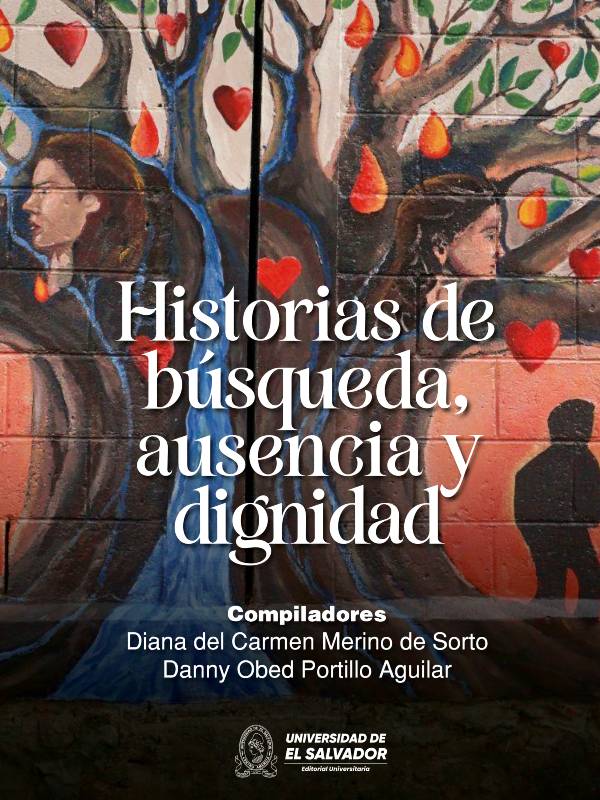
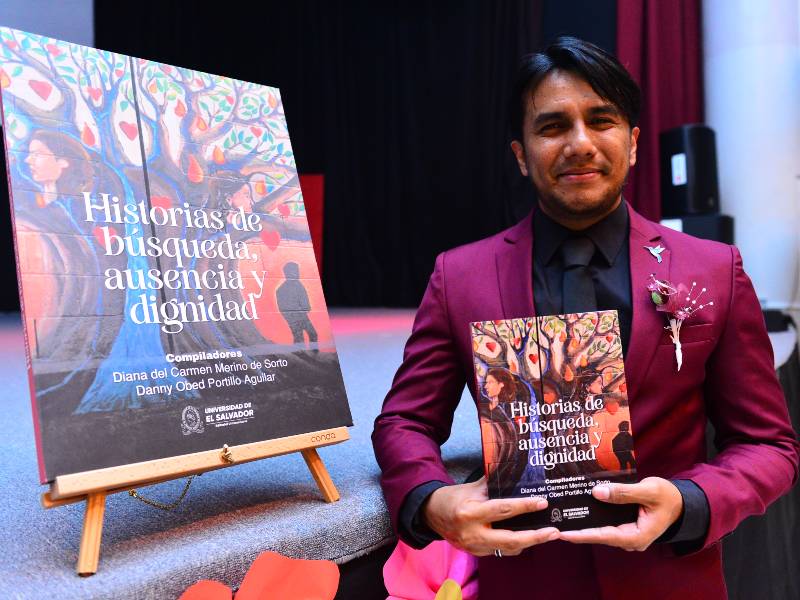
According to the book Historias de búsqueda, ausencia y dignidad (Stories of Search, Absence and Dignity), recently launched by the University of El Salvador (UES), a disappeared person is a human being with a face, dreams and a story—not a number or a case file—who inhabits a “suspended geography” and whose story remains open as long as someone is searching for them.
Indeed, after extensive research, a multidisciplinary team from the university gave a voice and a face to the ordeal of 20 Salvadoran families who have been carrying open wounds since one of their members disappeared.
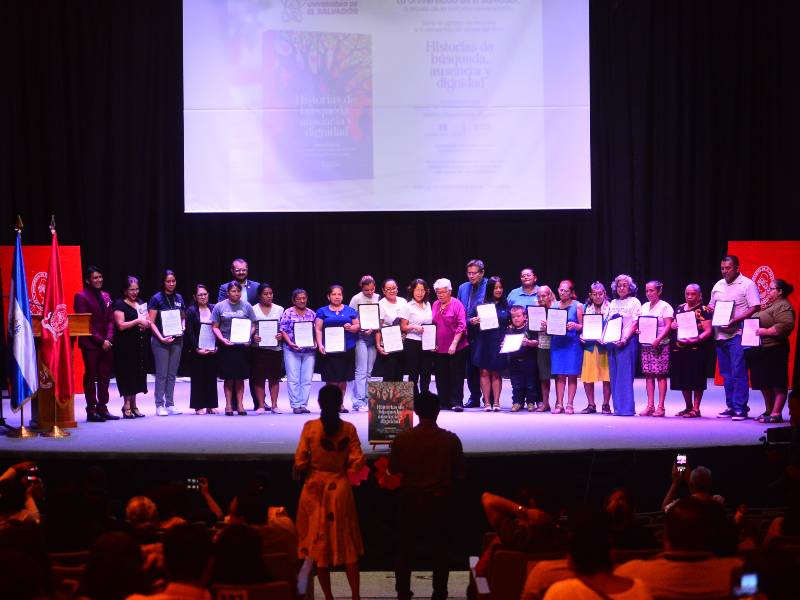
The launch took place this past November 18 during a special event organized by the entire team behind this university project, an occasion at which the joy of seeing that effort come to fruition contrasted with the weight of the pain that remains latent in the families featured in the book.
Although the affectionate greetings, the welcoming words and the solidarity of those present pervaded the ceremony, the shadow of uncertainty rooted in the victims remains intact.
The work was compiled by professors Diana del Carmen Merino de Sorto and Danny Obed Portillo Aguilar, published by the Editorial Universitaria with the backing of the International Committee of the Red Cross (ICRC), and developed by more than 100 first-year students in the Bachelor’s degree program in Legal Sciences at the UES Faculty of Jurisprudence and Social Sciences.
The publication, available in print and digital formats, brings together 20 accounts narrated by twenty-two relatives of disappeared persons.
During the presentation, the UES academic vice-rector, Evelyn Beatriz Farfán, summed up the nature of that suspended grief that dwells in the people portrayed in the book, because unlike a death, where there is a place to bring a flower and say goodbye, a disappearance interrupts mourning and leaves families trapped in uncertainty. “It is one of the most vile and inhumane acts that can exist,” she emphasized.
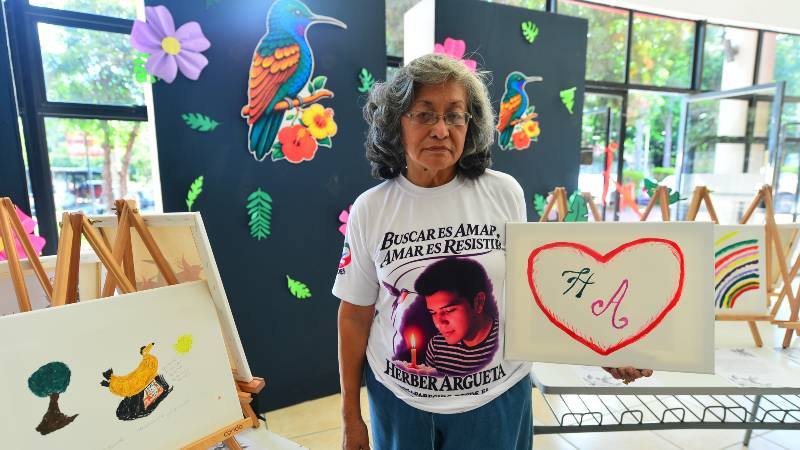
The launch included an exhibition of drawings and paintings created by the relatives of the disappeared in an art workshop that helped heal the wounds a little.
Faces and voices against oblivion
In the front row were the women: mothers, sisters, daughters and wives who have borne alone the economic and emotional impact of searching without respite.
Carmen Argueta, a member of the Bloque de Búsqueda de Personas Desaparecidas (Search Bloc for Disappeared Persons) and mother of Herber Antonio Argueta Armero—a young International Relations student at the UES itself—expressed the mixed feelings of the day: “There is gratitude, emotion and memories, but there is also that pain that accompanies us every day and that the passage of time has not managed to erase.”
“These pages contain fragments of our lives, of our struggles and of that immense love that keeps us standing even when we feel we no longer have any strength,” she stated. “Behind every story there is a family whose life changed forever. A voice we miss, a hug we are still waiting for and many questions that still find no answers,” she added.
Very close to her, Lucía Elizabeth Contreras, a founding member of the Committee of Relatives of Deceased and Disappeared Migrants of El Salvador (Cofamides) and a native of Olomega, La Unión, celebrated the fact that the book finally gives a face to those who search tirelessly, recalling her own odyssey to exhume and repatriate from Mexico the remains of her younger brother, José Salomón “Monchito,” who was murdered at age 19 on the migrant route at the beginning of this century.
For her part, compiler Diana Merino underscored the urgency of incorporating a gender perspective to make visible how women transformed pain into organization and the defense of human rights, warning that a society that forgets its disappeared runs the risk of forgetting its own wounds.
The flight of the hummingbirds
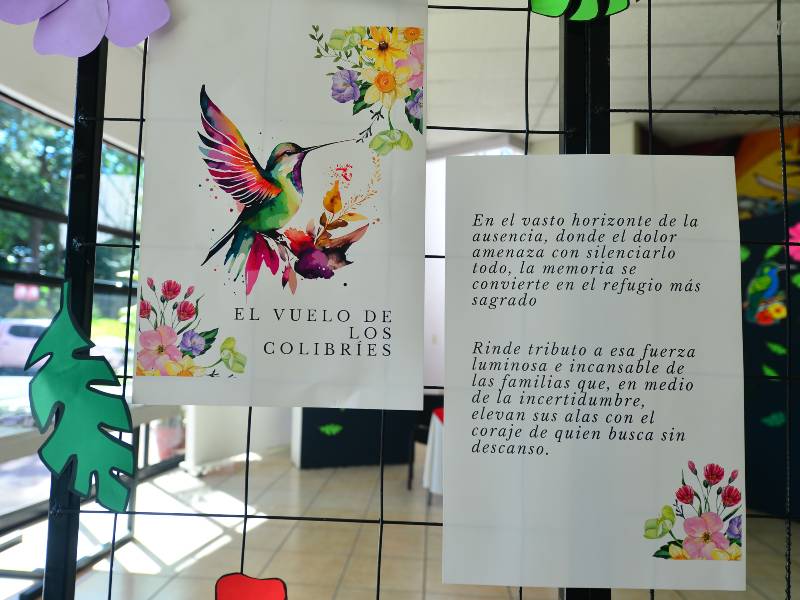
The emotional close came when Danny Portillo named the absent, one by one, and compared the searching families to hummingbirds that, despite their apparent fragility, beat their wings with such force that they are capable of generating wind and sowing the seed of justice.
It was precisely one of the searching mothers, doña Sandra Elizabeth Gallegos, who inspired this simile. After she heard it from Portillo’s lips, the sighs of that mother who has been searching for her son Fernando since March 2022 could be heard in the auditorium of the UES Cine Teatro. Tears slid down her cheeks as she was overcome with emotion.
“Because that silence is deafening, it hurts, it erases, and that silence is not accepted,” the compiler emphasized. “That silence seeks to convince us that we are talking about numbers and case files, and not about human beings. This book was born precisely to refute that, placing at the center those who should never have been forgotten.
“The disappeared persons and their families, direct survivors of this scourge,” said the professor and former teacher of doña Carmen Argueta’s son, who has been missing since August 2021.
The work, which incorporates photographs and QR codes with the real voices of the relatives, is now available, backed by those more than 100 university students whose vision of justice in their country, as the authorities acknowledged at the event, changed forever after hearing these stories.
“Toward freedom through culture until it is found,” concluded Professor Danny Obed.
El Diario de Hoy: https://www.eldiariodehoy.com/arte-y-cultura/ues-lanza-libro-personas-desaparecidas-elsalvador/101390/2026/
La UES lanza libro sobre personas desaparecidas en El Salvador entre llanto y memoria
R. Mixco
¿Qué es un desaparecido?, ¿qué significado engloba este vocablo en la lengua hispana?
El diccionario de la RAE lo define como una persona que se halla en paradero desconocido, sin que se sepa si vive, o de quien no se tiene noticia tras una guerra, catástrofe o suceso semejante, sin que conste su muerte.
Para el Derecho Penal es el sujeto pasivo (víctima) de una privación de libertad (cometida por agentes estatales o particulares) seguida del ocultamiento de su suerte o paradero, sustrayéndola de la protección de la ley.
Según el libro Historias de búsqueda, ausencia y dignidad, lanzado recientemente por la Universidad de El Salvador (UES), es un ser humano con rostro, sueños e historia —no una cifra ni un expediente— que habita en una «geografía suspendida» y cuya historia sigue abierta mientras alguien lo busque.
En efecto, tras una extensa investigación, un equipo multidisciplinario de la universidad dio voz y rostro al drama de 20 familias salvadoreñas que cargan heridas abiertas desde que uno de sus integrantes desapareció.
El lanzamiento se llevó a cabo durante un evento especial organizado por todo el equipo detrás de este proyecto universitario el pasado 18 de noviembre, actividad en la que la alegría de ver materializado dicho esfuerzo contrastó con el peso del dolor que sigue latente en las familias protagonistas.
Aunque los saludos cariñosos, las palabras acogedoras y la solidaridad de los ahí presentes embargó el acto, la sombra de la incertidumbre arraigada en las víctimas sigue intacta.
La obra fue compilada por los docentes Diana del Carmen Merino de Sorto y Danny Obed Portillo Aguilar, editada por la Editorial Universitaria con el respaldo del Comité Internacional de la Cruz Roja (CICR), y desarrollada por más de 100 alumnos de primer año de la Licenciatura en Ciencias Jurídicas de la Facultad de Jurisprudencia y Ciencias Sociales de la UES.
La publicación, disponible en físico y en digital, reúne 20 relatos narrados por veintidós parientes de personas desaparecidas.
Durante la presentación, la vicerrectora académica de la UES, Evelyn Beatriz Farfán, resumió la naturaleza de ese duelo suspendido que habita en los personajes del libro; porque a diferencia de una muerte donde existe un espacio para llevar una flor y despedirse, la desaparición interrumpe el luto y deja a las familias atrapadas en la incertidumbre. «Es uno de los actos más viles e inhumanos que pueden existir», enfatizó.
El lanzamiento incluyó una exposición de dibujos y pinturas creados por los familiares de los desaparecidos, en un taller de arte que contribuyó a curar un poco las heridas.
Rostros y voces frente al olvido
En primera fila estaban ellas: madres, hermanas, hijas y esposas que han cargado solas con el impacto económico y emocional de buscar sin tregua.
Carmen Argueta, integrante del Bloque de Búsqueda de Personas Desaparecidas y madre de Herber Antonio Argueta Armero —un joven estudiante de Relaciones Internacionales de la misma UES—, expresó el sentimiento encontrado de la jornada: «Hay gratitud, emoción y recuerdos, pero también está ese dolor que nos acompaña todos los días y que el paso del tiempo no ha logrado borrar».
«Estas páginas contienen fragmentos de nuestras vidas, de nuestras luchas y de ese amor inmenso que nos mantiene de pie aún cuando sentimos que ya no tenemos fuerzas», afirmó. «Detrás de cada historia hay una familia cuya vida cambió para siempre. Una voz que extrañamos, un abrazo que seguimos esperando y muchas preguntas que todavía no encuentran respuestas», añadió.
Muy cerca de ella, Lucía Elizabeth Contreras, miembro fundadora del Comité de Familiares de Migrantes Fallecidos y Desaparecidos de El Salvador (Cofamides), y originaria de Olomega, La Unión, celebró que el libro finalmente le dé un rostro a quienes buscan sin descanso, recordando su propia odisea para exhumar y repatriar desde México los restos de su hermano menor, José Salomón «Monchito», asesinado a los 19 años en la ruta migratoria a inicios del presente siglo.
Por su parte, la compiladora Diana Merino subrayó la urgencia de incorporar un enfoque de género para visibilizar cómo las mujeres transformaron el dolor en organización y defensa de los derechos humanos, advirtiendo que una sociedad que olvida a sus desaparecidos corre el riesgo de olvidar sus propias heridas.
El vuelo de los colibríes
El cierre emotivo llegó cuando Danny Portillo nombró uno a uno a los ausentes y comparó a las familias buscadoras con colibríes que, pese a su aparente fragilidad, agitan sus alas con tal fuerza que son capaces de generar viento y sembrar la semilla de la justicia.
Fue precisamente una de las madres buscadoras, doña Sandra Elizabeth Gallegos, quien inspiró este simil. Tras escucharlo de labios de Portillo, en el auditorio del Cine Teatro de la UES se escucharon los suspiros de esa madre que busca a su hijo Fernando desde marzo de 2022. Las lágrimas resbalaron por sus mejillas presa de la emoción.
«Porque ese silencio es ensordecedor, duele, borra y ese silencio no es aceptado», enfatizó el compilador. «Ese silencio pretende convencernos de que hablamos de cifras y expedientes, y no de seres humanos. Este libro nace precisamente para desmentirlo, poniendo en el centro a quienes nunca debieron ser olvidados.
Las personas desaparecidas y sus familias, sobrevivientes directos de este flagelo», expresó el catedrático y exmaestro del hijo de doña Carmen Argueta, desaparecido desde agosto de 2021.
La obra, que incorpora fotografías y códigos QR con las voces reales de los familiares, queda disponible respaldada por esos más de 100 universitarios cuya visión de la justicia en su país, según reconocieron las autoridades en el evento, cambió para siempre tras escuchar estas historias.
«Hacia la libertad por la cultura hasta encontrarla», concluyó el maestro Danny Obed.
El Diario de Hoy: https://www.eldiariodehoy.com/arte-y-cultura/ues-lanza-libro-personas-desaparecidas-elsalvador/101390/2026/