

It is not the first time that attempts have been made to resolve Haiti’s crisis in foreign offices. The Caribbean country has hosted more than 10,000 NGOs and has received around ten international missions in half a century. Many have placed their hopes in international cooperation, given the country’s political instability, and others have criticized the constant foreign interference with scarcely any results. The latest chapter has been the arrival of 2,000 Salvadoran soldiers, sent to rescue four compatriots who were part of a UN-led military mission. But pacifying the country has become the latest obsession of Nayib Bukele, who has promised to “liberate” Haiti, as he swears he has done with his own country. Very little is known yet about how. What seems clear is that he will do so with barely any involvement from the other four forces operating in the country. While a large part of the local population applauds him—including the Haitian prime minister—the promise to replicate the ‘Bukele model’ in Haiti has activists and human rights organizations trembling.
Although the Salvadoran officers arrived with the approval of the prime minister, Alix Didier Fils-Aimé, nothing has emerged about the agreement between the two leaders. Neither how long they will remain, nor the objectives, nor who will carry out oversight of the operations on Haitian soil. So far, the troops answer to the orders of Bukele, with an extensively documented record of human rights violations.
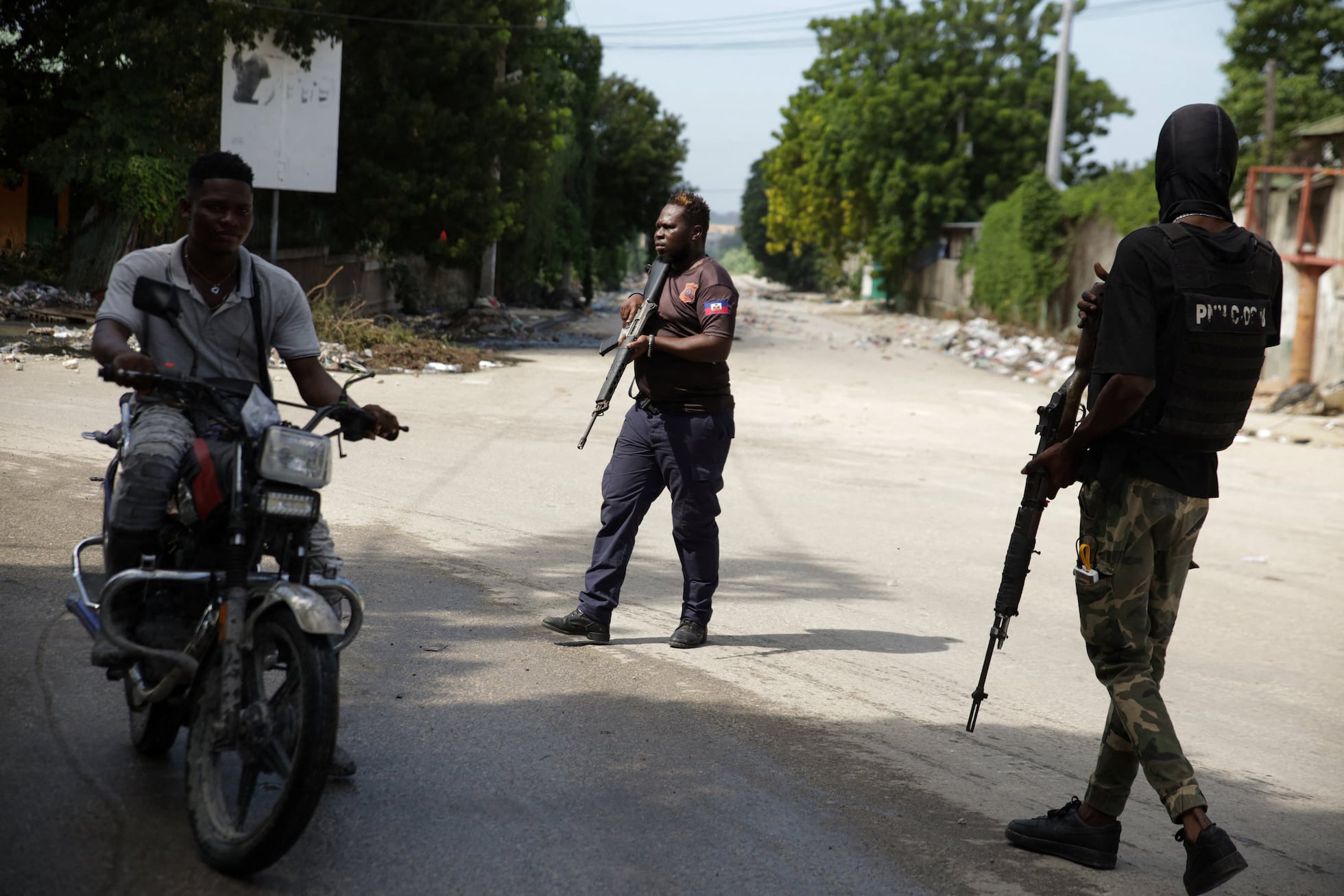
What has emerged, however, is the scant coordination with the other four forces deployed in the Caribbean country [the Haitian Police, the Haitian Army, the Task Force (an armed group linked to the U.S. security company Vectus Global) and the Gang Suppression Force (GSF, by its English acronym, led by the UN)]. This misalignment could especially affect the civilian population, which does not know where the fire will come from or how close they are to each force’s targets. For Romain Le Cour, director of the Haiti Observatory at Global Initiative (GI-TOC), it is like “an orchestra without a conductor.” “If you don’t know who is doing what, you don’t know who is accountable if something goes wrong either.”
Despite the praise Fils-Aimé has lavished on social media—he says he “takes his hat off” to Bukele—his popularity is plummeting, precisely because the population attributes the recent military actions to Bukele and not to him. On Tuesday there will be a new demonstration in Port-au-Prince in support of the Salvadoran. Many of the demonstrators say they are also coming out to march over state neglect. This is the second in two weeks.
Meanwhile, the prime minister is working on creating a de-escalation office to coordinate the efforts of all the forces deployed on the island. It is the first organizational step of a larger plan that, according to Diego Da Rin, Haiti analyst at International Crisis Group, is designed so that they “don’t step on each other’s hoses” and avoid friendly fire. The Salvadoran contingent, which includes members of special forces, is the largest since the end of the United Nations Stabilization Mission in Haiti (Minustah), which was in the country between 2004 and 2017.
From singular to plural
Bukele’s narrative has been changing as the days go by. Just this Thursday, he announced that they will set up an operational base at the Sylvio Cator stadium, the country’s main one, occupied by the gangs since 2024, and recovered “as part of a joint operation” with the Haitian National Police, the Armed Forces of Haiti and the Task Force. Sources close to the de-escalation office maintain that the use of the plural is not trivial and that it is due to an explicit request from Fils-Aimé, who is seeking to appear in the photo as well.
This tone has nothing to do with that of late October, when he sent the first 200 officers and was casting himself as the pacifier of Haiti. “We have already put an end to the gangs in El Salvador, and we can put an end to yours too,” he said at the time on X, alluding to what he considers a “mission from God,” against the “satanic gangs.” Or even as recently as this very Tuesday, when he celebrated in Creole having destroyed the house of Lanmò San Jou, a Haitian ringleader, and the headquarters of the 400 Mawozo gang. “Most of them fled without even trying to fight. What cowards!” he added.
For those who have spent years documenting the Haitian conflict, this development is more symbolic than effective. The location was very well known to all the armed actors in the country, but it had not been attacked until it became a priority for the Salvadoran leader. According to Le Cour, this is no coincidence. It is due, he says, to a “Salvadoran effect” whereby the Haitian authorities are mobilizing “harder and faster.” The continuous propaganda, he comments, has generated a kind of “distorting mirror” in which it is not clearly discernible who is doing what. The fact that Bukele is beginning to name them gives some oxygen to a government with extremely low popularity and to a society fed up with living in a country in flames. “Coordination seems to be starting to take shape. That’s good news,” he concludes.
“The cure may be worse than the disease”
Safeguarding the civilian population is a concern shared by the four analysts interviewed by EL PAÍS: What will the gangs’ response be to a Bukele-style escalation? “We know that these operations can intensify and begin to enter densely populated neighborhoods,” Da Rin explains. “And we also know that the gangs have no qualms about using civilians as human shields. The eagerness for symbolic victories in order to broadcast them widely on social media cannot take precedence over the lives of Haitians.” One of the worst possible scenarios is that the gangs begin to operate under an alliance in the face of a common enemy.
The fear of Ana Piquer, Amnesty International’s Americas director, is that the cure may end up being worse than the disease because of the free rein of the Salvadoran troops and the opacity with which they operate. It is precisely the handling of the gangs in El Salvador—with a perennial state of exception and a mass incarceration plan, to the point of becoming the country with the highest rate of people deprived of liberty in the world—that heightens her fear.
“Bukele has adopted policies that have dismantled due process and the rule of law, and has committed acts that could constitute crimes against humanity,” she says. “This is not what the Haitian population needs.” Nathalye Cotrino, senior researcher in the Americas Division at Human Rights Watch, demands that long-term measures be sought. “Beyond the immediate changes in patterns of violence, how can a meaningful and sustainable transformation that respects and guarantees human rights be achieved?” she asks.
Given Haiti’s weak institutions, replicating the ‘Bukele model’ would translate, according to Piquer, into going beyond the incarceration of the population linked to the gangs. “It would be a mass extermination. And it is a short-termist view. The situation in Haiti is much more complex and needs complex responses,” she says in a call. “What is going to happen when he realizes that many of those who work with the gangs are boys and girls? Because it is a reality: they are forcibly recruited out of fear of saying no to a ringleader or out of economic necessity. They are victims of the gangs and they may go on to become victims of Bukele,” the lawyer argues. “We run the risk that the measures to pacify the country end up constituting the same human rights violations as those of these illegal groups. And, to date, there are no mechanisms to report these abuses.”
Between March 2025 and January 2026, the UN counted 3,497 dead during security force operations against the gangs; 229 of them civilians. As of August, Reuters reported that no investigation had been opened, not even one into the deaths of the 18 minors.
El caos entre las cinco fuerzas armadas que operan en Haití eleva el riesgo para la población civil: “Es una orquesta sin director”
NOOR MAHTANI
No es la primera vez que la crisis de Haití se trata de resolver en despachos extranjeros. El país caribeño ha albergado más de 10.000 oenegés y ha recibido una decena de misiones internacionales en medio siglo. Muchos han puesto sus esperanzas en la cooperación internacional, dada la inestabilidad política del país, y otros han criticado la constante injerencia extranjera sin apenas frutos. El último capítulo ha sido la llegada de 2.000 soldados salvadoreños, enviados para rescatar a cuatro compatriotas que hacían parte de una misión militar liderada por la ONU. Pero pacificar el país se ha convertido en la última obsesión de Nayib Bukele, quien ha prometido “liberar” Haití, como jura haber hecho con su país. Del cómo se sabe aún bien poco. Lo que parece estar claro es que lo hará sin contar apenas con las otras cuatro fuerzas que operan en el país. Mientras que gran parte de la población local lo aplaude —incluido el primer ministro haitiano—, la promesa de replicar el ‘modelo Bukele’ en Haití pone a temblar a activistas y organizaciones de derechos humanos.
Si bien los oficiales salvadoreños llegaron con el beneplácito del primer ministro, Alix Didier Fils-Aimé, no ha trascendido nada del acuerdo entre ambos mandatarios. Ni el tiempo que permanecerán, ni los objetivos, ni quién llevará a cabo la veeduría de las operaciones en tierras haitianas. Hasta el momento, las tropas responden a las órdenes de Bukele, con un historial más que documentado de violaciones a los derechos humanos.
Lo que sí ha trascendido es la escasa coordinación con las otras cuatro fuerzas desplegadas en el país caribeño [Policía haitiana, Ejército militar haitiano, la Task Force (un grupo armado vinculado a la empresa de seguridad estadounidense Vectus Global) y la Fuerza de Eliminación de Pandillas (GSF, por sus siglas en inglés, liderada por la ONU)]. Este desajuste podría afectar especialmente a la población civil, que desconoce por dónde va a venir el fuego y qué tan cerca están de los objetivos de cada fuerza. Para Romain Le Cour, director del Observatorio Haití en Global Initiative (GI-TOC), es como “una orquesta sin director”. “Si no se sabe quién hace qué, tampoco se sabe quién responde si algo sale mal”.
A pesar de los elogios en los que se ha deshecho Fils-Aimé en redes —quien dice “quitarse el sombrero” ante Bukele—, su popularidad cae en picado, precisamente porque la población atribuye a Bukele y no a él las acciones militares recientes. El martes habrá una nueva manifestación en Puerto Príncipe en apoyo al salvadoreño. Muchos de los manifestantes dicen salir también a marchar por el abandono estatal. Esta es la segunda en dos semanas.
Mientras, el primer ministro trabaja en la creación de una oficina de desescalada para coordinar los esfuerzos de todas las fuerzas desplegadas en la isla. Es el primer paso organizativo de un plan mayor que, según Diego Da Rin, analista de Haití en International Crisis Group, está pensado para “no pisarse las mangueras” y evitar el fuego amigo. El contingente salvadoreño, que incluye miembros de fuerzas especiales, es el más numeroso desde el final de la Misión de Estabilización de las Naciones Unidas en Haití (Minustah), que estuvo en el país entre 2004 y 2017.
Del singular al plural
La narrativa de Bukele ha ido cambiando con los días. Este mismo jueves, comunicó que instalarán una base operativa en el estadio Sylvio Cator, el principal del país, tomado desde 2024 por las pandillas, y recuperado “como parte de un operativo conjunto” con la Policía Nacional de Haití, las Fuerzas Armadas de Haití y la Task Force. Fuentes cercanas a la oficina de desescalada aseguran que el uso del plural no es banal y que se debe a una petición explícita de Fils-Aimé, quien busca aparecer también en la foto.
Este tono no tiene nada que ver con el de finales de octubre, cuando mandó a los primeros 200 oficiales y se erigía como el pacificador de Haití. “Ya hemos terminado con las pandillas en El Salvador, y podemos terminar con las de ustedes también”, decía entonces en X, aludiendo a lo que él considera una “misión de Dios”, frente a las “pandillas satánicas”. O incluso desde este mismo martes, cuando celebraba en creole haber destruido la casa de Lanmò San Jou, un cabecilla haitiano, y el cuartel general de la banda de los 400 Mawozo. “La mayoría huyó sin siquiera intentar luchar. ¡Qué cobardes!”, añadía.
Para quienes llevan años documentando el conflicto haitiano, este hecho es más simbólico que efectivo. La ubicación era muy conocida por todos los actores armados del país, pero no había sido atacada hasta que fue prioritario para el líder salvadoreño. Según Le Cour, no es casual. Se debe, cuenta, a un “efecto salvadoreño” por el que las autoridades haitianas están movilizándose “más fuerte y más rápido”. La continua propaganda, comenta, ha generado una especie de “espejo deformante” en el que no se aprecia con claridad quién hace qué. Que Bukele los empiece a nombrar da cierto oxígeno a un Gobierno con una bajísima popularidad y a una sociedad harta de vivir en un país en llamas. “La coordinación parece empezar a construirse. Es una buena noticia“, zanja.
“Puede ser peor el remedio que la enfermedad”
La salvaguarda de la población civil es una preocupación compartida por los cuatro analistas entrevistados por EL PAÍS: ¿Cuál va a ser la respuesta de las pandillas ante una escalada al estilo de Bukele? “Sabemos que estos operativos se pueden intensificar y empezar a entrar en barriadas densamente pobladas”, explica Da Rin. “Y también sabemos que las pandillas no tienen reparos en usar población civil como escudos humanos. El afán de las victorias simbólicas para poder comunicarlas masivamente en redes sociales no puede primar sobre la vida de los haitianos”. Uno de los peores escenarios posibles es que las pandillas empiecen a operar bajo una alianza ante un enemigo común.
El temor de Ana Piquer, directora de Amnistía Internacional para las Américas, es que acabe siendo peor el remedio que la enfermedad debido al libre albedrío de las tropas salvadoreñas y la opacidad con la que se mueven. Es precisamente la gestión de las pandillas en El Salvador —con un perenne estado de excepción y un plan de encarcelación masiva, hasta convertirse en el país con la mayor tasa de personas privadas de la libertad del mundo— lo que agudiza su miedo.
“Bukele ha adoptado políticas que han desmantelado el debido proceso, el estado de derecho y ha cometido actos que podrían constituir crímenes de lesa humanidad”, narra. “Esto no es lo que necesita la población haitiana”. Nathalye Cotrino, investigadora sénior de la División de las Américas de Human Rights Watch, exige buscar medidas a largo plazo. “Más allá de los cambios inmediatos en los patrones de violencia, ¿cómo se puede lograr una transformación significativa y sostenible que respete y garantice los derechos humanos?“, se pregunta.
Dada la débil institucionalidad de Haití, replicar el ‘modelo Bukele’ se traduciría, según Piquer, en ir más allá de la encarcelación de la población vinculada a las pandillas. “Sería una exterminación masiva. Y es una mirada cortoplacista. La situación en Haití es mucho más compleja y necesita respuestas complejas”, narra en una llamada. “¿Qué va a pasar cuando se dé cuenta de que muchos de los que trabajan con las pandillas son niños y niñas? Porque es una realidad, son reclutados a la fuerza por miedo a decirle que no a un cabecilla o por una necesidad económica. Son víctimas de las pandillas y pueden pasar a convertirse en víctimas de Bukele”, argumenta la abogada. “Corremos el riesgo de que las medidas para pacificar el país acaben constituyendo las mismas violaciones a los derechos humanos que las de estos grupos ilegales. Y, hasta la fecha, no hay mecanismos para denunciar estos abusos”.
Entre marzo de 2025 y enero de 2026, la ONU contabilizó 3.497 muertos durante operaciones de las fuerzas de seguridad contra las pandillas; 229, civiles. Hasta agosto, Reuters señaló que no se había abierto ninguna investigación, ni siquiera la de los 18 menores fallecidos.