

Editor’s clarification: This article was published on November 9, 2026. It states that no official military agreement specifying operational limits and equipment authorization exists, while separately quoting Romain Le Cour as saying that he does not know the terms of an agreement with Haiti. El Salvador’s Decree No. 679, effective October 2, 2026, authorizes participation in the GSF and calls for inter-State agreements for deployment, aircraft maintenance and supplies, but does not publish their operational terms. The decree establishes domestic authorization; it does not establish the contents or status of a separate operational agreement. The article’s territorial-control estimate is reproduced as its own statement; it supplies no underlying geographic dataset.
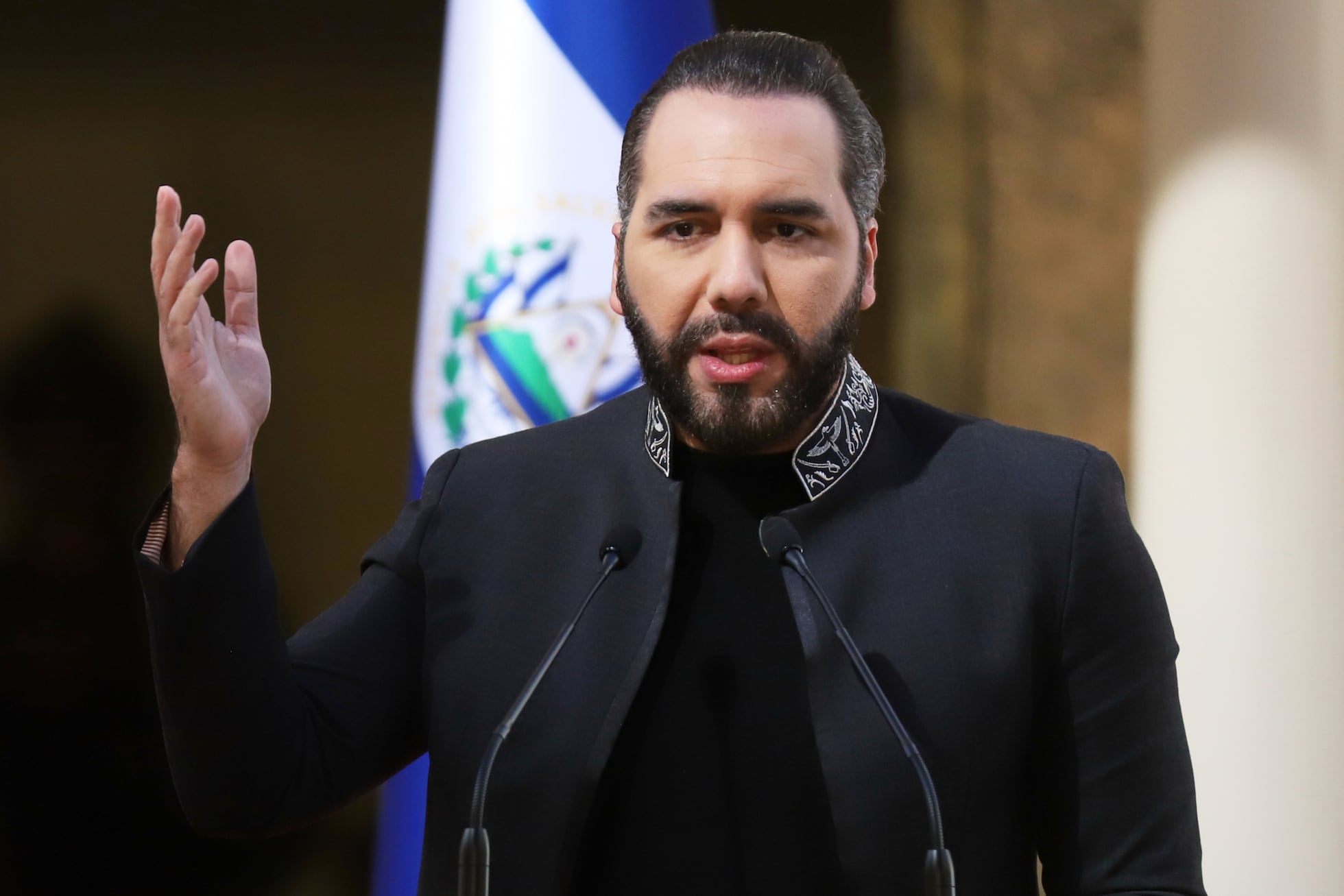
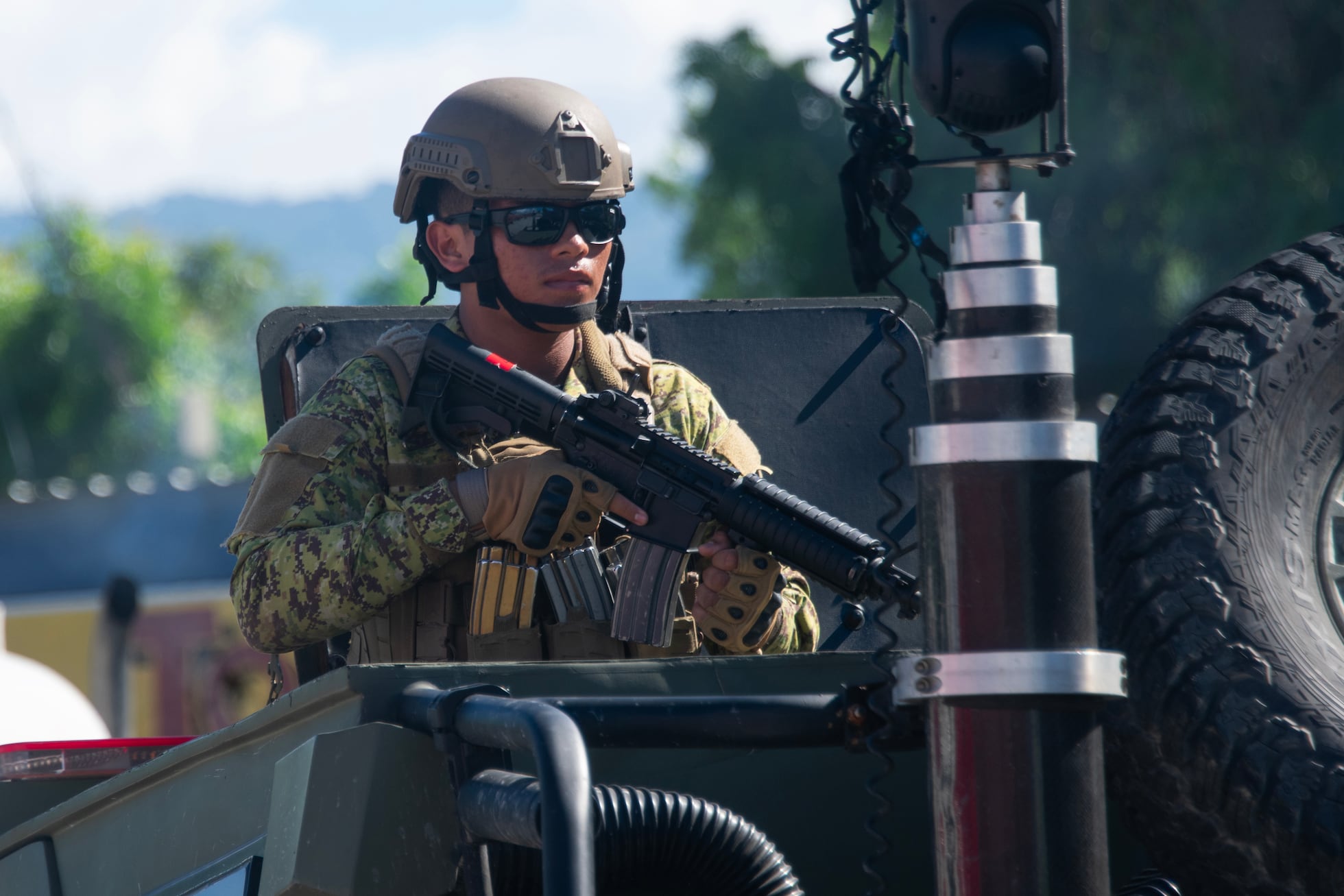
Two thousand soldiers sent to Haiti by the president of El Salvador, in search of four Salvadoran aviation technicians kidnapped on the island by the gangs, are operating in parallel with the United Nations Gang Suppression Force and under the orders of a three-star general who answers directly to Nayib Bukele. It is unclear under what rules and limits they operate, in a context of violence where multiple armed factions are already clashing.
Since late October, El Salvador has multiplied its presence in Haiti, from 200 to 2,200 soldiers. The first 200 arrived to form part of the Gang Suppression Force (GSF, for its initials in English), made up of international troops authorized by the Security Council to combat the criminal gangs. Bukele then sent two thousand more men, as a unilateral response to a gang attack that took place on October 18 in which four Salvadorans who were working with the GSF were kidnapped.
The four Salvadorans, who were not taking part in combat activities, disappeared during an ambush on a GSF vehicle that took place on the outskirts of Port-au-Prince, and so far there is no news of their whereabouts, nor have the gangs asked for a ransom to return them. On November 4, the Haitian National Police reported that it had found the charred remains of the vehicle.
This week, Haitian media have reported aerial patrols and clashes, which were confirmed by Bukele. In these exchanges, two Salvadoran soldiers have already suffered gunshot wounds, one of them seriously.
The Haitian government also announced on Friday the death of the leader of the Boston gang, Mathias Sainthil, and of other members of his group. According to the official version, this occurred in a drone attack on the gang member’s vehicle, which was in the Cité Soleil neighborhood, on the outskirts of Port-au-Prince.
The UN distances itself from Bukele’s troops
The UN has distanced itself from the deployment of the Salvadorans this week. Stéphane Dujarric, spokesperson for the office of the Secretary-General, clarified in a statement that only 200 uniformed personnel from El Salvador have its endorsement and are accountable to it, and asked that any type of security operation “must be carried out in full compliance with applicable international law.” So far there is no official military agreement between El Salvador and the UN or the Haitian authorities that establishes the limits of the operation and authorizes the landing of tanks, helicopters and war machinery in a conflict territory where there is an arms embargo and sanctions for anyone who violates it.
“They are their own force. Nobody knows what they are going to do or how this is going to affect the Gang Suppression Force. Many people are worried about the possibility that there will be much more violence and violations of human rights and of the law,” a source involved in the security operations in Haiti, who preferred not to reveal their identity because of the sensitivity of the context, told EL PAÍS. So far, even the most basic logistics of their movements are unknown: whether these troops, for example, are authorized to make arrests and, if so, what they do with the detainees or where they take the wounded, or which laws apply to their actions, international laws or those of Haiti.
“We still do not know the terms of the agreement with the Haitian government, who is in command of these troops, under what rules of engagement they operate or for how long,” said the director of the Haiti Observatory at the Global Initiative Against Transnational Organized Crime, Romain Le Cour. “In a dense urban environment, where civilians find themselves trapped in the middle of the crossfire, these questions will determine who will have to be held accountable if something goes wrong (…) The risk, as things stand, is the lack of transparency and that nobody takes responsibility,” he warns.
In his view, the security response in Haiti is an orchestra without a conductor. In addition to the Salvadoran soldiers, five different structures handle the country’s security: the Haitian police and army, the United Nations force intended to combat the gangs, and an operational group that collaborates with Vectus Global, the private security company founded by Erik Prince, a former member of the US Navy SEALs and founder of Blackwater. “Each one has its own mandate and its own rules, without a common plan,” says Le Cour.
Haiti’s authorities have barely referred to Bukele’s deployment. On November 3, the Haitian prime minister, Alix Didier Fils-Aimé, spoke about the matter for the first time and stated that the foreign forces were under Haitian command, but Bukele has not confirmed this. “The international force is not here to replace the State. They are here to support us,” said the prime minister, flanked by a colonel of the Salvadoran army who is part of the UN-backed force and by officials of the Haitian army and police.
On Friday, the vice president of El Salvador, Félix Ulloa, announced that the Haitian prime minister would travel to El Salvador between November 16 and 17 to discuss the role of the Salvadoran troops deployed in Haiti.
The gangs currently control about three-quarters of the territory, including Port-au-Prince, the capital. This year alone, the violence of their clashes has added up to hundreds of murders and has caused the displacement of more than one and a half million people, worsening the humanitarian crisis in which Haiti already found itself.
At the same time, the United States, the Dominican Republic and other countries where most of the diaspora is concentrated deport hundreds of Haitians every month, to a country that is not in a position to receive them; billions of dollars in remittances that families use to subsist also stop arriving.
Las tropas de Bukele en Haití operan sin reglas claras ni fecha de retorno: “Son su propia fuerza”
Maye Primera
Nota editorial: Este artículo se publicó el 9 de noviembre de 2026. Afirma que no existe un acuerdo militar oficial que especifique los límites operativos y la autorización de equipos, mientras cita por separado a Romain Le Cour diciendo que desconoce los términos de un acuerdo con Haití. El Decreto Legislativo salvadoreño n.º 679, vigente desde el 2 de octubre de 2026, autoriza la participación en la GSF y dispone que se emitan acuerdos entre Estados para el despliegue, el mantenimiento de aeronaves y los suministros, pero no publica sus términos operativos. El decreto establece la autorización nacional; no establece el contenido ni la situación de un acuerdo operativo distinto. La estimación del control territorial del artículo se reproduce como una afirmación de este; no aporta un conjunto de datos geográficos que la sustente.
Dos mil soldados enviados a Haití por el presidente de El Salvador, en busca de cuatro técnicos de aviación salvadoreños secuestrados en la isla por las pandillas, operan en paralelo a las Fuerzas de Represión de las Bandas de Naciones Unidas y bajo órdenes de un general de tres estrellas que responde directamente a Nayib Bukele. No está claro bajo qué normas y límites operan, en un contexto de violencia donde ya se enfrentan múltiples facciones armadas.
Desde finales de octubre, El Salvador ha multiplicado su presencia en Haití, de 200 a 2.200 soldados. Los primeros 200 llegaron para formar parte de la Fuerza de Represión de las Pandillas (GSF, por sus siglas en inglés), integrada por tropas internacionales autorizadas por el Consejo de Seguridad para combatir a las bandas criminales. Luego Bukele envió dos millares de hombres más, como respuesta unilateral a un ataque de las pandillas ocurrido el 18 de octubre donde cuatro salvadoreños que trabajaban con la GSF fueron secuestrados.
Los cuatro salvadoreños, que no participaban en actividades de combate, desaparecieron durante una emboscada a un vehículo de las GSF ocurrido en las afueras de Puerto Príncipe y hasta ahora no hay noticias de su paradero, ni las pandillas han pedido recompensa para devolverlos. El 4 de noviembre la Policía Nacional de Haití informó que había encontrado los restos calcinados del vehículo.
Esta semana, los medios de Haití han reportado patrullajes aéreos y enfrentamientos, que fueron confirmados por Bukele. En estos intercambios, dos militares salvadoreños ya han sufrido heridas por impactos de bala, uno de ellos de gravedad.
El Gobierno haitiano también anunció el viernes la muerte del líder de la banda Boston, Mathias Sainthil, y otros integrantes de su grupo. De acuerdo a la versión oficial, esto ocurrió en un ataque con drones contra el vehículo del pandillero, que se encontraba en el barrio de Cité Soleil, en las afueras de Puerto Príncipe.
La ONU se desmarca de las tropas de Bukele
La ONU se ha distanciado del despliegue de los salvadoreños esta semana. Stéphane Dujarric, portavoz de la oficina del Secretario General, aclaró a través de un comunicado que solo 200 uniformados de El Salvador cuentan con su aval y les rinden cuentas, y pidió que cualquier tipo de operación de seguridad “debe llevarse a cabo en plena conformidad con el derecho internacional aplicable”. Hasta ahora no existe un acuerdo militar oficial entre El Salvador y la ONU o las autoridades de Haití que establezca los límites de la operación y autorice el desembarco de tanques, helicópteros y maquinaria de guerra en un territorio de conflicto donde hay un embargo de armas y sanciones para quien lo infrinja.
“Ellos son su propia fuerza. Nadie sabe qué van a hacer ni cómo esto va a afectar a la fuerza de Fuerza de Represión de las Pandillas. Mucha gente está preocupada con la posibilidad de que haya mucha más violencia y violaciones de derechos humanos y a las leyes”, ha dicho a EL PAÍS una fuente involucrada en las operaciones de seguridad en Haití, que ha preferido no revelar su identidad por lo delicado del contexto. Hasta ahora se desconoce la mínima logística de sus movimientos: si estas tropas, por ejemplo, están autorizadas a practicar arrestos y en ese caso, qué hacen con los detenidos o a dónde trasladan a los heridos, o qué leyes aplican a sus actuaciones, las internacionales o las de Haití.
“Todavía desconocemos los términos del acuerdo con el gobierno haitiano, quién está al mando de estas tropas, bajo qué reglas de enfrentamiento operan o por cuánto tiempo”, ha dicho el director del Observatorio sobre Haití en la Iniciativa Global contra el Crimen Organizado Transnacional, Romain Le Cour. “En un entorno urbano denso, donde los civiles se encuentran atrapados en medio del fuego cruzado, estas cuestiones determinarán quién deberá rendir cuentas si algo sale mal (…) El riesgo, tal como están las cosas, es la falta de transparencia y que nadie asuma la responsabilidad”, advierte.
En su opinión, la respuesta en materia de seguridad en Haití es una orquesta sin director. Además de los militares salvadoreños, cinco estructuras distintas operan la seguridad del país: la policía y el ejército haitiano, la fuerza de Naciones Unidas destinada a combatir a las pandillas, y un grupo operativo que colabora con Vectus Global, la empresa de seguridad privada fundada por Erik Prince, exmiembro de los SEAL de la Marina estadounidense y fundador de Blackwater. “Cada una cuenta con su propio mandato y sus propias normas, sin un plan común”, dice Le Cour.
Las autoridades de Haití apenas se han referido al despliegue de Bukele. El 3 de noviembre, el primer ministro haitiano, Alix Didier Fils-Aimé, habló del asunto por primera vez y afirmó que las fuerzas extranjeras se encontraban bajo el mando haitiano, pero Bukele no lo ha confirmado. “La fuerza internacional no está aquí para reemplazar al Estado. Están aquí para apoyarnos”, dijo el primer ministro, flanqueado por un coronel del ejército de El Salvador que forma parte de la fuerza respaldada por la ONU y funcionarios del ejército y la policía de Haití.
El viernes, el vicepresidente de El Salvador, Félix Ulloa, anunció que el primer ministro haitiano viajaría a El Salvador entre el 16 y el 17 de noviembre para discutir el papel de las tropas salvadoreñas desplegadas en Haití.
Las pandillas controlan actualmente unas tres cuartas partes del territorio, incluyendo Puerto Príncipe, la capital. Solo este año, la violencia de sus enfrentamientos ha sumado centenares de asesinatos y ha provocado el desplazamiento de más de un millón y medio de personas, agravando la crisis humanitaria en la que ya se encontraba Haití.
Al mismo tiempo, Estados Unidos, República Dominicana y otros países donde se concentra la mayor parte de la diáspora deportan a cientos de haitianos cada mes, a un país que no está en capacidad de recibirlos; también dejan de llegar miles de millones de dólares en remesas que las familias utilizan para subsistir.