
The 2027 General Budget of the Nation bill provides for an allocation for Education equivalent to 8.1% of gross domestic product (GDP) in 2027. However, budget execution data from recent years show a difference between programmed resources and those actually accrued, a situation that worries representatives of the teaching sector.
According to the Ministry of Finance’s state budget execution figures, processed by economist José Luis Magaña, the budget voted for Education in 2025 was equivalent to 4.19% of GDP, while accrued expenditure represented only 3.63%. For 2026, the budgeted allocation is equivalent to 4.41% of GDP, and through August, execution reached 2.68%.
The difference is also seen in previous years. In 2023, the approved budget represented 4.44% of GDP, compared with accrued expenditure of 3.47%. In 2024, the two proportions were 4.44% and 3.85%, respectively.
In that regard, teachers’ union organizations view the increase planned in the education area’s budget for 2027 with skepticism and warned that the allocation might not translate into improvements for schools due to the budget execution deficiencies that, they point out, have recurred during the current administration.
The Frente Magisterial Salvadoreño stated that the increase planned for 2027 should be analyzed not only in terms of the amount allocated, but also in terms of the Ministry of Education’s capacity to execute the resources. The organization indicated that the bill includes $320 million in external loans and $20 million in donations, and therefore it also expressed concern about the weight of borrowing in the financing of the education portfolio.
“Hopefully that budget increase will be reflected in those schools that they have left abandoned, that have been closed, especially in cantons and hamlets, and that have left those communities without schools. There they are; some have already gone more than 4 years (without any intervention),” the organization said.
The Mi Nueva Escuela Program, for the remodeling of schools, is one of the projects with the largest amount of funds allocated for 2027, with $117 million for its development. It began execution in 2022 with financing from a $200 million loan from the Banco de Integración Centroamericana. However, as of June 2026, it had executed only $36.5 million, according to the Ministry of Finance.
Another of the programs with the largest amount of funds allocated is the program for the improvement of educational environments, which is financed each year with resources from the State’s general fund. For 2026, it had an allocation of $12.5 million and only $2.5 million executed. Meanwhile, for 2027 there are plans to allocate $410 million to it.
Meanwhile, the Crecer y Aprender Juntos program, which is financed with funds from a World Bank loan and a donation from the Global Partnership for Education, was allocated $200 million in 2025 and executed only $30.5 million.
For 2026, it had an allocation of $170.5 million and as of last June had executed only $26 million. Meanwhile, for next year it has an allocation of $132.7 million.
Concern
The Sindicato de Docentes por una Educación para Todos (SINDOPETS) stated that, during several fiscal years of the current administration, the Government has promoted increases in the education budget, but some projects are not fully executed.
“That increase is only going to be reflected on paper, but not in the implementation of the projects,” the union maintained.
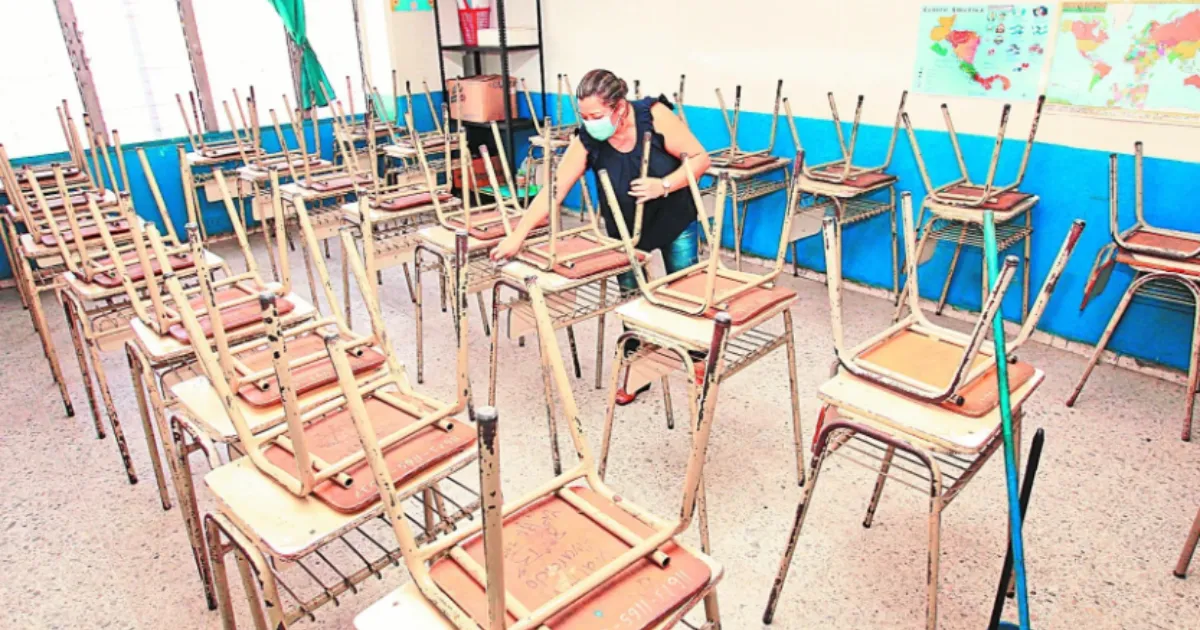
The organization noted that there are hundreds of schools in precarious conditions of infrastructure and equipment that have not received interventions. It also stated that some schools where remodeling work began were vacated, structures were demolished, and the works were subsequently abandoned.
“If we talk about the Dos Escuelas por Día project, that one is not being fulfilled either,” it stated.
The union considered that the budget allocation for these projects should be reviewed because, in its view, they might not be executed in full. It also questioned the fact that the Government presents the increase in the education allocation as progress toward 8% of GDP.
Bases Magisteriales stated that the Ministry of Education’s budget execution over the last five-year period has shown deficiencies, because the projected amounts exceed those that are ultimately executed.
The organization put forward three possible explanations for that difference: that the budgets are underfunded, that the institutions are inefficient in executing the projects, or that the lack of execution has become a government strategy to save money.
“The truth is that while there are many shortages in the schools, officials allow themselves the luxury of not executing the money allocated for the fiscal year,” Bases Magisteriales said.
La Prensa Gráfica: https://www.laprensagrafica.com/elsalvador/programas-educativos-presentan-baja-ejecucion-presupuestaria-20261014-0077.html
Programas educativos presentan baja ejecución presupuestaria
Por Claudia Palacios y Graciela Aguilar
El proyecto de Presupuesto General de la Nación 2027 contempla una asignación para Educación equivalente al 8.1 % del producto interno bruto (PIB) en 2027. Sin embargo, los datos de ejecución presupuestaria en los últimos años muestran una diferencia entre los recursos programados y los efectivamente devengados, una situación que preocupa a representantes del sector docente.
Según las cifras de la ejecución presupuestaria estatal del Ministerio de Hacienda, procesados por el economista José Luis Magaña, el presupuesto votado para Educación en 2025 equivalió al 4.19 % del PIB, mientras que el gasto devengado representó solo el 3.63 %. Para 2026, la asignación presupuestada equivale al 4.41 % del PIB, y hasta agosto la ejecución alcanzó el 2.68 %.
La diferencia también se observa en años anteriores. En 2023, el presupuesto aprobado representó el 4.44 % del PIB, frente a un gasto devengado del 3.47 %. En 2024, ambas proporciones fueron del 4.44 % y el 3.85 %, respectivamente.
En ese sentido, organizaciones sindicales del magisterio ven con escepticismo el incremento previsto en el presupuesto del área educativa para 2027 y advirtieron que la asignación podría no traducirse en mejoras para los centros escolares debido a las deficiencias de ejecución presupuestaria que, según señalan, se han repetido durante la actual administración.
El Frente Magisterial Salvadoreño señaló que el incremento previsto para 2027 debe analizarse no solo por el monto asignado, sino también por la capacidad del Ministerio de Educación para ejecutar los recursos. La organización indicó que el proyecto incluye $320 millones en préstamos externos y $20 millones en donaciones, por lo que también expresó preocupación por el peso del endeudamiento en el financiamiento de la cartera educativa.
“Ojalá que ese aumento del presupuesto se vea reflejado en aquellas escuelas que han dejado abandonadas, que han sido cerradas, especialmente de cantones y caseríos, y que han dejado esas comunidades sin centros escolares. Ahí están, ya algunas ya tienen más de 4 años (sin ser intervenidas)”, indicó la organización.
El Programa Mi Nueva Escuela, para la remodelación de centros escolares, es uno de los proyectos con mayor cantidad de fondos asignados para 2027, con $117 millones para su desarrollo. El mismo inició su ejecución en 2022 el financiamiento de un préstamo con el Banco de Integración Centroamericana por $200 millones. Sin embargo, hasta junio de 2026, solo había ejecutado $36.5 millones, según Hacienda.
Otro de los programas con mayor cantidad de fondos asignados es el de mejoramiento de ambientes educativos, que se financia cada año con recursos del fondo general del Estado. Para 2026, tuvo una asignación de $12.5 millones y solo $2.5 millones ejecutados. En tanto, para 2027 se le planean asignar $410 millones.
En tanto, el programa Crecer y Aprender Juntos, que se financia con fondos de un préstamo del Banco Mundial y una donación de la Alianza Mundial para la Educación, tuvo asignados $200 millones en 2025 y solo ejecutó $30.5 millones.
Para 2026, tuvo una asignación de $170.5 millones y hasta junio pasado había ejecutado solo $26 millones. En tanto, para el próximo año tiene una asignación de $132.7 millones.
Preocupación
El Sindicato de Docentes por una Educación para Todos (SINDOPETS) afirmó que, durante varios ejercicios fiscales de la actual administración, el Gobierno ha promocionado incrementos en el presupuesto educativo, pero algunos proyectos no terminan de ejecutarse.
“Ese incremento solamente se va a ver reflejado en el papel, pero no en la realización de los proyectos”, sostuvo el sindicato.
La organización señaló que hay cientos de escuelas en condiciones precarias de infraestructura y equipamiento que no han recibido intervenciones. También afirmó que algunos centros educativos donde comenzaron trabajos de remodelación fueron desalojados, se demolieron estructuras y posteriormente las obras quedaron abandonadas.
“Si hablamos del proyecto de Dos Escuelas por Día, este tampoco se está cumpliendo”, manifestó.
El sindicato consideró que debe revisarse la asignación presupuestaria de estos proyectos porque, a su juicio, podrían no ejecutarse en su totalidad. También cuestionó que el Gobierno presente el incremento de la asignación educativa como un avance hacia el 8 % del PIB.
Bases Magisteriales afirmó que la ejecución presupuestaria del Ministerio de Educación durante el último quinquenio ha mostrado deficiencias, debido a que los montos proyectados superan los que finalmente se ejecutan.
La organización planteó tres posibles explicaciones para esa diferencia: que los presupuestos estén desfinanciados, que las instituciones sean ineficientes en la ejecución de los proyectos o que la falta de ejecución se haya convertido en una estrategia gubernamental para ahorrar dinero.
“Lo cierto es que mientras en las escuelas hay muchas carencias, los funcionarios se dan el lujo de no ejecutar el dinero asignado para el año fiscal”, expresó Bases Magisteriales.
La Prensa Gráfica: https://www.laprensagrafica.com/elsalvador/programas-educativos-presentan-baja-ejecucion-presupuestaria-20261014-0077.html