
“In El Salvador we are beginning to design a country for the future, with the ingredients that define us and the sensitivity to find the best ideas from history and from the world. And I believe bitcoin can be one of them.”
With that pre-recorded message, President Nayib Bukele addressed the enthusiastic cryptocurrency community gathered at the Bitcoin 2021 conference in Miami, Florida (United States), in March of that year.
Immediately afterward, he announced his intention to send the Legislative Assembly a bill that would make the Central American country the first in the world to adopt bitcoin, prompting the audience to burst into applause at the materialization of an ideal.
Five years later, the dollar is once again the only legal tender currency in El Salvador, acceptance of bitcoin has become voluntary and there is not —as was promised— any futuristic city, powered by geothermal energy from a volcano, in which the cryptocurrency would be mined.
What remains today, then, of the “bitcoin country,” as Bukele himself christened it? What has been fulfilled of everything that was announced? And who has benefited?
Of what was promised…
The crusade to “bitcoinize” El Salvador began in June 2021, when the Legislative Assembly —controlled by the president’s party, Nueva Ideas— approved the law that made the crypto asset legal tender alongside the dollar, El Salvador’s official currency for two decades.
The promise was clear: its implementation would bring “prosperity, economic freedom and financial inclusion.”
It was said that it would make remittances cheaper (the money sent by the diaspora, which represents almost a quarter of Gross Domestic Product (GDP); in 2025 it amounted to 26.3%, according to data from the Central Reserve Bank), that it would help bring into the system the part of the population with informal employment and no bank account, and that it would attract foreign investment.
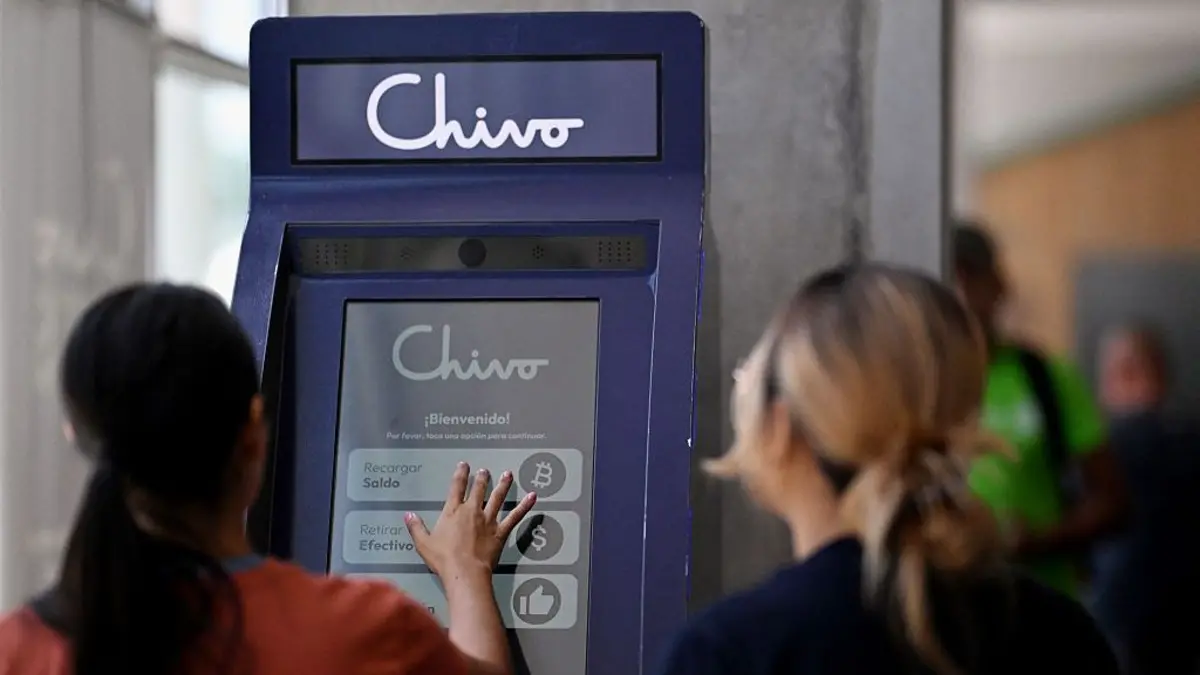
To launch it, the government created a US$150 million trust fund and gave each citizen a US$30 incentive to download the Chivo Wallet digital wallet on their cellphone.
It also allocated another US$50 million for the installation of ATMs and other logistics.
Nine months later, one of the first surveys on the new policy showed how little faith Salvadorans already had in it at that time.
Of those surveyed about it by the University Institute of Public Opinion (Iudop) of the José Simeón Cañas Central American University (UCA), 71% stated that it was not “benefiting them at all in the household economy.”
This added to what had been observed by the National Bureau of Economic Research, a private, non-profit US organization, which in its April 2022 report noted that most users who downloaded Chivo Wallet did not use it again once the “bonus” offered by the government had been spent.
Meanwhile, Bukele kept buying the cryptocurrency with public funds, despite warnings from experts about the high risk to which the nation’s resources were exposed due to the price instability of a digital asset that lost more than 60% of its value in 2022.
“Sometimes I do it even when I’m in the bathroom,” the president wrote in response on the network then called Twitter.
Pressing ahead with his plan, in January 2023 the Assembly approved the unprecedented and controversial Digital Assets Issuance Law, with the aim of attracting foreign capital.
In its attempt to convince major investors to believe in its project to “bitcoinize” El Salvador and to dare to make high-risk loans to it, the government explained on Twitter that the new law paved the way for the “volcano bonds” that —it said— it would soon begin to issue.
It was, perhaps, the most ambitious step of the project: it involved indebting the country in bitcoin; that is, issuing a bond on the international market, as any state that needs financing does, although in this case backed by the cryptocurrency.
Half of the money from the bond would be used to buy more bitcoin and the other half to finance the start of construction of a city called Bitcoin City at the foot of the Conchagua volcano.
To round out the strategy, this sort of futuristic metropolis would use geothermal energy generated by the volcano, which in turn would feed the powerful computer networks used to create (or mine) new bitcoin.
“The plan is simple: while the world falls into tyranny, we will create a refuge for freedom,” Bukele said, a narrative that coincides with that of the crypto-evangelists.
They have particularly deep roots in the United States, where the cryptocurrency market has taken on an ideological component driven by radical Republicans and anarcho-capitalists who present bitcoin as a tool to reduce the power of central banks and state intervention, with the promise that anyone can get rich if its price reaches stratospheric levels.
Be that as it may, how much of that catalog of promises that was supposed to accompany the “bitcoinization” of El Salvador has materialized?
Low adoption
“If one looks at the reasons Bukele offered for the adoption of bitcoin, there is no doubt that the project failed,” economist Carlos Acevedo, a former president of the Central Reserve Bank of El Salvador, tells BBC Mundo.
“It is very clear that the government’s aim was for everyone to be using bitcoin by now. The approval of the law, the setting up of the trust fund, the whole ecosystem was designed for that, even though in previous surveys the population expressed a high level of distrust about the experiment,” he explains.
“And in that sense, indeed, it has not worked,” he continued.
As early as 2022, when enthusiasm for the initiative was at its peak, a CID-Gallup survey found that only a fifth of businesses accepted bitcoin and that just 5% of tax payments were made in crypto.
Two years later, in 2024, BBC Mundo was able to verify on the ground that use of the cryptocurrency was anecdotal, concentrated mostly in the area dubbed Bitcoin Beach, around El Zonte beach.
“Bitcoin has not had the adoption we expected,” Bukele himself confessed to Time magazine during an interview published in August of that year.
A survey published in January 2025 by Iudop completed the picture: 91.8% of Salvadorans said they had not used the crypto asset the previous year; and among them, 76.2% admitted they had never used it.
Although El Salvador made a significant leap in access to banking last year, according to the World Bank’s Global Findex 2025 survey, only four out of ten Salvadorans over the age of 15 have a bank account.
Remittances and bonds
“Bitcoinization” did not have much impact on remittances either.
According to the BCR’s most recent official statistics, the percentage sent through cryptocurrency wallets between January and April 2026 increased compared with the previous year —44.3% more, to a total of US$23.1 million— but it represented barely 0.7% of the total remittances sent, which amounted to US$3,286 million.
The vast majority of the money sent by the diaspora, which constitutes a financial lifeline for thousands of Salvadoran households, continues to arrive through traditional channels.
“The thing is that the proposal misdiagnosed the problem,” Frank Muci, a researcher at the School of Public Policy of the London School of Economics and Political Science (LSE), tells BBC Mundo.
“What makes remittances expensive (what gives them high fees) is partly that they originate in cash in the US and people also want to receive them in cash,” explains the expert, who has written extensively about the experience with bitcoin in El Salvador.
Muci describes the project as a “big nothing burger,” the English expression used to refer to something insignificant, with no relevant impact.
As for the role that bitcoin may have played, according to its defenders, in the arrival of visitors to the country, Muci believes it is not “macroeconomically significant.” “If you ask me what Bukele has done that is really changing the tourism landscape, it’s the security policy,” he points out.
With its “war on gangs,” Bukele’s government managed to drastically reduce the homicide rate, while turning El Salvador into one of the countries with the highest incarceration rate in the world.
The collapse in violence led to President Bukele being re-elected by an overwhelming majority in February 2024, winning around 90% of the vote.
Unlike the security policy, the bitcoin one is “a policy that generated hundreds of headlines, if not thousands, and that in essence did nothing,” Muci continues, “beyond generating spending for its implementation and scaring the markets, which for a time penalized El Salvador very heavily.”
“At least it should be pointed out that no money has been lost,” Acevedo stresses for his part, referring to the bitcoins acquired over these years. “Although the investment has not had the return the government expected, it is also not that far from what the market return would have been if it had been invested in something else.”
As of last Thursday, the country had accumulated 7,798.37 bitcoins (equivalent to US$636 million, a value that fluctuates), according to the National Bitcoin Office, which shows transactions in real time on its website.
What has not been issued to date are the “volcano bonds,” and there has been no progress on the construction of Bitcoin City either.
It is something that Samson Mow, CEO of the bitcoin infrastructure firm JAN3, who was the architect of the “volcano bonds,” regrets.
“The good thing is that they did keep the digital assets framework, and with that we created a regulated, thriving and robust industry that is growing very fast,” he tells BBC Mundo.
Although he acknowledges that he has not spoken with Bukele in a long time, he also thinks that the president “still believes in bitcoin.”
“But he needs to balance that faith with what is necessary to govern a country and with the pressure and conditions imposed by an institution like the International Monetary Fund (IMF) to release a lot of capital for El Salvador,” he stresses.
Pressure from the IMF
In a complicated economic context for the country, in December 2024 the Salvadoran government reached a US$1,400 million financing agreement with the institution, on the condition of “mitigating the risks of bitcoin.”
A month later, and without much announcement from the ruling party, the Legislative Assembly approved a reform to the Bitcoin Law.
With the amendment of six articles and the elimination of three from the pioneering legislation, the crypto asset ceased to be legal tender, its use was relegated to exchanges between citizens and private companies, and its acceptance went from being mandatory to voluntary.
And just in September, yet another step was taken toward dismantling the original plan to “bitcoinize” El Salvador.
As part of the third review of compliance with the conditions for the loan, which is scheduled in several installments, the government transferred “majority ownership and control” of the state wallet Chivo Wallet to a “private operator.”
“The only thing that was transferred was Chivo’s shares, something that was offered a year and a half ago, and not the strategic bitcoin reserve,” Bukele wrote as a clarification on X after several media outlets picked up the news.
It was not until last Thursday that it became known that it is Linguard Labs, although the percentage acquired and the amount of the transaction remain unknown. Meanwhile, the Salvadoran state will remain a shareholder and partner.
With this “public-private” partnership, the relaunch of the wallet is envisaged, with services that would include free remittances from the US for certain users, access to microloans, cash advances and payments with various digital assets.
Separately, in the report with which it authorized the new US$138 million disbursement for El Salvador, the IMF also referred to the bitcoins that the Executive continued to buy.
In fact, it continued those acquisitions even after the loan was signed, despite the fact that halting the investment was an explicit condition for it, as shown by the official site of The Bitcoin Office, which compiles data on the buying and selling of the cryptocurrency and its reserve.
In its statement, however, the IMF said that the latest bitcoins were acquired thanks to “private donations and has not involved the use of public resources” and that the Salvadoran government committed not to invest any more. “No additional accumulation of bitcoin is foreseen beyond the documented donations,” the IMF concluded.
But who is behind the donations? And how much do they amount to?
These are questions that add to the unknowns that have surrounded the project since the beginning. To this day, there is no clarity about where the funds come from or who exercises oversight over them.
BBC Mundo asked the Presidency about this, but has still not received a response. It also asked the IMF, but the institution replied that it had nothing more to add to the statement.
What remains of the experiment?
Despite acknowledging that the agreement with the IMF dismantled the most ambitious elements of the experiment, its defenders, as well as some critics, emphasize its symbolic impact.
“It was important for the narrative of hyperbitcoinization, the idea of a world in which bitcoin has replaced traditional money issued by states,” Muci, the LSE researcher, tells BBC Mundo.
Before 2021, the idea that a government could adopt bitcoin was purely hypothetical. And El Salvador, under Bukele, made it a reality, at least for a time, Mow stresses for his part.
“For bitcoin it was a validation of the concept, while El Salvador gained a global stage,” he adds.
Although he acknowledges that he expected other countries to quickly follow the example, from El Salvador’s experience he learned that it is “more difficult than it seems.”
“Even when you have a government with enormous amounts of power, in reality you cannot impose adoption,” he says about the lessons left by El Salvador’s example.
“There must be a combined approach, of government-driven initiatives that pave the way for markets to function freely and to remove the obstacles that prevent people from adopting this technology, and other initiatives more focused on education,” he argues.
“In any case, I don’t think bitcoin needs a decree forcing people to use it, because I am convinced that it is the best form of money humanity has known and that its adoption will happen naturally,” he concludes.
BBC: https://www.bbc.com/mundo/articles/c8ly0ewg93ddo
Qué pasó con el experimento de Bukele de convertir a El Salvador en el “país del bitcoin”
Por Leire Ventas
“En El Salvador estamos comenzando a diseñar un país para el futuro, con los ingredientes que nos definen y la sensibilidad para encontrar las mejores ideas de la historia y del mundo. Y creo que el bitcoin puede ser una de ellas”.
Con ese mensaje pregrabado se dirigió el presidente Nayib Bukele a la comunidad entusiasta de la criptomoneda reunida en la conferencia Bitcoin 2021 en Miami, Florida (Estados Unidos), en marzo de aquel año.
Acto seguido, anunció su intención de enviar a la Asamblea Legislativa un proyecto de ley que convertiría al país centroamericano en el primero del mundo en adoptar el bitcoin, haciendo al público estallar en aplausos ante la materialización de un ideal.
Cinco años después, el dólar vuelve a ser la única divisa de curso legal en El Salvador, la aceptación del bitcoin pasó a ser voluntaria y no existe —como se prometió— ninguna ciudad futurista impulsada por la energía geotérmica de un volcán en la que se minaría la criptomoneda.
¿Qué queda entonces hoy del “país del bitcoin”, como el propio Bukele lo bautizó? ¿Qué se ha cumplido de todo lo que se anunció? Y, ¿quién se ha beneficiado?
De lo prometido…
La cruzada para “bitcoinizar” El Salvador arrancó en junio de 2021, con la aprobación en la Asamblea Legislativa —controlada por el partido del presidente, Nueva Ideas— de la ley que volvió el criptoactivo de curso legal junto al dólar, la moneda oficial de El Salvador desde hace dos décadas.
La promesa era clara: su implementación traería “prosperidad, libertad económica e inclusión financiera”.
Se dijo que abarataría las remesas, ese dinero que envía la diáspora y que representa casi una cuarta parte del Producto Interior Bruto (PIB) —en 2025 ascendió al 26,3%, según datos del Banco Central de Reserva—, ayudaría a incorporarse al sistema a aquella parte de la población con empleo informal y sin cuenta bancaria, y atraería inversión extranjera.
Para su puesta en marcha, el gobierno creó un fideicomiso de US$150 millones y entregó un incentivo de US$30 a cada ciudadano para que descargara la billetera digital Chivo Wallet en su celular.
También destinó otros US$50 millones para la instalación de cajeros y demás logística.
Nueve meses después, una de las primeras encuestas sobre la nueva política mostraba la poca fe que le tenían ya por aquel entonces los salvadoreños.
El 71% de los consultados al respecto por el Instituto Universitario de Opinión Pública (Iudop) de la Universidad Centroamericana José Simeón Cañas (UCA) aseguró que no le estaba “beneficiando en nada en la economía familiar”.
Aquello se sumaba a lo observado por la Oficina Nacional de Investigación Económica, una organización estadounidense privada y sin ánimo de lucro, que en su informe de abril de 2022 recogió que la mayoría de los usuarios que descargaron la Chivo Wallet no volvieron a usarla una vez gastado el “bono” ofrecido por el gobierno.
Mientras, Bukele siguió comprando la criptomoneda con fondos públicos, a pesar de las advertencias de expertos sobre el alto riesgo al que quedaban expuestos los recursos de la nación por la inestabilidad del precio de un activo digital que perdió más del 60% de su valor en 2022.
“A veces lo hago incluso cuando estoy en el baño”, escribió el mandatario en respuesta en la red entonces llamada Twitter.
Avanzando con su plan, en enero de 2023 la Asamblea aprobó la inédita y controvertida Ley de Emisión de Activos Digitales, con el objetivo de atraer capital extranjero.
En su intento de convencer a los grandes inversores de que creyeran en su proyecto de “bitcoinizar” El Salvador y se atrevieran a hacerle préstamos de alto riesgo, el gobierno explicó en Twitter que la nueva ley allanaba el camino para los “bonos volcán” que —dijo— pronto empezaría a emitir.
Era, quizá, el paso más ambicioso del proyecto: implicaba endeudar al país en bitcoin; es decir, emitir un bono en el mercado internacional, como lo hace cualquier Estado que requiere financiarse, aunque en este caso respaldado en la criptomoneda.
La mitad del dinero del bono sería utilizada para comprar más bitcoin y la otra mitad para financiar el inicio de la construcción de una ciudad a los pies del volcán de Conchagua llamada Bitcoin City.
Para redondear la estrategia, esta suerte de urbe futurista utilizaría energía geotérmica generada por el volcán, que a su vez alimentaría las potentes redes de computadoras que se usan para crear (o minar) nuevos bitcoin.
“El plan es simple: mientras el mundo cae en la tiranía, crearemos un refugio para la libertad”, dijo Bukele, una narrativa que coincide con la de los criptoevangelistas.
Estos tienen especial arraigo en Estados Unidos, donde el mercado de las criptomonedas se ha dotado de un componente ideológico impulsado por republicanos radicales y anarcocapitalistas que presentan al bitcoin como una herramienta para reducir el poder de los bancos centrales y la intervención del Estado, bajo la promesa de que cualquiera puede enriquecerse si su cotización alcanza niveles estratosféricos.
Sea como fuere, ¿cuánto se ha materializado de ese catálogo de promesas que debía acompañar la “bitcoinización” de El Salvador?
Baja adopción
“Si se atiende a las razones que ofreció Bukele para la adopción del bitcoin, no hay duda de que el proyecto fracasó”, le dice el economista Carlos Acevedo, quien fuera presidente del Banco Central de Reserva de El Salvador, a BBC Mundo.
“Es muy claro que la pretensión del gobierno era que a estas alturas todo el mundo estuviera usando el bitcoin. La aprobación de la ley, la constitución del fideicomiso, todo el ecosistema estaba diseñado para eso, a pesar de que en encuestas previas la población manifestaba una alta desconfianza sobre el experimento”, explica.
“Y en ese sentido, efectivamente, no ha funcionado”, continuó.
Ya en 2022, cuando el entusiasmo por la iniciativa estaba en su punto máximo, una encuesta de CID-Gallup halló que solamente una quinta parte de las empresas aceptaba bitcoin y que tan solo el 5% de los pagos de impuestos se hacía en cripto.
Dos años después, en 2024, BBC Mundo pudo comprobar en terreno que el uso de la criptomoneda era anecdótico, concentrado mayormente en el área bautizada como Bitcoin Beach, en torno a la playa de El Zonte.
El “bitcoin no ha tenido la adopción que esperábamos”, le confesó el propio Bukele a la revista Time durante una entrevista publicada en agosto de aquel año.
Una encuesta publicada en enero de 2025 por el Iudop acabó de completar la radiografía: el 91,8% de los salvadoreños manifestó no haber utilizado el criptoactivo el año anterior; y entre ellos, un 76,2% admitió no haberlo usado nunca.
Aunque El Salvador dio el año pasado un importante salto en la bancarización, según la encuesta Global Findex 2025 del Banco Mundial, solo cuatro de cada diez salvadoreños mayores de 15 años tienen una cuenta bancaria.
Remesas y bonos
La “bitcoinización” tampoco tuvo mayor impacto en las remesas.
De acuerdo con las estadísticas oficiales más recientes del BCR, el porcentaje enviado mediante billeteras de criptomonedas entre enero y abril de 2026 aumentó con respecto al año anterior — 44,3% más, hasta un total de US$23,1 millones—, pero apenas representó el 0,7% del total de remesas enviadas, que ascendió a US$3.286 millones.
La gran mayoría del dinero que manda la diáspora y que constituye un salvavidas financiero para miles de hogares salvadoreños continúa llegando por los canales tradicionales.
“Lo que pasa es que la propuesta diagnosticó mal el problema”, le dice a BBC Mundo Frank Muci, investigador de la Escuela de Políticas Públicas de la London School of Economics and Political Science (LSE).
“Lo que hace que las remesas sean caras (que tengan comisiones altas) es en parte que se originan en efectivo en EE.UU. y se quieren recibir también en efectivo”, explica el experto, quien ha escrito ampliamente sobre la experiencia con el bitcoin en El Salvador.
Muci describe el proyecto como un “gran nothing burger”, el concepto inglés para referirse a algo insignificante, sin impacto relevante.
Sobre el rol que el bitcoin habría tenido, según sus defensores, en la llegada de visitantes al país, Muci cree que no es “macroeconómicamente significativo”. “Si tú me preguntas qué ha hecho Bukele que realmente esté cambiando el panorama turístico, es la política de seguridad”, señala.
Con su “guerra contra las pandillas”, el gobierno de Bukele logró reducir drásticamente el índice de homicidios, al tiempo que convirtió a El Salvador en uno de los países con la tasa de encarcelamiento más alta del mundo.
El desplome de la violencia llevó a que en febrero de 2024 el presidente Bukele fuera reelegido por una mayoría aplastante, obteniendo alrededor del 90% de los votos.
A diferencia de la de seguridad, la del bitcoin es “una política que generó cientos de titulares, si no miles, y que en el fondo no hizo nada”, prosigue Muci, “más allá de generar un gasto para su implementación y asustar a los mercados, que durante un tiempo penalizaron muy fuertemente a El Salvador”.
“Por lo menos hay que remarcar que no se ha perdido dinero”, subraya por su parte Acevedo, refiriéndose a los bitcoins adquiridos en estos años. “Si bien la inversión no ha tenido la rentabilidad que el gobierno esperaba, tampoco está tan alejada de lo que habría sido la rentabilidad del mercado si se hubiera invertido en otra cosa”.
Hasta pasado jueves, el país acumulaba 7.798,37 bitcoins (equivalente a US$636 millones, un valor que fluctúa), según la Oficina Nacional de Bitcoin, que muestra en su página web las transacciones a tiempo real.
Lo que no se ha emitido hasta la fecha son los “bonos volcán”, y tampoco se ha avanzado en la construcción de la Bitcoin City.
Es algo que Samson Mow, director ejecutivo de la firma de infraestructura bitcoin JAN3 y quien fuera el arquitecto de los “bonos volcán”, lamenta.
“Lo bueno es que sí conservaron el marco de activos digitales y con eso creamos una industria regulada, próspera y robusta que está creciendo muy rápido”, le dice a BBC Mundo.
Aunque reconoce que hace mucho no habla con Bukele, también opina que el presidente “todavía cree en el bitcoin”.
“Pero necesita equilibrar esa fe con lo necesario para gobernar un país y con la presión y las condiciones impuestas por una entidad como el Fondo Monetario Internacional (FMI) para liberar mucho capital para El Salvador”, subraya.
La presión del FMI
En un contexto económico complicado para el país, en diciembre de 2024 el gobierno salvadoreño alcanzó con la entidad un acuerdo de financiamiento de US$1.400 millones, con la condición de “mitigar los riesgos del bitcoin”.
Al mes, y sin mucho anuncio desde el oficialismo, la Asamblea Legislativa aprobó una reforma a la Ley Bitcoin.
Con la modificación de seis artículos y la eliminación de tres de la pionera legislación, el criptoactivo dejó de ser moneda de curso legal, su uso quedó relegado a intercambios entre ciudadanos y empresas privadas, y su aceptación pasó de ser obligatoria a voluntaria.
Y recién en septiembre se dio otro paso más hacia el desmantelamiento del plan original para “bitcoinizar” El Salvador.
En el marco de la tercera revisión del cumplimiento de las condiciones para el préstamo, programado en varias entregas, el gobierno transfirió “la propiedad mayoritaria y el control” de la billetera estatal Chivo Wallet a un “operador privado”.
“Lo único que se transfirió fueron las acciones de Chivo, algo que se ofreció hace año y medio, y no la reserva estratégica de bitcoin”, escribió Bukele como aclaración en X después de que varios medios se hicieran eco de la noticia.
No sería hasta el pasado jueves cuando se supo que se trata de Linguard Labs, aunque sigue sin conocerse el porcentaje adquirido y el monto de la operación. Mientras, el Estado salvadoreño permanecerá como accionista y socio.
Con esta alianza “público-privada” se contempla el relanzamiento de la billetera con servicios que incluirían remesas gratuitas desde EE.UU. para determinados usuarios, acceso a microcréditos, adelantos en efectivo y pagos con distintos activos digitales.
Por otra parte, en el informe con el que autorizaba el nuevo desembolso de US$138 millones para El Salvador, el FMI también hizo referencia a los bitcoins que el Ejecutivo siguió comprando.
De hecho, continuó con esas adquisiciones incluso tras la firma del préstamo, a pesar de que frenar la inversión era una condición explícita para ello, según mostró el sitio oficial de The Bitcoin Office, que recoge datos sobre la compraventa de la criptomoneda y su reserva.
En su comunicado, sin embargo, el FMI señaló que los últimos bitcoins fueron adquiridos gracias a “donaciones privadas y no ha implicado el uso de recursos públicos” y que el gobierno salvadoreño se comprometió a no invertir más. “No se prevé acumulación adicional de bitcoin más allá de las donaciones documentadas”, concluyó el FMI.
Pero ¿quién está detrás de las donaciones? ¿Y a cuánto asciende su monto?
Son preguntas que se suman a las interrogantes que rodean al proyecto desde el inicio. Hasta hoy no se tiene claridad de dónde salen los fondos ni quién lleva una contraloría sobre ellos.
BBC Mundo se lo preguntó a Presidencia, pero sigue sin recibir respuesta. También le consultó al FMI, pero la entidad contestó diciendo que no tenía nada más que añadir al comunicado.
¿Qué queda del experimento?
A pesar de reconocer que el acuerdo con el FMI desmanteló los elementos más ambiciosos del experimento, sus defensores, así como algunos críticos, subrayan su impacto simbólico.
“Fue importante para la narrativa de la hiperbitcoinización, la idea de un mundo en el que el bitcoin haya reemplazado al dinero tradicional emitido por los Estados”, le dice Muci, el investigador del LSE, a BBC Mundo.
Antes de 2021, la idea de que un gobierno pudiera adoptar el bitcoin era puramente hipotético. Y El Salvador, bajo Bukele, lo volvió realidad, al menos por un tiempo, subraya por su parte Mow.
“Para el bitcoin fue una validación del concepto, mientras que El Salvador consiguió un escenario global”, agrega.
Aunque reconoce que esperaba que otros países siguieran rápido el ejemplo, de la experiencia de El Salvador aprendió que es “más difícil de lo que parece”.
“Incluso cuando se tiene un gobierno con enormes cuotas de poder, en realidad no se puede imponer la adopción”, dice sobre las lecciones que deja el ejemplo de El Salvador.
“Debe haber un enfoque combinado, de iniciativas impulsadas desde el gobierno que allanen el camino para que los mercados funcionen libremente y para eliminar los obstáculos que impiden a la gente adoptar esta tecnología, y otras iniciativas más centradas en la educación”, opina.
“De todas maneras, no creo que el bitcoin necesite un decreto que obligue a la gente a usarlo, porque estoy convencido de que es la mejor forma de dinero que ha conocido la humanidad y de que su adopción se producirá de manera natural”, concluye.