
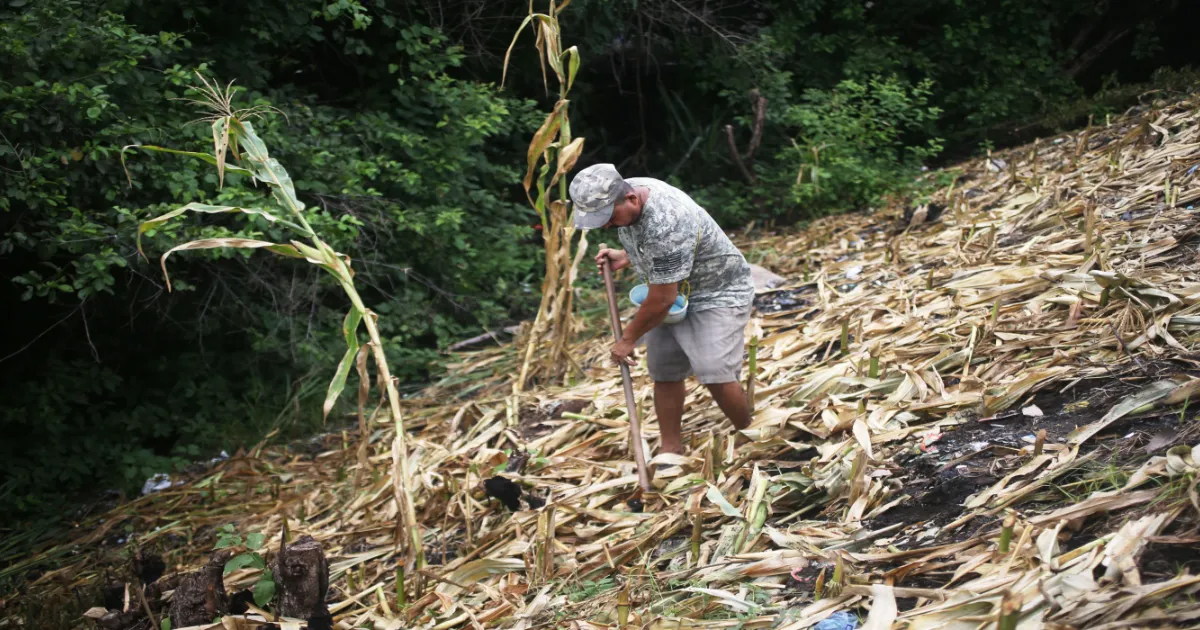
The Legislative Assembly declared a National State of Emergency this Wednesday due to the meteorological and agricultural drought throughout Salvadoran territory, related to the El Niño climate phenomenon. The decree was presented by the Nuevas Ideas caucus and approved on an expedited basis through the procedural waiver mechanism.
The declaration will remain in effect for six months and may be extended upon a request from the President of the Republic to the Legislative Assembly, according to the approved decree. The measure is based on Article 24 of the Civil Protection, Disaster Prevention and Mitigation Law.
The decree states that the meteorological and agricultural drought may pose a danger to people, their property, public services and ecosystems. Therefore, it calls for the adoption of exceptional measures to confront its effects, mitigate the damage and protect the population and its livelihoods.
Among the approved provisions, Government institutions are empowered to administer funds and carry out transfers of resources with the aim of preventing and mitigating the effects of the emergency, in accordance with the law.
The decree also establishes that the National Civil Police, the Armed Forces and the relief agencies must provide swift and timely assistance in the activities related to the emergency.
The initiative drew criticism from the opposition, which accused the Nuevas Ideas party of “abusing the procedural waiver mechanism” and pointed out that the proposal was not shared with the lawmakers prior to its reading. The decree was not published until it had already been approved.
In addition, the opposition stated that the ruling party responded to the emergency too late. Lawmaker Marcela Villatoro, of ARENA, recalled that the United States National Oceanic and Atmospheric Administration as well as the International Research Center on El Niño had been warning since last May that the warming of the Pacific would intensify, causing stronger and more prolonged droughts.
Meanwhile, her caucus colleague, lawmaker Francisco Lira, complained that the Nuevas Ideas, PDC and PCN parties had denied their votes to an initiative presented by his caucus on August 20, with the aim of having the Ministry of Agriculture explain the mechanism for responding to the agricultural and climate emergency.
“Here you make a big show of saying that you support agriculture, but when we have to come and approve initiatives that we have presented from this side of the chamber, you just say no and lower your heads,” he said.
“Let’s hope that this initiative that is going to be approved today does not end up allowing all public procurement regulations to be bypassed, as happened during the pandemic, when, as we already know, all of the CICIES complaints were shelved,” Lira added, referring to the investigations that the international commission conducted into the misuse of public resources during the covid-19 emergency.
Lawmaker Claudia Ortiz, for her part, pointed out that the Public Procurement Law permits exceptions to its own regulations when there is a declaration of emergency. The decree also allows the use of the Civil Protection, Disaster Prevention and Mitigation Fund (FOPROMID), whose use has been questioned in the past due to the lack of accountability and the opacity in public spending.
Ortiz recalled that, in the past, the Executive has been reluctant to make the use of the fund and emergency purchases transparent, citing the experience of the covid-19 pandemic, when the Executive blocked the work of the committee that was supposed to oversee the use of resources during that period.
The decree was approved with 59 votes from the legislative plenary and one vote against, from lawmaker Ortiz.
La Prensa Gráfica: https://www.laprensagrafica.com/elsalvador/asamblea-declara-estado-de-emergencia-a-nivel-nacional-por-fenomeno-el-nino-20261007-0030.html
Declaran estado de emergencia en El Salvador por fenómeno de El Niño
Por Claudia Palacios
La Asamblea Legislativa declaró este miércoles Estado de Emergencia Nacional por la sequía meteorológica y agrícola en todo el territorio salvadoreño relacionada con el fenómeno climático de El Niño. El decreto fue presentado por la bancada de Nuevas Ideas y aprobado de forma exprés por el mecanismo de dispensa de trámite.
La declaratoria tendrá una vigencia de seis meses y podrá ser prorrogada previa solicitud del presidente de la República a la Asamblea Legislativa, de acuerdo con el decreto aprobado. La medida se ampara en el artículo 24 de la Ley de Protección Civil, Prevención y Mitigación de Desastres.
El decreto señala que la sequía meteorológica y agrícola puede representar un peligro para las personas, sus bienes, los servicios públicos y los ecosistemas. Por ello, plantea la adopción de medidas excepcionales para enfrentar sus efectos, mitigar los daños y proteger a la población y sus medios de vida.
Entre las disposiciones aprobadas se faculta a las instituciones del Gobierno a administrar fondos y realizar traslados de recursos con el objetivo de prevenir y mitigar los efectos de la emergencia, de conformidad con la ley.
El decreto también establece que la Policía Nacional Civil, la Fuerza Armada y los cuerpos de socorro deberán prestar auxilio ágil y oportuno en las actividades relacionadas con la emergencia.
La iniciativa provocó críticas de la oposición, que acusó al partido Nuevas Ideas de “abusar del mecanismo de dispensa de trámite” y señaló que la propuesta no fue con los diputados previamente a su lectura. El decreto fue publicado hasta que ya había sido aprobado.
Asimismo, la oposición afirmó que el oficialismo respondió a la emergencia demasiado tarde. La diputada Marcela Villatoro, de ARENA, recordó que la Oficina Nacional de Administración Oceánica y Atmosférica de Estados Unidos así como el Centro Internacional para la Investigación del Fenómeno El Niño advirtieron, desde mayo pasado, que el calentamiento del Pacífico se intensificaría provocando sequías más fuertes y prolongadas.
En tanto, su compañero de bancada, el diputado Francisco Lira, reclamó que los partidos Nuevas Ideas, PDC y PCN hayan negado sus votos a una iniciativa presentada por su bancada el 20 de agosto, con el objetivo de que el Ministerio de Agricultura explicara el mecanismo de atención de la emergencia agrícola y climática.
“Aquí se llenan la boca diciendo que apoyan el agro, pero cuando tenemos que venir a aprobar iniciativas que hemos presentado de este lado del hemiciclo, ustedes solo dicen que no y bajan la cabeza”, dijo.
“Esperemos que esta iniciativa que se va a aprobar este día no vaya a permitir saltarse todas las normativas de compras públicas, como pasó en la pandemia, que ya sabemos que todas las denuncias de la CICIES fueron engavetadas”, agregó Lira haciendo referencia a las investigaciones que realizó la comisión internacional sobre el mal uso de recursos públicos durante la emergencia de covid-19.
La diputada Claudia Ortiz por su parte, señaló que la Ley Compras Públicas habilita excepciones a sus propias regulaciones cuando existe una declaratoria de emergencia. El decreto además permite el uso del Fondo de Protección Civil, Prevención y Mitigación de Desastres (FOPROMID), cuyo uso ha sido cuestionado en el pasado debido a la falta de rendición de cuentas y la opacidad en el gasto público.
Ortiz recordó que, en el pasado, el Ejecutivo ha sido reacio a transparentar el uso del fondo y las compras de emergencia, citando la experiencia de la pandemia por covid-19, cuando el Ejecutivo bloqueó el trabajo del comité que debía fiscalizar el uso de recursos durante ese periodo.
El decreto se aprobó con 59 votos del pleno legislativo y uno en contra de la diputada Ortiz.
La Prensa Gráfica: https://www.laprensagrafica.com/elsalvador/asamblea-declara-estado-de-emergencia-a-nivel-nacional-por-fenomeno-el-nino-20261007-0030.html