
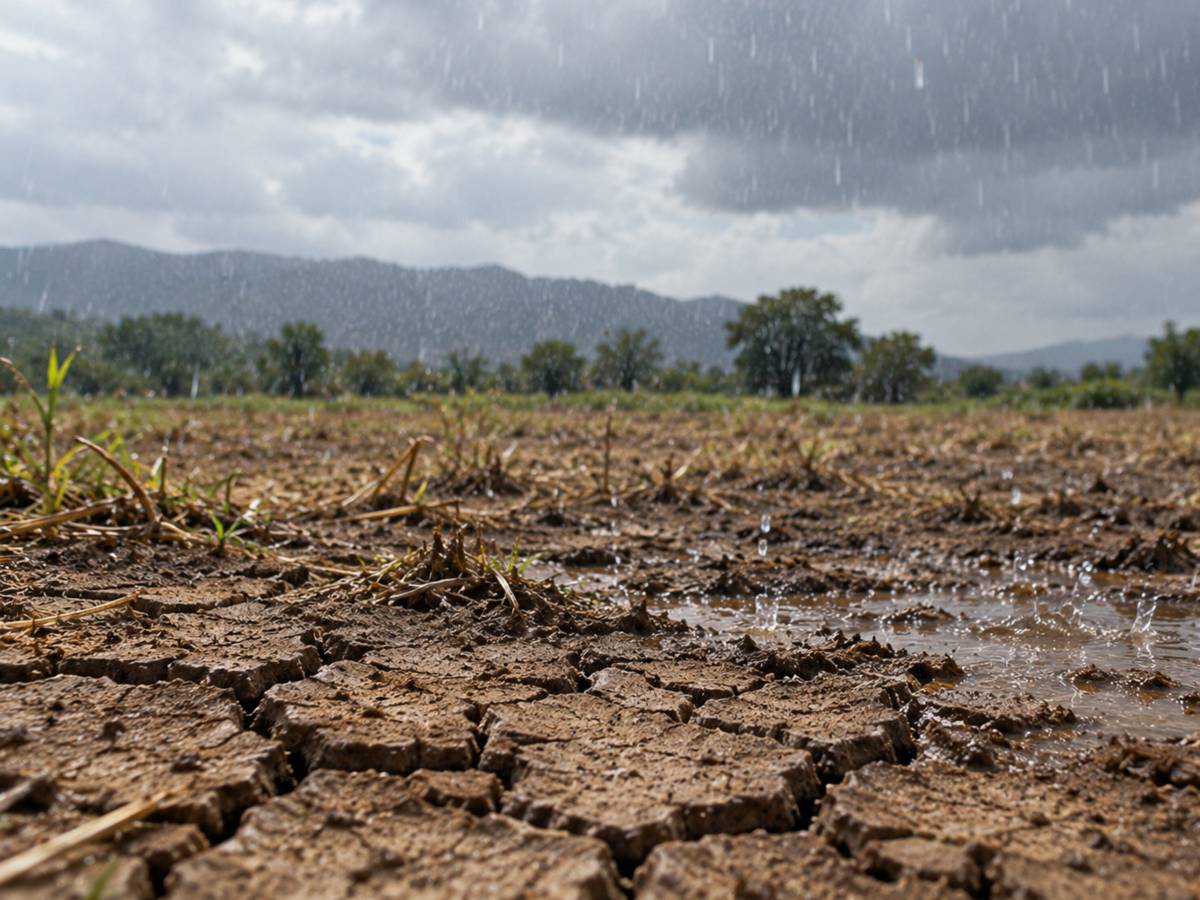
The Legislative Assembly approved a state of national emergency over the meteorological and agricultural drought throughout El Salvador, a measure that enables mechanisms to distribute aid to the affected population, mobilize public resources and coordinate the response of various State institutions.
The decree, titled “State of national emergency due to the meteorological and agricultural drought throughout the national territory,” empowers government institutions to administer funds and carry out budget transfers intended to address the consequences of the emergency.
The declaration also establishes as immediate actions the protection of the population’s food and nutritional security, as well as measures aimed at preventing impacts on national production, especially in agriculture, agro-industry and livestock farming.
In addition, it orders the activation of “all the commissions” of the National Civil Protection System and the national, departmental and municipal coordination mechanisms related to addressing the drought.
Civil Protection, Agriculture and Defense will take on specific tasks
The emergency decree over the drought in El Salvador distributes responsibilities among different institutions of the Executive.
The director of Civil Protection must report to the president of the Republic on the actions carried out during the emergency and the procedures used to distribute the aid.
The Ministry of Foreign Affairs will be in charge of channeling international cooperation, while the Ministry of Agriculture will be responsible for food storage.
The administration of humanitarian assistance will fall to the Ministry of Defense.
The regulation also provides that “all the heads of the portfolios that make up the Executive Branch, their officials and employees” will take part in actions related to the “distribution of aid.”
The National Civil Police, the Armed Forces and the relief corps must provide support in the activities linked to addressing the emergency.
The request to declare the national emergency was submitted by lawmakers from Nuevas Ideas at the request of President Nayib Bukele, “on the basis of the evidence and weighing of the risk warned of, due to the consequences arising from the meteorological and agricultural drought throughout the national territory in the respective report of the General Directorate of Civil Protection.”
Lira questions the timing of the emergency’s approval
During the legislative debate, lawmaker Francisco Lira, of Arena, recalled that on August 20, 2026, he had submitted a piece of correspondence in which he requested a mitigation plan for the prolonged drought.
“It costs nothing to do the work that the Salvadoran people ask of us,” he said.
Lira questioned the fact that his proposal did not move forward at that time. “And they said no. They remain silent,” he said.
The legislator maintained that “many of the inputs” included in his initiative appear in the decree approved by the Assembly.
“What does it cost? We could have summoned the minister, the institutions, to learn about this mitigation plan, but once again they abuse the tool of the procedural waiver; what is the fear of debating?” he asked.
Lira also criticized the conduct of the legislative majority and referred to the situation of agricultural producers.
“You continue to turn your backs on farmers; let us hope that this initiative, this emergency, will not allow all public procurement regulations to be bypassed, as we were able to have it during the pandemic,” he told them.
“Let us be mature and approve it, regardless of whether we are the ones proposing it. How many farmers had a hard time this month? And you continue betting on a policy of imports and not of strengthening national agriculture,” the Arena lawmaker said.
Nuevas Ideas defends the emergency declaration
The deputy head of the Nuevas Ideas caucus, Caleb Navarro, asserted that the declaration is based on a risk assessment and on the progressive impacts attributed to the drought.
According to Navarro, the decree “is not born of speculation.”
During his remarks, the legislator reviewed the immediate measures contemplated in the regulation and responded to the criticisms raised during the session.
“If there is some female lawmaker who preceded me who always wants to raise objections to the matter and find the hair in the soup so as not to vote, well, to each their own; here we are free to vote. But let’s not go around saying things that the decree does not say,” he said.
The head of the Nuevas Ideas caucus, Christian Guevara, maintained that the measure seeks to act before greater consequences occur.
“Governing also means anticipating; we are not going to wait for harvests to be lost, for food to run short, for a family to be in trouble before we start to act. We are not approving a piece of paper; rather, we are activating a national response structure,” he maintained.
Guevara also indicated that the State must function according to the emergency and not according to bureaucracy.
The declaration is grounded in Article 24 of the Civil Protection Law, which allows a national emergency to be established in part or all of the territory when the danger caused by a disaster to people, their property, public services or ecosystems “warrant it.”
The same provision states that, in order to adopt the measure, the evidence of risk and the weighing carried out by the director of Civil Protection must be taken as the basis.
El Salvador.com: https://www.elsalvador.com/noticias/nacional/emergencia-sequia-el-salvador/1297431/2026/
El Salvador entra en emergencia nacional por sequía agrícola, ¿qué medidas se activan?
Por Karla Rodas
La Asamblea Legislativa aprobó un estado de emergencia nacional por la sequía meteorológica y agrícola en todo El Salvador, una medida que habilita mecanismos para distribuir ayuda a la población afectada, movilizar recursos públicos y coordinar la respuesta de distintas instituciones del Estado.
El decreto denominado “Estado de emergencia nacional por la sequía meteorológica y agrícola en todo el territorio nacional” faculta a las instituciones de Gobierno para administrar fondos y efectuar traslados presupuestarios destinados a atender las consecuencias de la emergencia.
La declaratoria también establece como acciones inmediatas la protección de la seguridad alimentaria y nutricional de la población, así como medidas dirigidas a prevenir impactos en la producción nacional, especialmente en la agricultura, agroindustria y ganadería.
Además, ordena activar “todas las comisiones” del Sistema Nacional de Protección Civil y los mecanismos de coordinación nacional, departamental y municipal relacionados con la atención de la sequía.
Protección Civil, Agricultura y Defensa asumirán tareas específicas
El decreto de emergencia por la sequía en El Salvador distribuye responsabilidades entre diferentes instituciones del Ejecutivo.
El director de Protección Civil deberá informar al presidente de la República sobre las acciones ejecutadas durante la emergencia y los procedimientos utilizados para distribuir la ayuda.
El Ministerio de Relaciones Exteriores tendrá a su cargo la canalización de la cooperación internacional, mientras que el Ministerio de Agricultura será responsable del almacenamiento de alimentos.
La administración de la asistencia humanitaria corresponderá al Ministerio de la Defensa.
La normativa también dispone que “todos los titulares de las carteras que componen el Órgano Ejecutivo, a sus funcionarios y empleados” participarán en acciones relacionadas con la “distribución de ayuda”.
La Policía Nacional Civil, la Fuerza Armada y los cuerpos de socorro deberán prestar apoyo en las actividades vinculadas con la atención de la emergencia.
La solicitud para declarar la emergencia nacional fue presentada por diputados de Nuevas Ideas a petición del presidente Nayib Bukele, “sobre la base de la evidencia y ponderación de riesgo advertido, por las consecuencias derivadas de la sequía meteorológica y agrícola en todo el territorio nacional en el respectivo informe de la Dirección General de Protección Civil”.
Lira cuestiona el momento en que se aprobó la emergencia
Durante la discusión legislativa, el diputado Francisco Lira, de Arena, recordó que había presentado el 20 de agosto de 2026 una pieza de correspondencia en la que solicitaba un plan de mitigación frente a la sequía prolongada.
“Nada cuesta hacer la tarea que nos pide el pueblo salvadoreño”, expresó.
Lira cuestionó que su propuesta no avanzara en ese momento. “Y dijeron que no. Guardan silencio”, señaló.
El legislador sostuvo que “muchos de los insumos” incluidos en su iniciativa aparecen en el decreto aprobado por la Asamblea.
“¿Qué cuesta? Pudimos haber convocado al ministro, a las instituciones, para conocer este plan de mitigación, pero vuelven a abusar de la herramienta de la dispensa de trámite, ¿cuál es el miedo de debatir?”, cuestionó.
Lira también criticó la actuación de la mayoría legislativa y se refirió a la situación de los productores agrícolas.
“Ustedes les siguen dando la espalda a los agricultores, esperemos que esta iniciativa, esta emergencia, no vaya a permitir saltarse todas las normativas de compras públicas como pudimos tenerlo en pandemia”, les dijo.
«Seamos maduros y aprobemos, independientemente que lo propongamos nosotros. ¿Cuántos agricultores la pasaron mal este mes? Y ustedes siguen apostando a una política de importación y no de fortalecimiento al agro nacional», señaló el diputado de Arena.
Nuevas Ideas defiende la declaratoria de emergencia
El subjefe de fracción de Nuevas Ideas, Caleb Navarro, afirmó que la declaratoria se sustenta en una evaluación del riesgo y en las afectaciones progresivas atribuidas a la sequía.
De acuerdo con Navarro, el decreto “no nace de una especulación”.
El legislador repasó durante su intervención las medidas inmediatas contempladas en la normativa y respondió a los cuestionamientos realizados durante la sesión.
«Si hay alguna diputada que me antecedió que siempre quiere ponerle peros al asunto y encontrarle el pelo en la sopa para no votar, pues, cada quien, aquí somos libres de votar. Pero no estemos diciendo cosas que el decreto no dice», indicó.
El jefe de fracción de Nuevas Ideas, Christian Guevara, sostuvo que la medida busca actuar antes de que se produzcan mayores consecuencias.
«Gobernar también significa anticiparse, no vamos a esperar que se pierdan cosechas, que falten alimentos, que una familia esté en problemas para empezar a actuar, no estamos aprobando un papel sino estamos activando una estructura nacional de respuesta», sostuvo.
Guevara indicó además que el Estado debe funcionar en función de la emergencia y no de la burocracia.
La declaratoria se ampara en el artículo 24 de la Ley de Protección Civil, que permite establecer una emergencia nacional en una parte o en todo el territorio cuando el peligro ocasionado por un desastre para las personas, sus bienes, los servicios públicos o los ecosistemas “lo ameriten”.
La misma disposición señala que para adoptar la medida debe tomarse como base la evidencia de riesgo y la ponderación realizada por el director de Protección Civil.
El Salvador.com: https://www.elsalvador.com/noticias/nacional/emergencia-sequia-el-salvador/1297431/2026/