
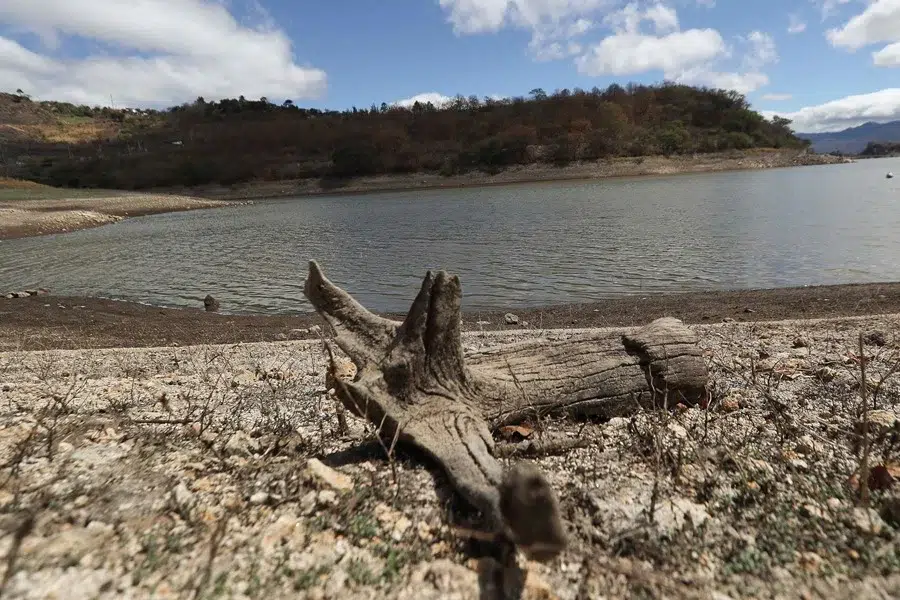
San Salvador (EFE) — El Salvador’s General Directorate of Civil Protection declared a red alert on Tuesday to take the necessary measures and thus face the effects of the El Niño phenomenon, which is forecast to be severe toward late 2026 and early 2027.
“It is the duty of the State to safeguard the life, integrity, well-being, livelihoods, and food security of the population through the timely adoption of prevention, preparedness, and disaster risk reduction measures in the face of hydrometeorological and climate-related threat scenarios,” Civil Protection said.
The agency noted that “during August and part of September 2026, the recurrence of dry periods associated with El Niño and the extension of the midsummer dry spell is expected, with a 20 to 40 percent probability of at least one meteorological drought event occurring nationwide.”
Civil Protection also warned that “the combination of rainfall deficit, recurrence of dry periods, above-normal temperatures, and the transition toward the dry season increases the population’s vulnerability levels, affecting water availability, agricultural and livestock production, livelihoods, and food security.”
The effects of the drought
In addition, the agency called for “implementing and strengthening early, preventive, and mitigation measures aimed at anticipating, reducing, and managing the potential impacts of the water deficit on the population’s health, water availability and quality, production systems, and food security, prioritizing the territories, sectors, and population groups with the highest levels of exposure and vulnerability.”
Environment Minister Fernando López confirmed on August 20 that El Salvador’s eastern and coastal regions are facing their third drought in recent months due to the influence of the El Niño phenomenon, and that “some type of prolonged rainfall event” is expected for September.
The World Meteorological Organization (WMO) recently confirmed that El Niño will evolve rapidly in the coming months into a strong episode, which will increase the likelihood of extreme weather events and natural disasters.
According to the data, the warming of the central and eastern equatorial Pacific waters will accelerate between July and September, giving rise to a strong El Niño episode with sea surface temperature anomalies exceeding 2 degrees.
EFE: https://efe.com/medio-ambiente/alerta-roja-salvador-fenomeno-el-nino-sequia/
Emiten la alerta roja en El Salvador para enfrentar la sequía provocada por el fenómeno de El Niño
Por Silvia Contreras
San Salvador (EFE).- La Dirección General de Protección Civil de El Salvador declaró este martes alerta roja para tomar las medidas necesarias y enfrentar así los efectos del fenómeno de El Niño, que tiene un pronóstico grave hacia finales de 2026 e inicios de 2027.
«Es deber del Estado salvaguardar la vida, integridad, bienestar, medios de subsistencia y seguridad alimentaria de la población, mediante la adopción oportuna de medidas de prevención, preparación y reducción del riesgo de desastres ante escenarios de amenaza de origen hidrometeorológico y climático», apuntó Protección Civil.
La entidad señaló que «durante agosto y parte de septiembre de 2026 se prevé la recurrencia de períodos secos asociados a El Niño y a la extensión de la canícula, con probabilidad de entre 20-40 % de ocurrencia de al menos un evento de sequía meteorológica a escala nacional».
Protección Civil advirtió también que «la combinación de déficit de precipitación, recurrencia de períodos secos, temperaturas superiores a lo normal y la transición hacia la época seca, incrementa los niveles de vulnerabilidad de la población, afectando disponibilidad de agua, producción agropecuaria, medios de vida y seguridad alimentaria«.
Las afectaciones de la sequía
Adicional a esto, la entidad llamó a «implementar y fortalecer medidas tempranas, preventivas y de mitigación orientadas a anticipar, reducir y gestionar los impactos potenciales del déficit hídrico sobre la salud de la población, la disponibilidad y calidad del agua, los sistemas productivos y la seguridad alimentaria, priorizando los territorios, sectores y grupos de población con mayores niveles de exposición y vulnerabilidad».
El ministro de Medio Ambiente, Fernando López, confirmó el pasado 20 de agosto que la zona oriental y costera de El Salvador enfrentan su tercera sequía en los últimos meses por la influencia del fenómeno El Niño y que para septiembre se espera «tener algún evento de lluvias de tipo temporal».
La Organización Meteorológica Mundial (OMM) confirmó recientemente que El Niño evolucionará rápidamente en los próximos meses hasta convertirse en un episodio fuerte, lo que acentuará la probabilidad de fenómenos extremos y desastres naturales.
Según los datos, el calentamiento de las aguas del Pacífico ecuatorial central y oriental se acelerará entre julio y septiembre y dará lugar a un episodio fuerte de El Niño, con anomalías de la temperatura superficial del mar superiores a los 2 grados.
EFE: https://efe.com/medio-ambiente/alerta-roja-salvador-fenomeno-el-nino-sequia/