
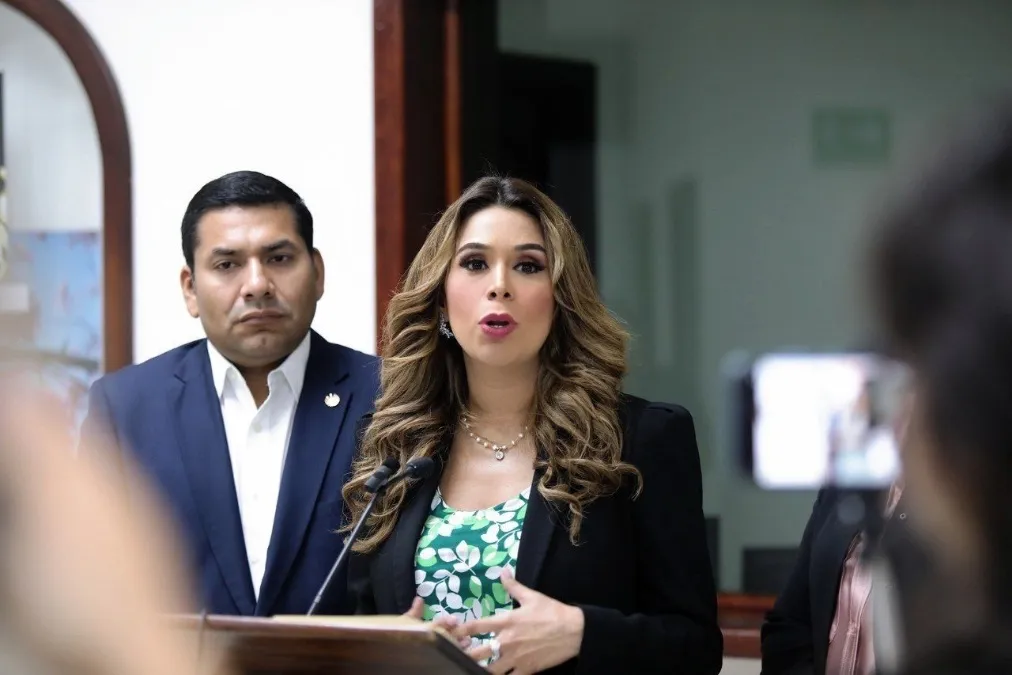
Lawmaker Marcela Villatoro, of Arena, questioned the president of the Court of Accounts of the Republic (CCR), Walter Sosa Funes, about why the institution stopped publishing its audit reports in 2024, despite being required to do so under Article 46 of the Court of Accounts Law.
“I’d like to know why the public doesn’t know about this, because, being the ones who oversee how public funds are managed, well, you need to start by setting an example, too,” the lawmaker said at Monday’s committee meeting, when they interviewed the first five candidates for the CCR from a list of 18.
Sosa Funes acknowledged that Article 46 of the Court of Accounts Law establishes that “reports are public.” “That is indeed the case, but let’s remember that we have the Personal Data Protection Law, we have the Access to Public Information Law, and the Court of Accounts Law. When we harmonize these laws with the reports, it prevents us from publishing sensitive information,” he said.
“We can’t put confidential information in the reports,” the Court of Accounts president replied, adding that they must harmonize audit reports with those regulations.
The Court of Accounts has not published audit reports since 2024.
Lawmaker Villatoro also questioned why most of the department heads at the Court of Accounts belong to the Salvadoran Association of Judicial Employee Lawyers (Asajelp), an association created in 2017 by lawyer Luis Enrique López Jerez.
“I’d like to know why there’s such a good relationship with members of that association to give them the department head positions,” she asked.
“This shows us that we live in a country with freedoms, a country with the freedom to assemble, to associate. I believe that all of us here, and the Salvadoran people watching us, we already live in a country of freedom, where we can associate freely, where we can’t be judged because I belong to an association or a political party. And I thank God because I know we’re not going to go backward on that,” he said.
“I don’t know, lawmaker—is it a crime to associate?” the CCR president asked.
The lawmaker also questioned why government vehicles had not been audited since 2021, something reported to the committee by the head of the CCR.
“The Court of Accounts was run by the current presiding magistrate of the Supreme Electoral Tribunal. He practically told me she did a poor job during her time. It’s sad to know that someone who didn’t do her job well at the CCR, well, was rewarded by this Legislative Assembly with the presidency of the TSE,” Villatoro said. The official did not respond.
The Court of Accounts is currently led by Walter Sosa Funes, who succeeded Roxana Soriano in the position. Soriano is now president of the Supreme Electoral Tribunal and was previously a Nuevas Ideas candidate for lawmaker.
Marcela Villatoro cuestiona vínculos de jefaturas de la CCR con asociación y por qué CCR no publica informes de auditoría
Por Yolanda Magaña
La diputada Marcela Villatoro, de Arena, cuestionó al presidente de la Corte de Cuentas de la República, Walter Sosa Funes, por qué la institución dejó de publicar desde el año 2024 los informes de auditorías realizados por la institución en cumplimiento pese a que se lo obliga el artículo 46 de la Ley de la Corte de Cuentas de la República.
“Quisiera saber por qué no conoce la población porque, siendo los que ven cómo se manejan los fondos públicos, pues, hay que comenzar dando el ejemplo, también”, dijo la legisladora, en la reunión de Comisión el lunes, cuando entrevistaron a los primeros cinco candidatos a la CCR, de un listado de 18.
Sosa Funes reconoció que el artículo 46 de la ley de la Corte de Cuentas establece que los “informes son públicos”. “Efectivamente así es, pero recordémonos que tenemos la Ley de protección de datos personales, tenemos la Ley de acceso a la información pública y la Ley de la Corte de Cuentas. Al armonizar estas leyes con los informes, lo que nos impide es no publicar información sensible”, dijo.
“No podemos poner información confidencial en los informes”, respondió el presidente de la Corte de Cuentas, y que deben armonizar los informes de auditorías con esas normativas.
La Corte de Cuentas no publica informes de auditorías desde el año 2024.
La diputada Villatoro también cuestionó que mayoría de jefaturas de la Corte de Cuentas forma parte de la asociación de la Asociación Salvadoreña de Abogados Empleados Judiciales (Asajelp), una asociación creada en 2017 por el abogado Luis Enrique López Jerez.
“Quisiera saber por qué esa buena relación con miembros de esa asociación para darles las jefaturas”, cuestionó.
“Esto nos refleja que vivimos en un país con libertades, un país con libertades de reunirnos, de asociarnos, yo creo que todos los que estamos acá y el pueblo salvadoreño, que nos mira, ya vivimos en un país de libertad, en el que nos podemos asociar libremente, en el que no nos pueden juzgar porque yo pertenezco a una asociación o a un partido político. Y doy gracias a dios que sé que a eso no vamos a retroceder nosotros”, afirmó.
“¿No sé, diputada, si es delito asociarse?, cuestionó el presidente de la CCR.
La legisladora también cuestionó también por qué desde 2021 no se fiscalizaba los vehículos nacionales, algo que fue informado en la Comisión por el titular de la CCR.
“La Corte de Cuentas estaba a cargo de la actual magistrada presidenta del Tribunal Supremo Electoral. Prácticamente me dijo que hizo una mala gestión en su tiempo. Es triste saber que alguien que no hizo su bien trabajo dentro de la CCR pues se le haya premiado por esta Asamblea Legislativa para darle la presidencia del TSE”, señaló Villatoro. El funcionario no respondió.
La Corte de Cuentas es dirigida actualmente por Walter Sosa Funes, quien sucedió en el cargo a Roxana Soriano, ahora presidenta del Tribunal Supremo Electoral y quien en el pasado fue excandidata a diputada por Nuevas Ideas.