
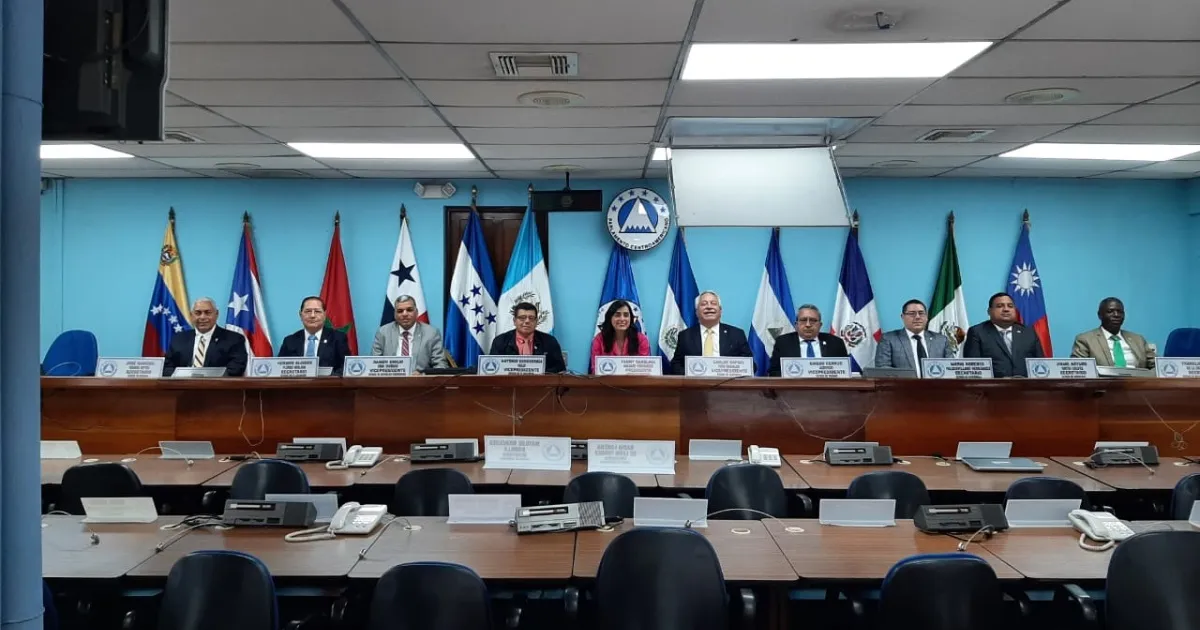
The proposed reform to the Tegucigalpa Protocol, put forward by the Vice Presidency of El Salvador, envisions a transformation of the nature and structure of the Central American Integration System (SICA), including the creation of two new regional bodies to replace the Central American Parliament (PARLACEN) and the Central American Court of Justice, institutions from which El Salvador withdrew in the past year.
The document, which has already been presented to the other member states of SICA, proposes moving from a “Central American system” to a “Central American Union” model, similar to the European Union. Along those lines, it calls for the creation of a legislative body and a judicial body: The Parliament of the Central American Union and the Union’s Court of Justice.
These bodies would take on functions similar to those of the current regional institutions, but with greater powers and new oversight mechanisms.
Unlike PARLACEN, whose role has been primarily deliberative and consultative, the Union Parliament would be a permanent body of political representation with legislative, budgetary, and oversight powers within the structure of the Central American Union.
Distribution of lawmakers
The proposal establishes that seats would be distributed proportionally based on the population of each member state, with one lawmaker for every 500,000 inhabitants. The parliamentarians would be elected by direct, secret, and democratic vote for a four-year term, with the possibility of reelection, and upon taking office they would acquire the status of international civil servants.
Its permanent seat would be in Guatemala City, although it could hold sessions in any of the member states. The plenary would hold ordinary sessions every month, while working committees would meet weekly, either in person or virtually.
Among its main powers would be participating in the creation, interpretation, reform, and repeal of community regulations; approving the Union’s General Budget and its amendments; and taking part in the election of justices of the Union’s Court of Justice, the comptroller, and the authorities of the Union Commission (the governing body).
It could also create special committees to investigate matters of regional interest, review reports from the Union’s other institutions, and participate in the negotiation and signing of international treaties entered into by the bloc.
The proposal also incorporates a citizen participation mechanism that does not exist under the current framework. The Parliament would be required to receive and process popular legislative initiatives when they are backed by at least 1% of the national citizens of the member states. If the body refused to consider them, the proponents could appeal to the Union’s Court of Justice to claim their right.
On July 31, the Salvadoran Legislative Assembly, dominated by the ruling Nuevas Ideas party, approved a constitutional reform that eliminated recognition of PARLACEN lawmakers, as a way of abandoning the body.
At the time, it was argued that PARLACEN lacks real impact and that its operation represents “inefficient spending.”
A new regional court
The reform also proposes replacing the Central American Court of Justice with the Union’s Court of Justice, conceived as a permanent body with exclusive jurisdiction to interpret and ensure compliance with community law.
The Court would be composed of one sitting justice and one alternate for each member state. National judicial bodies would propose shortlists of three candidates to the Union Council, which would make the selection by simple majority, after a hearing before the Union Parliament.
The justices would serve five-year terms and could be reelected for one additional term. To be eligible for the position, they would need to meet the same requirements demanded in their respective countries to serve on the highest judicial body.
Among its powers would be to resolve disputes between member states, hear cases between natural or legal persons and the governments or bodies of the Union, rule on actions for noncompliance with community regulations, annulment claims against decisions of regional institutions, preliminary rulings requested by national judges, and conflicts of jurisdiction between the Union’s bodies.
The proposal establishes that its rulings would have the authority of res judicata and would be binding on states, regional institutions, and private parties. In addition, the Court could order enforcement measures when a ruling is not complied with.
Under SICA’s current system, jurisdictional functions fall to the Central American Court of Justice, whose mission is to guarantee respect for and interpretation of community law.
The Court is not currently operating. According to a statement published by the Honduran foreign ministry, the closure of the regional court was the result of the denunciation of the CCJ Statute Convention by all member states: Nicaragua on March 18, 2025; Honduras on April 29, 2026; and El Salvador on May 20, 2026. Of the remaining Central American states, Costa Rica and Honduras never ratified the convention for different reasons, while Guatemala never appointed delegates.
The Salvadoran proposal maintains that objective but strengthens the new court’s powers by equipping it with more direct enforcement mechanisms and an administrative oversight regime for its justices.
La Prensa Gráfica: https://www.laprensagrafica.com/elsalvador/gobierno-de-el-salvador-propone-nuevo-parlamento-centroamericano-20260730-0075.html
Gobierno de El Salvador propone nuevo parlamento centroamericano
Por Claudia Palacios
La propuesta de reforma al Protocolo de Tegucigalpa, impulsada por la Vicepresidencia de El Salvador, plantea una transformación de la naturaleza y estructura del Sistema de la Integración Centroamericana (SICA), que incluye la creación de dos nuevos órganos regionales para sustituir al Parlamento Centroamericano (PARLACEN) y a la Corte Centroamericana de Justicia, instituciones de las que El Salvador se retiró en el último año.
El documento, que ya fue presentado a los demás Estados que integran el SICA, propone pasar de un “sistema centroamericano” a un modelo de “Unión Centroamericana”, parecido a la Unión Europea. En esa línea, plantea la creación de un órgano legislativo y otro de justicia: El Parlamento de la Unión Centroamericana y el Tribunal de Justicia de la Unión.
Estos organismos asumirían funciones similares a las de las actuales instituciones regionales, pero con mayores facultades y nuevos mecanismos de control.
A diferencia del PARLACEN, cuyo papel ha sido principalmente deliberativo y consultivo, el Parlamento de la Unión sería un órgano de representación política permanente con atribuciones legislativas, presupuestarias y de fiscalización dentro de la estructura de la Unión Centroamericana.
Distribución de diputados
La propuesta establece que los escaños se distribuirán de forma proporcional a la población de cada Estado miembro, con un diputado por cada 500,000 habitantes. Los parlamentarios serían elegidos mediante voto directo, secreto y democrático por un período de cuatro años, con posibilidad de reelección, y al asumir el cargo adquirirían la condición de funcionarios internacionales.
Su sede permanente estaría en Ciudad de Guatemala, aunque podría celebrar sesiones en cualquiera de los Estados miembros. El pleno sesionaría ordinariamente cada mes, mientras que las comisiones de trabajo lo harían semanalmente, de forma presencial o virtual.
Entre sus principales atribuciones figura participar en la formación, interpretación, reforma y derogación de las normas comunitarias; aprobar el Presupuesto General de la Unión y sus modificaciones; intervenir en la elección de los magistrados del Tribunal de Justicia de la Unión, del contralor y de las autoridades de la Comisión de la Unión (órgano director).
También podría crear comisiones especiales para investigar asuntos de interés regional, conocer los informes de las demás instituciones de la Unión y participar en la negociación y firma de tratados internacionales celebrados por el bloque.
La propuesta, además, incorpora un mecanismo de participación ciudadana que no existe en el esquema actual. El Parlamento estaría obligado a recibir y tramitar iniciativas legislativas populares cuando estén respaldadas por al menos el 1% de los ciudadanos nacionales de los Estados miembros. Si el órgano se negara a conocerlas, los promoventes podrían acudir al Tribunal de Justicia de la Unión para reclamar su derecho.
El 31 de julio pasado, la Asamblea Legislativa salvadoreña, dominada por el partido oficialista Nuevas Ideas, aprobó una reforma a la Constitución de la República que eliminó el reconocimiento de los diputados del PARLACEN, como una forma de abandonar este organismo.
En esa ocasión se argumentó que el PARLACEN carece de impacto real y que su operación representa un “gasto ineficiente”.
Un nuevo tribunal regional
La reforma también plantea sustituir la Corte Centroamericana de Justicia por el Tribunal de Justicia de la Unión, concebido como un órgano permanente con jurisdicción exclusiva para interpretar y garantizar el cumplimiento del derecho comunitario.
El Tribunal estaría integrado por un magistrado propietario y un suplente por cada Estado miembro. Los órganos judiciales nacionales propondrían ternas al Consejo de la Unión, que realizaría la elección por mayoría simple, previa audiencia del Parlamento de la Unión.
Los magistrados ejercerían el cargo durante cinco años y podrían ser reelectos por un período adicional. Para optar al cargo, deberán cumplir los mismos requisitos exigidos en sus respectivos países para integrar la máxima instancia judicial.
Entre sus competencias figura r esolver controversias entre Estados miembros, conocer litigios entre personas naturales o jurídicas y los gobiernos u organismos de la Unión, resolver acciones por incumplimiento de la normativa comunitaria, demandas de nulidad contra decisiones de las instituciones regionales, consultas prejudiciales formuladas por jueces nacionales y conflictos de competencia entre los órganos de la Unión.
La propuesta establece que sus sentencias tendrán autoridad de cosa juzgada y serán de cumplimiento obligatorio para los Estados, las instituciones regionales y los particulares. Además, el Tribunal podrá ordenar medidas ejecutorias cuando una resolución no sea acatada.
En el sistema vigente del SICA, las funciones jurisdiccionales corresponden a la Corte Centroamericana de Justicia, cuya misión es garantizar el respeto e interpretación del derecho comunitario.
Actualmente la Corte no se encuentra operando. De acuerdo con un comunicado publicado por la cancillería hondureña, el cierre del tribunal regional fue el resultado de la denuncia del Convenio del Estatuto de la CCJ por parte de todos los Estados miembros: Nicaragua, el 18 de marzo de 2025; Honduras el 29 de abril de 2026, y El Salvador, el 20 de mayo de 2026. Del resto de Estados centroamericanos, Costa Rica y Honduras nunca ratificaron el convenio por distintos motivos, mientras que Guatemala nunca nombró delegados.
La propuesta salvadoreña mantiene ese objetivo, pero fortalece las facultades del nuevo tribunal al dotarlo de mecanismos de ejecución más directos y de un régimen de control administrativo sobre sus magistrados.
La Prensa Gráfica: https://www.laprensagrafica.com/elsalvador/gobierno-de-el-salvador-propone-nuevo-parlamento-centroamericano-20260730-0075.html