
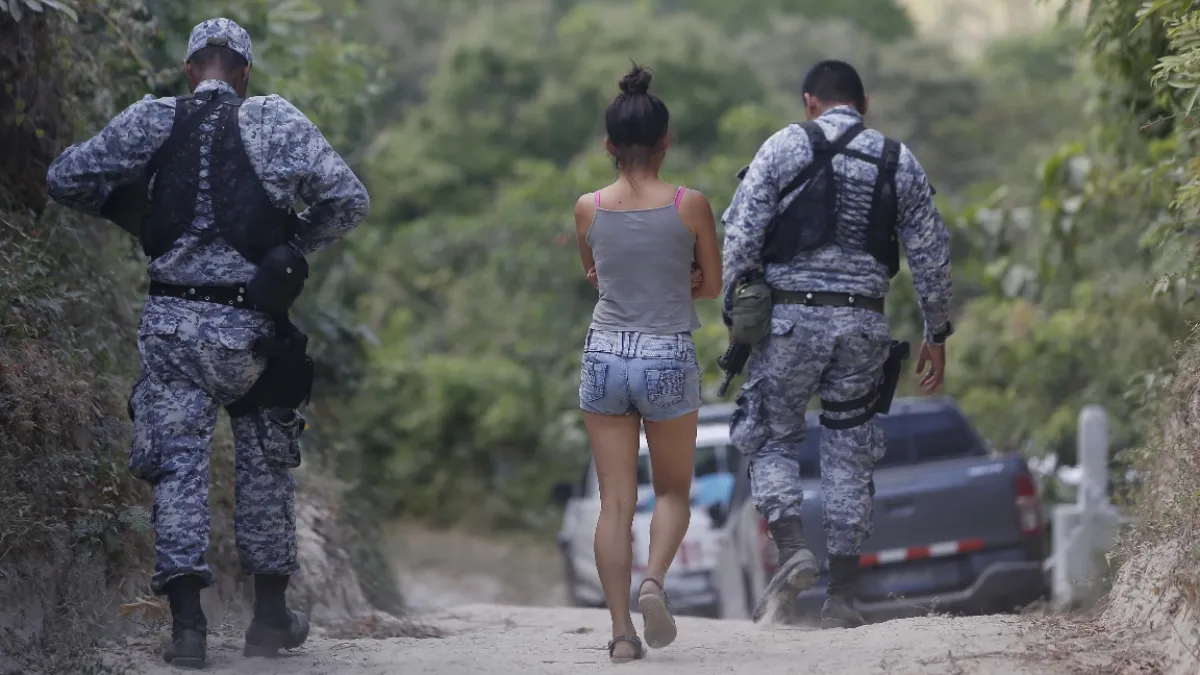
Police officers interviewed by the organization Amnesty International said that in March 2022 they received orders to use a registry called the “profiling database,” which contained data on people classified as “gang members” dating back to 2000, but which by the time of the first arrests under the state of exception was already outdated — leading them to arrest people who were not on the original list but lived in the same area.
The police testimony gathered by Amnesty confirms what LA PRENSA GRÁFICA had previously reported, when organizations such as Human Rights Watch and the Police Workers’ Movement (MTP) accused police officers of carrying out arbitrary arrests under the state of exception to meet a “quota” demanded by their superiors.
The officers said that during the first phase of the state of exception, which began on March 27, 2022, they received verbal instructions (through phone calls or messaging groups) to detain “all persons previously registered as gang members in their database.”
“They were instructed that every person included on those lists was to be arrested immediately on the charge of unlawful association, and that all constitutional guarantees were suspended,” Amnesty reports.
One of the police officers interviewed maintained that “here no one checks whether the arrests are legal or not. We just bring people in, the Attorney General’s Office gets the package, and that’s it. No judge looks at anything at that point. By the time they’re taken to the courts, the fifteen days have already passed, and the judges just read the list and confirm everything. No one asks whether there were beatings or whether there was an arrest warrant.”
The officers also explained that the aforementioned “profiling database” was generated from internal intelligence reports and anonymous tips, without periodic purging, which meant that in 2022, when the state of exception began, much of the data it contained was “obsolete,” since many of the people had died, migrated, or were considered “rehabilitated.” They add that because of this they were ordered to arrest “people from the family circle of those who were on the list” or even residents of the same area, which was considered “dominated by gangs.”
Amnesty believes that as a result “the registry ceased to be an intelligence tool and became a mechanism of indiscriminate detention, used to justify the arrest of thousands of people under the state of exception.”
This news outlet sought comment from the police through an email sent to its communications unit, but received no response by press time.
Previous complaints
On June 27, 2025, the international organization Human Rights Watch (HRW) published a report in which it also interviewed 11 police officers, who stated that many of the arrests they made during the first months of the state of exception resulted from “pressure to meet daily arrest quotas and were based on uncorroborated or fabricated evidence.”
In 2023, when the state of exception marked its first year, the Police Workers’ Movement (MTP) also reported that officers were threatened with sanctions or the loss of days off if they did not follow orders to carry out arrests.
Asked again about the matter, MTP spokesperson Marvin Reyes said on July 22, 2026 that the “profiling database” was indeed what was used at the start of the measure.
“Before the state of exception was implemented, there was already a fairly robust database containing details of the cliques and programs of the two main gangs, MS-13 and Barrio 18, and that was the one provided to the officers,” he said.
But he also said that the registry “was exhausted” and that after that “many officers lost their way” and arrested “people who had nothing to do with it.”
La Prensa Gráfica: https://www.laprensagrafica.com/elsalvador/pnc-utilizo-base-desactualizada-para-capturas-en-regimen-de-excepcion-de-el-salvador-segun-agentes-20260722-0051.html
PNC utilizó base desactualizada para capturas en régimen de excepción de El Salvador, según agentes
Por David Bernal
Agentes de la Policía Nacional Civil (PNC) entrevistados por la organización Amnistía Internacional afirmaron que en marzo de 2022 recibieron órdenes de utilizar un registro llamado “base de datos de perfilamiento” que contenía datos de personas calificadas como “pandilleros” desde el año 2000, pero que al momento de las primeras capturas del régimen de excepción ya estaba desactualizada, lo que generó que capturaran a personas que no estaban en el listado original pero que eran residentes de la misma área.
Los testimonios policiales recopilados por Amnistía confirman lo que previamente había publicado LA PRENSA GRÁFICA, cuando organizaciones como Human Rigths Watch y el Movimiento de Trabajadores de la Policía (MTP) denunciaron que agentes de la PNC habían realizado detenciones arbitrarias en el marco del régimen de excepción para cumplir con una “cuota” exigida por sus superiores.
Los agentes dijeron que durante la primera fase del régimen, que inició el 27 de marzo de 2022, recibieron instrucciones verbales (a través de llamadas telefónicas o grupos de mensajería electrónica) sobre detener a “todas las personas previamente registradas previamente como miembros de pandillas en su base de datos”.
Se les indicó que toda persona incluida en esos listados debía ser arrestada de inmediato bajo el delito de agrupaciones ilícitas, y que todas las garantías constitucionales estaban suspendidas”, recopila Amnistía.
Uno de los agentes policiales entrevistados sostuvo que “aquí nadie revisa si las capturas son legales o no. Nosotros solo llevamos a la gente, la Fiscalía recibe el paquete y ya. No hay juez que vea nada en ese momento. Cuando los llevan a los juzgados, ya pasaron los quince días, y los jueces solo leen la lista y confirman todo. Nadie pregunta si hubo golpes o si había orden de captura”.
Los agentes también explicaron que la citada “base de datos de perfilamiento” era generada a partir de reportes de inteligencia interna y denuncias anónimas, sin depuración periódica, lo cual generó que en el año 2022, cuando inició el régimen, muchos de los datos ahí citados eran “obsoletos”, pues muchas de las personas habían fallecido, migrado o eran consideradas “rehabilitadas”. Y añaden que debido a ello se les ordenó capturar a “personas del círculo familiar de quienes se encontraban en dicho listado” o incluso de habitantes de la misma zona que era considerada “dominada por pandillas”.
Amnistía considera que debido a ello “el registro dejó de ser una herramienta de inteligencia para transformarse en un mecanismo de detención indiscriminada, utilizado para justificar la captura de miles de personas en el marco del régimen de excepción”.
Este medio buscó una versión de la PNC al respecto, a través de un correo enviado a su unidad de comunicaciones, pero no hubo respuesta al cierre de esta nota.
Denuncias previas
El 27 de junio de 2025, la organización internacional Human Rights Watch (HRW) publicó un informe en el que también entrevistó a 11 agentes policiales, quienes externaron que muchas de las detenciones que realizaron durante los primeros meses del régimen fueron resultado de “una presión para cumplir con cuotas diarias de arrestos y se basaron en pruebas no corroboradas o fabricadas”.
En 2023, cuando se cumplió el primer año del régimen de excepción, el Movimiento de Trabajadores de la Policía (MTP) también denunció que agentes eran amenazados con sanciones o con el retiro de días de descanso si no seguían las órdenes de realizar capturas.
Consultado nuevamente por el tema, el vocero del MTP, Marvin Reyes, dijo el 22 de julio de 2026 que, en efecto, la “base de datos de perfilamiento” fue la que se utilizó al inicio de la medida.
Antes de implementarse el régimen ya se tenía una base bastante robusta que contenía el detalle de las clicas y programas de las dos principales pandillas, MS-13 y Barrios 18, y fue la que se proporcionó a los agentes”, indicó.
Pero también dijo que dicho registro “se agotó” y que después de eso “muchos agentes perdieron el rumbo” y capturaron a “personas que no tenían nada que ver”.
La Prensa Gráfica: https://www.laprensagrafica.com/elsalvador/pnc-utilizo-base-desactualizada-para-capturas-en-regimen-de-excepcion-de-el-salvador-segun-agentes-20260722-0051.html