
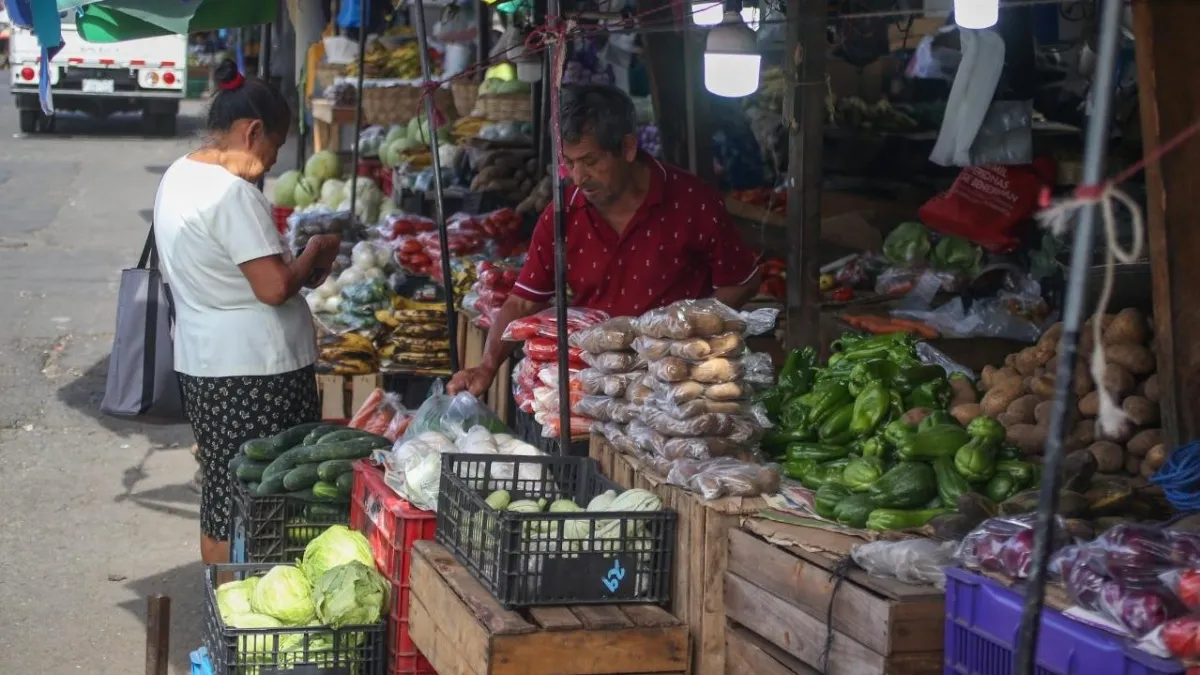
Urban basic food staples rose again in June, reaching $259.95, their highest price since August 2024, when they stood at $259.97, according to data from the National Office of Statistics and Censuses (ONEC).
Urban basic food staples have now risen for six consecutive months. Since January, when they cost $250.82, they have gone up $9.12. Compared to June 2025, the increase was $6.89.
The trend also reached rural basic food staples. In June, they hit $189.56 after rising $4.05 from May. Since January, they have accumulated an increase of $6.29, reaching their highest price since October 2025.
For Adalberto Blanco, a member of the Food Sovereignty Roundtable, the trend could continue over the coming months.
“Urban basic food staples have been going up since the start of the year, and we keep breaking price records,” he said.
Blanco attributed that pressure to factors such as the conflict in the Middle East, which is keeping international fuel prices high, and the dry spell, which is already beginning to affect some crops. “Basic food staples will probably keep rising in July and August; we’re possibly going to have the most expensive basic food staples in history,” he warned.
What went up and what went down?
The rise in urban basic food staples was driven mainly by tortillas. Rice, eggs, fluid milk, sugar, and vegetables — which include products like potatoes, onions, green peppers, tomatoes, chayote, and cabbage — also went up.
By contrast, French bread, meats, fats, fruits, and beans ended June with lower prices than the previous month.
A similar trend played out in rural areas. Tortillas, rice, eggs, fluid milk, and sugar saw increases, while meats showed no change and fats, fruits, and beans declined.
Miguela Isidro, a resident of Nahuizalco, said prices “haven’t gone down — if anything, some things keep creeping up. Especially with this lack of rain.” She added that tomatoes and potatoes are two of the few products that have dropped slightly in price.
The government’s bet
Facing the rising cost of food, the government is maintaining its network of agromarkets and its program to boost production as part of its strategy to contain prices.
Deputy Agriculture and Livestock Minister Óscar Domínguez maintains that increased production has expanded supply and prevented a scenario similar to the one recorded between 2023 and 2024.
In July 2024, the cost of urban basic food staples reached $264.91, the highest figure in more than two decades in El Salvador. “With this program, we increase our production and keep prices from reaching exorbitant levels like back in 2023-2024, when a hundredweight of beans was going for $150; now, at its most expensive, it reaches about $60,” he said in a television interview in early July.
However, the official acknowledged that prices are not static and that, as in any market, there can be fluctuations.
La Prensa Gráfica: https://www.laprensagrafica.com/economia/la-canasta-basica-urbana-en-el-salvador-se-acerca-a-los-260-tras-seis-meses-de-alzas-20260723-0039.html
La canasta básica en El Salvador suma seis alzas consecutivas
Karla Alfaro
La canasta básica alimentaria (CBA) urbana volvió a subir en junio y alcanzó $259.95, su precio más alto desde agosto de 2024, cuando se ubicó en $259.97, según datos de la Oficina Nacional de Estadísticas y Censos (Onec).
La CBA urbana acumuló seis meses consecutivos al alza. Desde enero, cuando costaba $250.82, subió $9.12. En comparación con junio de 2025, el incremento fue de $6.89.
La tendencia también alcanzó a la canasta básica rural. En junio llegó a $189.56, tras subir $4.05 respecto a mayo. Desde enero acumula un incremento de $6.29 y alcanzó su mayor precio desde octubre de 2025.
Para Adalberto Blanco, integrante de la Mesa por la Soberanía Alimentaria, la tendencia podría mantenerse durante los próximos meses.
“La canasta básica urbana ha tenido incrementos desde el inicio del año y seguimos rompiendo récord en precios”, afirmó.
Blanco atribuyó esa presión a factores como el conflicto en Medio Oriente, que mantiene elevada la cotización internacional de los combustibles, y a la canícula, que ya comienza a afectar algunos cultivos. “Probablemente en julio y agosto siga subiendo la canasta básica; vamos a tener posiblemente la canasta más cara de la historia”, advirtió.
¿Qué subió y qué bajó?
El alza de la canasta básica urbana estuvo impulsada principalmente por las tortillas. También aumentaron el arroz, los huevos, la leche fluida, el azúcar y las verduras, que incluyen productos como papa, cebolla, chile verde, tomate, güisquil y repollo.
Por el contrario, el pan francés, las carnes, las grasas, las frutas y los frijoles cerraron junio con precios más bajos que el mes anterior.
En la zona rural se repitió una tendencia similar. Las tortillas, el arroz, los huevos, la leche fluida y el azúcar registraron incrementos, mientras que las carnes no mostraron variación y las grasas, las frutas y los frijoles disminuyeron.
Miguela Isidro, residente de Nahuizalco, aseguró que los precios “no han bajado, sino que como que algunas cosas van trepando. Más con esto de que no llueve”. Agregó que el tomate y la papa son dos de los pocos productos que han reducido ligeramente su precio.
La apuesta gubernamental
Frente al aumento en el costo de los alimentos, el gobierno mantiene la red de agromercados y el programa de aumento a la producción como parte de su estrategia para contener los precios.
El viceministro de Agricultura y Ganadería, Óscar Domínguez, sostiene que el incremento de la producción ha permitido ampliar la oferta y evitar un escenario similar al registrado entre 2023 y 2024.
En julio de 2024, el costo de la CBA urbana alcanzó los $264.91, la cifra más alta en más de dos décadas en El Salvador. “Con esto (programa), aumentamos nuestra producción y no se permite llegar a precios exorbitantes como allá en el 2023-2024, que teníamos un quintal de frijol que valía los $150; ahora, cuando ya está caro, te llega a unos $60”, señaló a inicios de julio, en una entrevista televisiva.
Sin embargo, el funcionario reconoció que los precios no son estáticos y que, como en cualquier mercado, pueden haber fluctuaciones.
La Prensa Gráfica: https://www.laprensagrafica.com/economia/la-canasta-basica-urbana-en-el-salvador-se-acerca-a-los-260-tras-seis-meses-de-alzas-20260723-0039.html