
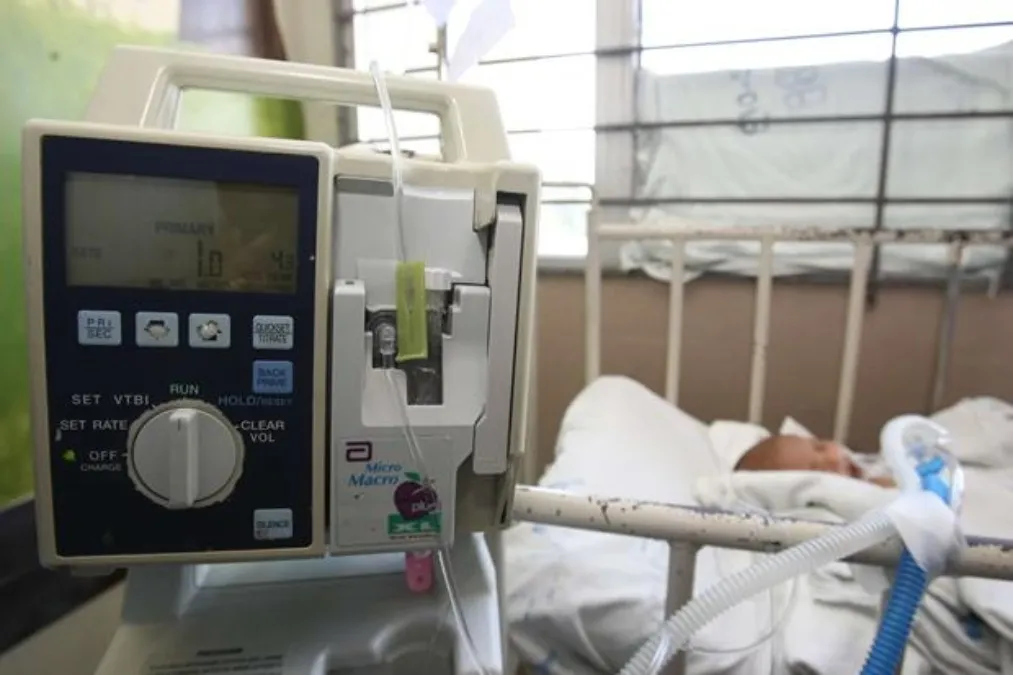
The “Dr. Salvador Allende” Health Movement (ALAMES El Salvador) said that the medication shortage persists in the public health system, a situation that has affected patients at the Benjamín Bloom National Children’s Hospital (HNNBB).
The organization, which brings together health workers — including doctors — explained that the lack of medications and supplies, as well as of reagents for performing tests, is being reported throughout the National Integrated Health System, which includes the Ministry of Health (MINSAL), the Salvadoran Social Security Institute (ISSS), and the Solidarity Health Fund (FOSALUD), among other institutions.
“We reiterate our warning about the shortage of medications and supplies, which includes a lack of reagents for certain tests throughout the National Integrated Health System. Scarcity has reached levels never before seen in the history of El Salvador, an aspect that is part of the crisis in the public health sector,” the organization said, adding that the current government’s intention is to privatize health care.
Regarding Bloom Hospital, ALAMES noted that the lack of medications and reagents for performing tests “puts the lives of children and adolescents at risk, a situation that health workers and mothers are denouncing.”
Clara (a fictitious name) has a three-year-old son diagnosed with salt-wasting congenital adrenal hyperplasia, a disease in which the patient has problems with sodium because the adrenal glands produce too little aldosterone, and without this hormone the body cannot retain sodium, which causes excessive loss through the urine, low sodium levels in the blood, and high potassium levels. The boy is under medical monitoring at Bloom Hospital.
To control this disease, Clara’s son takes fludrocortisone, but at his last appointment at the hospital, the medical staff informed her that there was none.
“At the hospital they’ve told us that if my son runs out of that medication, he’ll die. They haven’t given it to me since March,” Clara said through tears.
Faced with this situation, since March, relatives of Clara’s who live abroad have helped her buy the medication which, although it is not the exact same one the boy takes, has helped him, his mother said.
According to ALAMES’s estimates, the shortage of medicines and medical supplies in the health system ranges between 40 and 60 percent.
Clara said that several mothers and fathers are in the same situation as she is due to the lack of the medication, which can only be obtained with a doctor’s prescription.
“I went to Bloom a few days ago and the doctor didn’t give me any hope. She told me that what they’re saying at Bloom is that there is none (fludrocortisone), that they don’t know when this medication will arrive. So the doctor told me, ‘You have to get moving and figure out how to get it,'” Clara said.
LA PRENSA GRÁFICA sent an email this Wednesday, July 22, to Health Minister Francisco Alabi, asking him what is causing the medication shortage in the health system; he was also presented with the situation of Clara and her son. A response is still pending.
“We urgently call on the relatives of patients admitted to Benjamín Bloom National Hospital to speak out on social media about the chronic medication shortage; only viral messages on social media can break the mirage constructed with a multimillion-dollar propaganda campaign at the national and international level,” ALAMES concluded.
When this outlet spoke with Clara today, the boy was in crisis, with a fever and general malaise. “Right now my boy has a really high fever; I’m going to take him to the pediatrician because I don’t know what’s wrong with him.”
Desabastecimiento de medicamentos afecta al Hospital Bloom
Por Graciela Aguilar
El Movimiento por Saluda “Dr. Salvador Allende” ALAMES El Salvador dijo que el desabastecimiento de medicamentos persiste en el sistema público de salud, situación que ha afectado a pacientes del Hospital Nacional de Niños Benjamín Bloom (HNNBB).
La organización, que agrupa a personal de salud –incluidos médicos-, explicó que la falta de medicamentos e insumos, así como de reactivos para realizar exámenes, se registra en todo el Sistema Nacional Integrado de Salud, donde se incluye el Ministerio de Salud (MINSAL), el Instituto Salvadoreño del Seguro Social (ISSS), el Fondo Solidario para la Salud (FOSALUD) entre otras instituciones.
“Reiteramos el señalamiento del desabastecimiento de medicamentos e insumos, donde se incluye falta de reactivos para algunos exámenes en todo el Sistema Nacional Integrado de Salud. Los niveles de escasez llegan a niveles nunca vistos en la historia de El Salvador, aspecto que se enmarca en la crisis del sector salud pública”, señaló la organización que agregó que la intención del actual Gobierno es privatizar la salud.
Del Hospital Bloom, ALAMES señaló que la falta de medicamentos y de reactivos para realizar exámenes “pone en riesgo la vida de la niñez y adolescencia, situación que denuncia el personal de salud y las madres de familia”.
Clara (nombre ficticio) tiene un hijo de tres años con un diagnóstico de hiperplasia suprarrenal congénita con pérdida de sal, una enfermedad en la que el paciente tiene problemas con el sodio, pues las glándulas suprarrenales producen poca aldosterona y sin esta hormona el cuerpo no puede retener el sodio lo que provoca una pérdida excesiva por la orina, niveles bajos de sodio en la sangre y niveles altos de potasio. El niño está en control en el Hospital Bloom.
Para controlar esta enfermedad, el hijo de Clara toma fludrocortisone, pero en la última cita que tuvo en el hospital, el personal médico informó que no había.
“En el hospital nos han dicho que si ese medicamento le llegara a faltar a mi hijo se me muere. No me lo dan desde marzo”, dijo Clara entre lágrimas.
Ante la situación, desde marzo, familiares de Clara que residen en el extranjero le han ayudado a comprar el medicamento que, aunque no es igual al que toma el niño, le ha ayudado, dijo su madre.
De acuerdo a las estimaciones de ALAMES, el desabastecimiento de medicinas e insumos médicos en el sistema de salud ronda entre el 40 y 60 %.
Clara aseguró que varias madres y padres de familia están en la misma situación que ella ante la falta del medicamento, el cual solo se puede gestionar por medio de receta médica.
“Fui hace pocos días al Bloom y la doctora no me dio esperanzas, me dijo que en el Bloom lo que dicen es que no hay (fludrocortisone), que no saben para cuándo va a llegar este medicamento. Entonces, la doctora me dijo ‘ustedes tienen que movilizarse a ver cómo hacen para conseguirlo’”, afirmó Clara.
LA PRENSA GRÁFICA envió este miércoles 22 de julio un correo electrónico al ministro de Salud, Francisco Alabi, consultándole a qué se debe el desabastecimiento de medicamentos en la sistema de salud, además se le planteó la situación de Clara y su hijo. Al momento se está a la espera de una respuesta.
“Hacemos un llamado urgente a los familiares de los pacientes ingresados en el Hospital Nacional Benjamín Bloom a pronunciarse en redes sociales sobre el desabastecimiento crónico de medicamentos, solo los mensajes virales en redes sociales pueden romper el espejismo construido con una millonaria campaña propagandística a nivel nacional e internacional”, concluyó ALAMES.
Cuando este medio conversó con Clara, hoy, el niño estaba en crisis, con fiebre y malestar general. “Ahorita mi niño tiene una gran calentura, lo voy a llevar al pediatra por que no sé qué es lo que tiene”.