
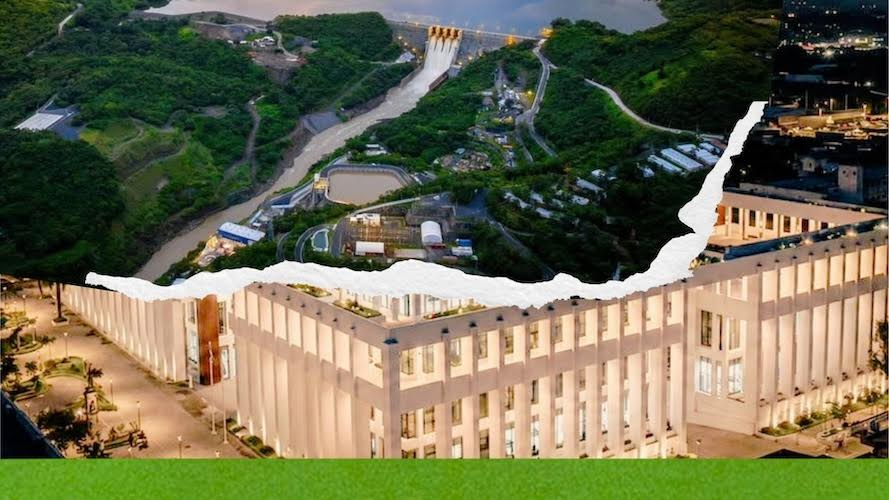
Ibrajim Bukele posted on X that what matters in a public works project is execution, not securing financing, in reference to the new outpatient building at Rosales Hospital. He cited the 3 de Febrero hydroelectric plant (El Chaparral) as an example of the current administration’s good work. Yet the timelines for both projects under his brother’s administration tell a different story: neither the Ministry of Health nor the DOM managed to select a contractor in nearly four years, and the plant was delivered two years later than announced. Voz Pública fact-checked the post using official records and determined that his claim is misleading.
Ibrajim Bukele argues that execution is the hard part and that his brother delivered it. But he leaves out the timelines, the canceled bidding processes, and the fact that the El Chaparral dam—his own example—does not fare well under the current administration either.
The post has been viewed more than 36,000 times.
Even though the project financing was secured from day one, the Ministry of Health did not launch the public tender until February 2021. The process dragged on for a year. Six companies participated; four passed the technical review and submitted financial bids. In February 2022, when the winner was to be chosen, the Ministry decided to cancel the process in order to redesign the project and transfer execution to the National Directorate of Municipal Works (DOM).
In the DOM’s hands, a new cycle began with the same result. After nearly a year in the preselection process, the three shortlisted companies showed no interest, and the agency declared the tender void in February 2023. Immediately after, it decided to carry out the work itself under direct administration, financed with GOES funds rather than the IDB loan that had been intended for the previous processes to select a contractor.
Before opting for direct administration, the DOM estimated an 18-month execution period. President Nayib Bukele laid the first stone on June 15, 2023, on the grounds of the former Maternity Hospital. Had that schedule been met, the project would have been finished by the end of 2024. The execution period ended up doubling.
In total, counting from February 2021 when the first tender was launched, the project took five years and four months. How does that compare with similar projects? To put the timelines in context, we compared the project with two hospitals of similar scale built under previous administrations: the National Women’s Hospital and the ISSS Regional Hospital in San Miguel. The “Dra. María Isabel Rodríguez” National Women’s Hospital was built in three years and two months, measured from the start of the bidding process in March 2011. Construction began on December 8 of that year, and the facility was inaugurated on May 10, 2014, according to the 2013-14 annual report. The investment totaled $50.3 million. The ISSS Regional Hospital in San Miguel was built over four years and seven months. The Social Security Board of Directors authorized an agreement with the United Nations Office for Project Services in El Salvador (UNOPS) on August 31, 2015. That agency selected the contractor in November 2016 and began a 27-month contract period. The hospital was not delivered in March 2019 as planned, but a year later, in March 2020.
El Chaparral, a project spanning four administrations
Before June 1, 2019, the project had accumulated 5 years and 3 months of actual execution under three previous administrations. The first stone was laid on September 30, 2008, during the administration of former President Elías Antonio Saca. Work was interrupted between May and June 2010 by Tropical Storm Agatha, and did not resume until December 2015. Under the Bukele administration, CEL carried out an additional 4 years and 5 months of work, having received the project at 76% physical completion, according to the agency’s own reports.
On August 4, 2020, President Bukele visited the site and announced it would be ready in a year. It was completed two years and two months after the announced date.
El Chaparral carries past corruption allegations. Mauricio Funes, now deceased, was prosecuted along with five others for irregularities linked to the contractor Astaldi. But Ibrajim’s argument goes in a different direction: execution. And on that score, the project he himself cites as an example does not fare well under the current administration either. Why is it misleading? It is a fact that executing a public works project is difficult, as Ibrajim says. The problem is what he omits: that his brother’s administration was not efficient in execution either. He fails to mention that the Rosales project took 36 months instead of the 18 estimated, and that El Chaparral, his own example, took four years to finish the remaining 24% of the work—twice as long as the president announced. Voz Pública requested a response from Ibrajim Bukele through Presidential House press secretary Ernesto Sanabria but received no reply.
Voz Pública: https://vozpublica.net/2026/06/08/ibrajim-bukele-fact-checking-rosales-chaparral/
Lo que Ibrajim Bukele no dijo sobre la ejecución del Rosales y El Chaparral
Javier Ramón
Ibrajim Bukele publicó en X que en una obra pública lo importante es la ejecución, no conseguir el financiamiento, en alusión al nuevo edificio de la consulta externa del hospital Rosales. Usó la central hidroeléctrica 3 de Febrero (El Chaparral) como ejemplo del buen hacer de la gestión actual. Pero los plazos en ambos proyectos bajo la administración de su hermano cuentan una historia diferente: ni el Ministerio de Salud ni la DOM fueron capaces de seleccionar un contratista en casi cuatro años y la central se entregó dos años después de lo anunciado. Voz Pública verificó lo publicado tomando como referencia información oficial y determinó que su afirmación es engañosa.
Ibrajim Bukele dice que ejecutar es lo difícil y que eso lo hizo su hermano. Pero omite los plazos, las licitaciones anuladas y que la presa El Chaparral, su propio ejemplo, tampoco sale bien parado bajo la administración actual.
El mensaje registra más de 36,000 visualizaciones.
Aún con el financiamiento del proyecto atado desde el primer día, el Ministerio de Salud lanzó la licitación pública hasta febrero de 2021. El proceso se extendió por un año. Participaron seis empresas, cuatro superaron la parte técnica y presentaron ofertas económicas. En febrero de 2022, cuando debía elegirse a la ganadora, Salud decidió anular el proceso para reformular el proyecto y trasladar la ejecución a la Dirección Nacional de Obras Municipales (DOM).
En manos de la DOM, empieza un nuevo ciclo con el mismo resultado. Luego de casi un año en el proceso de preselección, las tres empresas escogidas no mostraron interés y la institución declaró desierto el proceso licitatorio en febrero de 2023. Acto seguido, decidió hacer la obra ella misma bajo la modalidad “administración directa”, financiada con recursos del GOES y no con el préstamo del BID, como era en los procesos previos destinados a escoger un contratista.
Antes de optar por la administración directa, la DOM estimaba un periodo de ejecución de 18 meses. El presidente Nayib Bukele colocó la primera piedra el 15 de junio de 2023 en el predio del exhospital de Maternidad. De haberse cumplido ese plazo, la obra hubiese finalizado a finales de 2024. El periodo de ejecución acabó duplicándose.
En total, contado desde febrero de 2021, cuando se lanzó la primera licitación, el proyecto duró cinco años y cuatro meses. ¿Cómo se compara con obras similares? Para contextualizar los plazos, comparamos el proyecto con dos hospitales de envergadura similar construidos en administraciones anteriores: el Hospital Nacional de la Mujer y el Hospital Regional del ISSS de San Miguel. El Hospital Nacional de la Mujer “Dra. María Isabel Rodríguez” se construyó en tres años y dos meses, contados desde el inicio del proceso de licitación en marzo de 2011. Las obras comenzaron el 8 de diciembre de ese año y se inauguraron el 10 de mayo de 2014, según la memoria de labores 2013-14. La inversión fue de $50.3 millones. El Hospital Regional del ISSS de San Miguel se construyó en un periodo de cuatro años y siete meses. El Consejo Directivo del Seguro Social autorizó suscribir un acuerdo con Oficina de Servicios de Proyecto de las Naciones Unidas en El Salvador (UNOPS) el 31 de agosto de 2015. Esa dependencia escogió al contratista en noviembre de 2016 y comenzó un periodo contractual de 27 meses. El hospital no fue entregado en marzo de 2019 como estaba previsto, sino un año después, en marzo de 2020.
El Chaparral, una obra de cuatro gestiones
Antes del 1 de junio de 2019, la obra acumuló 5 años y 3 meses de ejecución real bajo tres administraciones anteriores. La primera piedra fue colocada el 30 de septiembre de 2008 durante la gestión del expresidente Elías Antonio Saca. Los trabajos se interrumpieron entre mayo y junio de 2010 por el impacto de la tormenta Agatha, y se reanudaron hasta diciembre de 2015. Bajo la administración Bukele, la CEL trabajó 4 años y 5 meses adicionales, habiendo recibido una obra con un 76% de avance físico, según informes de la propia institución.
El 4 de agosto de 2020, el presidente Bukele visitó la obra y anunció que estaría lista en un año. Se concluyó dos años y dos meses después de lo anunciado.
El Chaparral arrastra señalamientos de corrupción del pasado. Mauricio Funes, ya fallecido, fue procesado junto a otros cinco involucrados por irregularidades vinculadas a la constructora Astaldi. Pero el argumento de Ibrajim va en otra dirección: la ejecución. Y en ese terreno, la obra que él mismo menciona como ejemplo tampoco sale bien parada bajo la administración actual. ¿Por qué es engañoso? Es un hecho que ejecutar una obra pública es difícil, como dice Ibrajim. El problema es lo que omite: que la administración de su hermano tampoco fue eficiente en la ejecución. Calla que el Rosales se construyó en 36 meses en vez de los 18 estimados, y que El Chaparral, su propio ejemplo, tomó cuatro años en terminar con el 24% restante de la obra, el doble de lo que el presidente anunció. Voz Pública solicitó una reacción de Ibrajim Bukele a través del secretario de prensa de la Presidencia, Ernesto Sanabria, pero no obtuvo respuesta.
Voz Pública: https://vozpublica.net/2026/06/08/ibrajim-bukele-fact-checking-rosales-chaparral/