
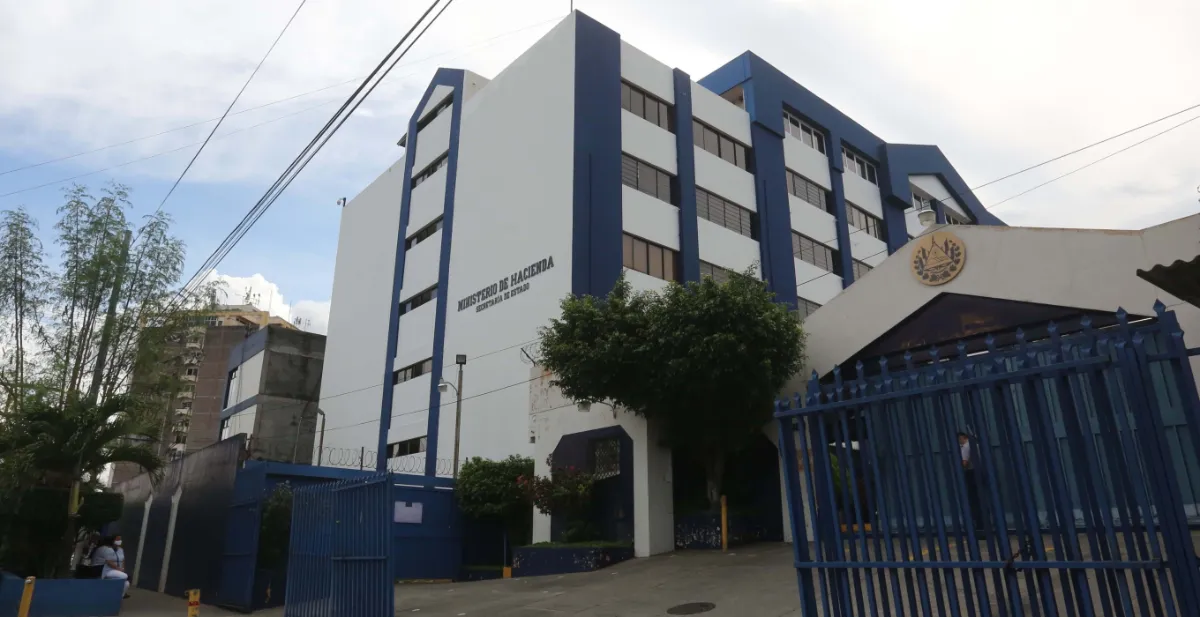
Central Government institutions spent nearly three times as much on goods and services during the first four months of the year compared to the same period in 2025, according to budget execution records available on the Ministry of Finance’s Fiscal Transparency portal.
According to the latest update, the Central Government allocated $449.1 million to that line item between January and April of this year, a figure that was 2.7 times what was used in the same period of 2025, which totaled $162.7 million.
The 2026 budget was approved with an increase in Central Government spending on goods and services for the first four months. For 2026, $515.9 million was budgeted, compared to $324 million in 2025.
The execution of these funds also increased: of the amount budgeted for the first four months of 2026, the aforementioned $449.1 million was disbursed, representing 87%. Meanwhile, in 2025, 50% of the budgeted amount was spent, which came to $162.7 million.
Thus, although the amount executed in 2026 did not exceed what was budgeted, it did see a substantial increase compared to what had been spent a year earlier.
How was it spent, and by whom?
In 2017, the Ministry of Finance issued the Classification Manual for Public Sector Financial Transactions to facilitate the identification, recording, and management of public sector financial operations.
That document defines spending on goods and services as expenses “necessary for the operation or production of Public Sector Institutions, as well as those allocated to the conservation and maintenance of capital assets and the contracting of specialized studies, excluding those aimed at general studies and the pre-investment and investment of projects.”
In that regard, tracking budget spending on the procurement of goods and services can be done from two angles: by institution and by the type of goods and services acquired.
In the latter case, the procurement of goods and services is divided into five different accounts: goods for use and consumption, basic services, general services and leases, travel and per diems, and consultancies, studies, and research.
All five accounts saw an increase in spending in the first four months of 2026, with an emphasis on purchases of goods for use and consumption, and on general services and leases.
The public sector transactions classification manual states that goods for use and consumption include “paper products and office accessories, cleaning supplies, sports and recreational supplies and accessories, electrical accessories and utensils, clothing, luggage and personal hygiene products, printed and electronic publications, among others of a similar nature.”
Between January and April 2025, the Central Government spent $43.1 million on these purchases. In the same period of 2026, the amount grew to $144.5 million.
Meanwhile, general services are those necessary “for the fulfillment of the functions of public entities, such as: maintenance, repairs, advertising, transportation, security, cleaning, among others,” and leases can cover buildings or offices, as well as furniture and equipment, along with patents, franchises, operating systems, among others.
This type of spending totaled $83.3 million in the first four months of 2025, while in the same period of 2026, it rose to $243 million (see graph).
In terms of purchases by institution, those that used the most resources in 2026 were Education ($93.8 million), Health ($85 million), Finance ($82.4 million), and Security ($66.2 million).
Of the $93.8 million used by Education, $57.7 million went to goods for use and consumption and $25.9 million to general services and leases. Health allocated $62.2 million to goods for use and consumption, $12.4 million to consultancies, studies, and research, and $11 million to other goods and services.
The case of Agriculture ($39.8 million) also stands out, as it spent $39.7 million (practically 99%) on general services and leases.
Gobierno casi triplicó el gasto en bienes y servicios en los primeros cuatro meses de 2026
Por Denni Portillo
Las instituciones del Gobierno Central gastaron casi el triple en bienes y servicios durante los cuatro primeros meses del año en comparación al mismo período de 2025, según los registros de ejecución presupuestaria disponibles en el portal de Transparencia Fiscal, del Ministerio de Hacienda.
Según la última actualización, el Gobierno Central destinó a ese rubro $449.1 millones entre enero y abril de este año, una cifra que representó 2.7 veces lo utilizado en el mismo periodo de 2025, que fueron $162.7 millones.
El presupuesto de 2026 se aprobó con un incremento en el gasto de bienes y servicios del Gobierno Central para el primer cuatrimestre. En este 2026 programó $515.9 millones, frente a los $324 millones de 2025.
La ejecución de estos fondos también aumentó, puesto que de la cifra prevista para los primeros cuatro meses de 2026 se desembolsaron los ya mencionados $449.1 millones, lo que representó el 87%. En tanto, en 2025, se gastó el 50% de lo programado, que fueron $162.7 millones.
Así, aunque el monto ejecutado en 2026 no superó lo programado, sí tuvo un incremento sustancial en comparación con lo que se había gastado un año antes.
¿Cómo y quién ejecutó?
En 2017, el Ministerio de Hacienda emitió el Manual de Clasificación para las Transacciones Financieras del Sector Público, para facilitar la identificación, registro y manejo de las operaciones financieras del sector público.
Dicho documento define los gastos en bienes y servicios como aquellos “necesarios para el funcionamiento o la producción de las Instituciones del Sector Público, además los destinados a la conservación y mantenimiento de los bienes de capital y la contratación de estudios especializados, excluyendo los orientados a estudios generales y de la pre-inversión e inversión de proyectos”.
En ese sentido, el seguimiento al uso del presupuesto en adquisición de bienes y servicios se puede hacer desde dos aristas: por institución y de acuerdo con el tipo de bienes y servicios adquiridos.
En este último caso, la adquisición de bienes y servicios tiene cinco cuentas diferentes: bienes de uso y consumo, servicios básicos, servicios generales y arrendamientos, pasajes y viáticos, y consultorías, estudios e investigaciones.
En las cinco cuentas hubo incremento en el gasto en el primer cuatrimestre de 2026, con énfasis en compras de bienes de uso y consumo, y en servicios generales y arrendamientos.
El manual de clasificación de las transacciones del sector público dice que los bienes de uso y consumo incluyen “productos de papel y accesorios de oficina, suministros de limpieza, suministros y accesorios deportivos y recreativos, accesorios eléctricos y utensilios, ropa, maletas y productos de aseo personal, publicaciones impresas y electrónicas, entre otros de similar naturaleza”.
Entre enero y abril de 2025, el Gobierno Central gastó $43.1 millones en dichas compras. En el mismo período de 2026, el monto creció hasta $144.5 millones.
Mientras, los servicios generales son los necesarios “para el cumplimiento de las funciones de los entes públicos, tales como: mantenimientos, reparaciones, publicidad, transporte, seguridad, limpieza, entre otros”, y los arrendamientos pueden ser de edificios u oficinas, así como de mobiliario y equipo, así como también patentes, franquicias, sistemas operativos, entre otros”.
Este tipo de gastos sumó $83.3 millones en el primer cuatrimestre de 2025, mientras en el mismo período de 2026, ascendió a $243 millones (ver gráfico).
En cuanto a las compras por institución, las que han usado más recursos en 2026 son Educación ($93.8 millones), Salud ($85 millones), Hacienda ($82.4 millones) y Seguridad ($66.2 millones).
Entre los $93.8 millones usados por Educación destacan $57.7 millones en bienes de uso y consumo y $25.9 millones en servicios generales y arrendamientos. Salud dedicó $62.2 millones a bienes de uso y consumo, $12.4 millones a consultorías, estudios e investigaciones, y $11 millones a otros bienes y servicios.
Además, destaca el caso de Agricultura ($39.8 millones), ya que este ha usado $39.7 millones (prácticamente un 99%) en servicios generales y arrendamientos.