
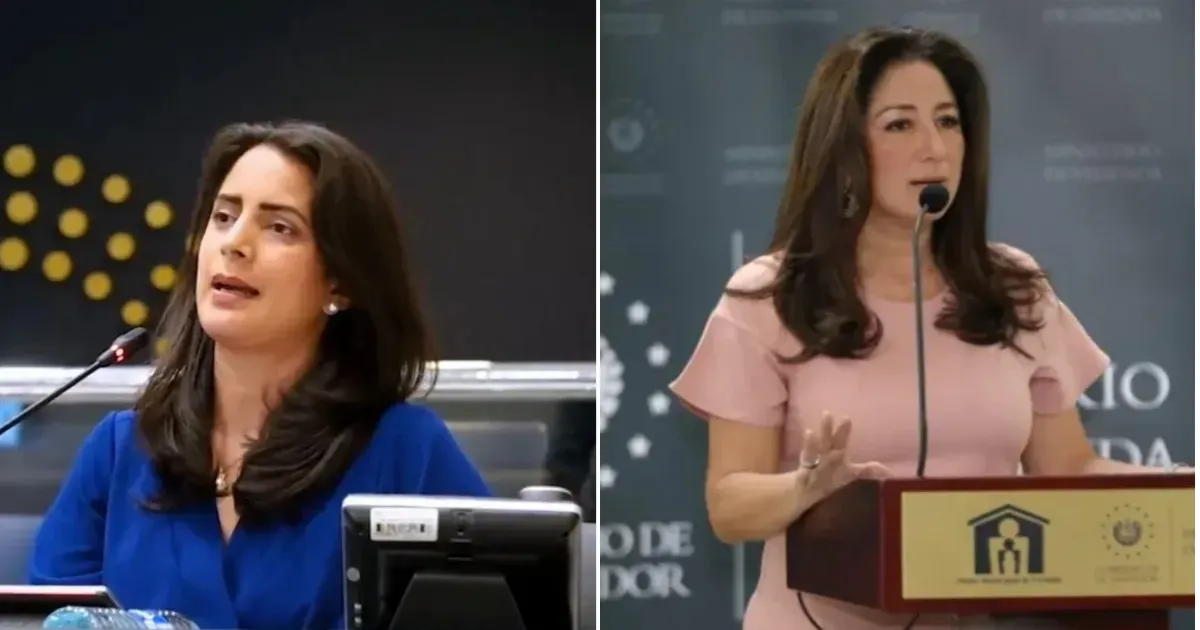
During Wednesday’s plenary session of the Legislative Assembly, Claudia Ortiz of Vamos criticized Housing Minister Michelle Sol over her comments on buying a home in El Salvador, saying the official spoke “from her privilege” rather than from the economic reality most Salvadorans face.
Ortiz revisited statements Sol made earlier this week, in which the minister said there are three ways to buy a home: using inherited money to pay in cash, saving for 15 or 20 years to buy outright, or taking out a mortgage and making extra payments to reduce interest.
“For most families in El Salvador, the only inheritance parents can leave their children is education, values, love of God — but certainly not money,” Ortiz said during her remarks.
The lawmaker argued that many families currently face financial hardships that prevent them from saving or taking on higher mortgage payments. “Right now, people are having to make the difficult choice between buying food or paying the electric bill,” she said.
According to Ortiz, the minister’s remarks sparked outrage. “People exploded with outrage, with pain, with sadness … because they were listening to a government official speak insensitively, speak from her privilege,” she said.
The lawmaker added that the core problem is that the state “is doing nothing” to correct distortions in the real estate market and make housing affordable for the population.
In that context, Ortiz reintroduced a proposed “Law for the Creation of the Affordable Housing Incentive Fund,” a bill she had first submitted weeks earlier that seeks to create mechanisms to encourage long-term residential rentals over short-term tourist rentals.
The lawmaker argued that short-term digital lodging platforms have helped shrink the supply of housing available for permanent residence and, as a result, driven up both rental and purchase prices.
“There are fewer homes, fewer apartments available on the market for people to live in permanently, and that drives prices up,” she said.
The proposal calls for the creation of a fund financed through a special 3% fee on short-term tourist rental platforms such as Airbnb, Expedia, and Booking.com.
According to Ortiz, the revenue would be used to create tax incentives for landlords who rent properties on a long-term basis, support housing improvements, and subsidize rent in emergency cases for vulnerable families.
The lawmaker said the initiative seeks to “create fairer conditions” for young people and Salvadoran families who currently see homeownership as out of reach.
At the end of her remarks, Ortiz asked that the bill be added to the legislative agenda and referred to committee for review. However, the motion received only two votes in favor and was not approved by the plenary.
After the vote, the president of the Legislative Assembly publicly thanked Minister Michelle Sol for her role in the legalization of land titles for the “2 de Noviembre” community, an initiative approved that same day.
Claudia Ortiz acusa a ministra de Vivienda, Michelle Sol, de hablar desde su privilegio
Por Claudia Palacios
La diputada de Vamos, Claudia Ortiz, criticó este miércoles en el pleno de la Asamblea Legislativa las declaraciones de la ministra de Vivienda, Michelle Sol, sobre las formas de adquirir una casa en El Salvador, y aseguró que la funcionaria habló “desde su privilegio” y no desde la realidad económica de la mayoría de salvadoreños.
Ortiz retomó las declaraciones hechas esta semana por Sol, quien afirmó que existen tres maneras de comprar una vivienda: recibir dinero heredado para pagarla al contado, ahorrar durante 15 o 20 años para adquirirla en efectivo o acceder a un crédito hipotecario y realizar pagos adicionales para reducir intereses.
“Para la mayoría de familias en El Salvador, la única herencia que pueden dejar los padres a los hijos es la educación, los valores, el amor a Dios, pero seguramente no dinero”, expresó Ortiz durante su intervención.
La legisladora sostuvo que actualmente muchas familias enfrentan dificultades económicas que les impiden ahorrar o asumir cuotas hipotecarias más altas. “Hoy por hoy la gente tiene que estar en la difícil decisión entre si comprar comida o pagar la energía eléctrica”, afirmó.
Según Ortiz, las declaraciones de la ministra provocaron indignación. “La gente explotó de indignación, de dolor, de tristeza (…) porque estaban escuchando a una funcionaria hablar de forma insensible, hablar desde su privilegio”, señaló.
La diputada agregó que el problema central es que el Estado “no está haciendo nada” para corregir las distorsiones del mercado inmobiliario y facilitar viviendas accesibles para la población.
En ese contexto, Ortiz volvió a presentar una propuesta de “Ley para la Creación del Fondo para el Incentivo de la Vivienda Accesible”, iniciativa que ya había introducido semanas atrás y que busca crear mecanismos para incentivar el alquiler residencial permanente frente a los alquileres turísticos de corta duración.
La parlamentaria argumentó que plataformas digitales de hospedaje temporal han contribuido a reducir la oferta de viviendas para residencia permanente y, en consecuencia, elevar los precios de alquiler y compraventa.
“Hay menos viviendas, menos apartamentos disponibles en el mercado para que la gente pueda acceder para vivir de forma permanente y eso hace que los precios suban”, sostuvo.
La propuesta contempla la creación de un fondo financiado mediante una contribución especial del 3 % aplicada a plataformas de alquiler turístico de corta duración, como Airbnb, Expedia y Booking.com.
De acuerdo con Ortiz, los recursos permitirían crear incentivos fiscales para propietarios que alquilen viviendas de forma permanente, apoyar mejoras habitacionales y subsidiar alquileres en casos de emergencia para familias vulnerables.
La diputada afirmó que la iniciativa busca “crear condiciones más justas” para los jóvenes y las familias salvadoreñas que actualmente consideran inalcanzable adquirir una vivienda.
Al finalizar su intervención, Ortiz solicitó incorporar la pieza de correspondencia a la agenda legislativa para enviarla a estudio de comisión. Sin embargo, la petición únicamente obtuvo dos votos a favor y no fue aprobada por el pleno.
Tras la votación, el presidente de la Asamblea agradeció públicamente a la ministra Michelle Sol por su participación en la legalización de terrenos de la comunidad “2 de Noviembre”, una iniciativa aprobada este día.