

BIOGRAPHY
José Ángel Pérez is a pastor at the Misión Cristiana Elim branch in El Triunfo, Department of La Libertad. As ad honorem president of the El Bosque Cooperative, he accompanies more than 250 farming families in their struggle for land security. He spent 220 days in detention, with no sentence and no proven crime. His experience reflects a theology incarnated in the fight for land, dignity, and justice from the rural communities of El Salvador.
SUMMARY
I’m writing this from what I lived through. There in Mariona I learned to make shoes out of paper — just watching videos and practicing when I was about to get out. I also learned to keep quiet… 220 days in a cell teach you that. But my faith didn’t die, even though it hurt a lot. I’m a pastor at a Misión Cristiana Elim church in El Triunfo, La Libertad. On May 12, 2025, they arrested me for standing with some families from the El Bosque Cooperative who were fighting not to lose their land. I was just there, in peace. I was locked up without them proving anything against me. I went through the Penalito in Lourdes Colón and then through Mariona. The first five months without being able to talk to anyone. I’m not writing so people will feel sorry for me. I’m writing so it won’t be forgotten. Because God doesn’t forget the poor, even if they don’t have papers… they have a story.
KEYWORDS: pastoral testimony, land and dispossession, faith and resistance, territorial injustice, prophetic ecclesiology
Preach, Accompany… and End Up in Prison

The Land Is Not for Sale, It’s to Be Defended: Testimony from the El Bosque Cooperative
I’m not a desk theologian. I’m a field pastor. What I know, I learned working the land, visiting homes, listening to people talk about their debts, about the fear of losing everything. I’m also president of the El Bosque Cooperative, but that’s never been about money, because the position doesn’t pay. It’s about serving.
More than 250 families live there. These are people I preach to — but not just with words. By being with them. The cooperative has its own history. Before, 47 members had around 750 manzanas of good land: coffee, teak, cedar, conacaste, laurel. Each family got a small plot to live on. They didn’t pay, but they didn’t have a deed either. That’s how they lived. That’s how they farmed.
The problem started before I got there. The cooperative owed $45,000 to Banco Agrícola. That’s when a man named Palomo showed up, recommended by the bank itself, promising to help pay off the debt. But he didn’t help. He arrived, saw the land was productive, cut down the timber — teak, cedars, conacastes, laurels — hauled it away, and then convinced the sitting president to sign two promissory notes: one for $50,000 and another for $85,000. He told him he was going to do a new survey and pay off the cooperative. He promised to pay… but he never paid a thing.
Ten years later, in 2009, the bank notified them again: Palomo hadn’t paid the debt. In desperation, the members sought help from the Santa Tecla mayor’s office, which told them it wanted a portion of the land in exchange for support. The members signed. Over time, interest grew to a million dollars, and in 2023 the auction came. Palomo claimed the land was his. But 250 families lived there. They had grown up and farmed there. They just didn’t have papers.
The hardest part was that the previous president handed over the deed — the most important document — to someone who didn’t even live there. I came along later, with little time in the cooperative, and I was the one who had to face all that mess. I arrived as the new guy — three years in the cooperative, two as president — and I ended up paying the consequences of decisions other people made.
We had exhausted every legal avenue. We tried everything. We paid $33,000 to a lawyer who promised an injunction and never filed it. In early May 2025, we went to deliver a letter to the presidential battalion, hoping they’d get it to the president and stop the eviction. The man who received it said there’d be an answer in three days. There wasn’t one.
So the community decided: we’re going to hold a peaceful gathering. Not to burn tires. To ask for help.
“All we were doing was asking for help, because we couldn’t do anything anymore. We had already done everything we could.” — Pérez, J. Á., CCR TV interview, min. 6:05
Those families are my church — the one I pastor. I couldn’t just keep preaching about heaven while they were losing their land. That’s why I told them: today we’re not going to hold service like we always do… today we’re going to go be there with the people, to defend what’s ours.
Because almost all of them live on cooperative land… and if they fell, we all fell.
On top of that, we have a CDI where more than 200 children gather, and most of them also live on that land. If they expelled us, the church would be finished too. Everything. Members and non-members — the whole community was in this together.
That night, May 12, 2025, they arrested me. They yanked me around, ripped my shirt, shoved me into a patrol car. An officer, looking at my documents, said:
“This old man is going to regret what he did.” — Pérez, J. Á., CCR TV interview, min. 14:59
I asked myself: what did I do? What am I supposed to regret if I haven’t done anything wrong? The answer came on its own: I did what a pastor has to do. I accompanied my community. I didn’t even live on cooperative land — my house belongs to my wife, it’s her inheritance. But when we saw how bad the situation was, we had to step up. There’s even a video of us praying together for the cooperative, calling out to God.
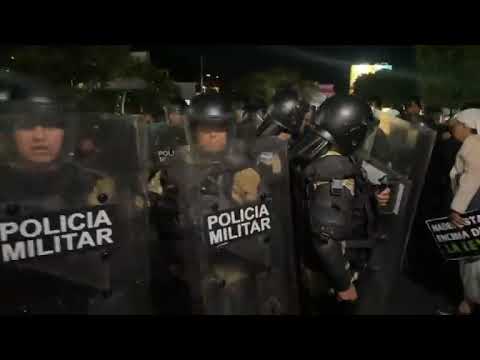
That night, armed people showed up like it was a war. They said they were military police. That night, several journalists and people who know about these things said it was the first time, since the civil war in the country, that the insignia of what they call “military police” had been seen again. I don’t know much about that, but the atmosphere felt heavy… and in front of them there were only farmers, children, families begging not to be removed.
About four of us had signed the letter, and that same night they went looking for the other three. To them, we were the troublemakers. It wasn’t a coincidence. It was a message about who has the right to protest in this country… and who doesn’t. We weren’t gang members or terrorists. We were families. Children. Elderly people who didn’t know where they’d go if they were thrown out.
They held me for a few days at the police headquarters in Lourdes Colón — they call it “El Penalito” — and then transferred me to La Esperanza Prison, Mariona.
There I spent five months without knowing anything about my wife, my children, my church… without knowing if she was alive or dead.
Between Naboth and Mariona
A Theology of Land, Power, and Injustice
In the Bible, land isn’t just a piece of property to sell. Land is life. It’s where you grow up, where you raise your children, and where you hope to rest when you’re old.
In the Bible there are laws that protect that. They speak of the jubilee, of how the land must not be lost forever (Leviticus 25). And there’s also the story of Naboth, that man who refused to sell his vineyard, and a king tried to take it from him… but God didn’t stay silent (1 Kings 21).
That’s why, when I started defending the families of the El Bosque Cooperative, I didn’t feel like I was just doing something social… I felt I was living out what God teaches. I was putting faith into action.
This is what injustice looks like here: the one with money has papers, and the poor person only has their story. And when you go before a judge, they don’t ask you what you’ve lived through… they ask you for a document.
But faith can’t stay silent in the face of that. Because poverty doesn’t come out of nowhere. Poverty happens because someone makes decisions that leave others with nothing.
It’s like in the times of Pharaoh: the country was growing, but the people were suffering. It’s the same today. A country can look nice on the outside… but if the ruler doesn’t govern with justice, poverty keeps growing for those who walk barefoot.
The Gospel Is Not Neutral: Chronicle of a Community Fighting for Its Land
This already happened in the Bible. Amos, Isaiah, Jeremiah… they all faced state repression when their words touched the interests of the powerful. Amos was driven out of Bethel for speaking the truth (Amos 7:12–13). Jeremiah was thrown into a cistern (Jeremiah 38:6).
And me… they took me to Mariona.
That’s how it is. When you speak up for those who suffer, when you touch what’s inconvenient for the powerful, there’s always a price. It’s not new. It’s always been this way.
Jesus himself didn’t stay silent. He too spoke plainly to those who held power in his time. That’s why I say: the Gospel isn’t meant to sit on the fence. The Gospel walks with the truth… even when it hurts, even when it costs.
“When a pastor who accompanies the poor because he understands their needs is arrested, and a lawyer because he defends a human cause, we Christians are compelled to ask ourselves: is this the kind of society we want to live in? Honestly? Will we let hatred and blind fanaticism divide us as brothers and sisters?” — Vega, M., Oler a oveja, May 18, 2025
This makes me want to ask the church here in El Salvador something: can we keep saying that the State is “God’s minister for good” (Romans 13:4) without asking ourselves when it stops doing good? Because the very place those families went to ask for help… was the same one that put me in prison.
And to this day, the cooperative still has no answer. We’re still waiting. We won’t rest easy until they tell us clearly: “Here are your papers — this land is yours.”
The worst of the pain has passed, yes… but the uncertainty persists. We don’t know what’s going to happen, whether the cooperative will survive or not.
But we keep going, trusting in God. If He wills it and we recover the land, we’ll give Him thanks. And we trust that everything that’s been investigated won’t come to nothing… but will bear fruit.
God in the Cell: Praying, Enduring, and Not Losing Your Mind
There are things you only understand when you’re locked up.
In there, the worst sickness isn’t of the body… it’s of the mind. Because the confinement eats away at your head little by little.
In there, the one who loses his mental stability they call “loro” — parrot. Sometimes they say it joking around… but other times it hurts to hear it. Because it’s seeing someone who’s no longer okay: talking to himself, looking every which way, like he’s lost, like he’s not really there anymore.
And that happens because you’re locked up without knowing anything. Without knowing about your family. Without knowing what’s happening outside. That’s what breaks your mind.
I saw it… and I felt it close.
“I don’t know if I can use this word, but what they call the ones who lose their minds is ‘loro’… because he starts talking to himself and looking every which way.” — Pérez, J. Á., CCR TV interview, min. 25:52
People who don’t know God think too much and worry more. I saw non-believers consumed by anguish. When you’re a Christian, you have to understand that at some point these things will happen to you: God knows why they happen and to whom they happen.
But I also saw something beautiful in there. Amid so much hardship, there was fellowship. If someone had food, they shared. Those who had no family bringing them anything found ways to survive: they washed other people’s clothes or made things out of plastic bags — like hammocks — to sell.
There were people who never received a package. Sometimes their families didn’t know if they were alive; other times, they simply couldn’t help. So those people found ways to sustain themselves with the little they had, selling what they made with their own hands.
In that place, so filthy and so unjust… people still looked out for each other. And there, in the middle of all that, God was also present.
I remembered what the apostle Paul wrote from prison, about a peace that surpasses understanding (Philippians 4:7). I’m not Paul… but in there I truly understood that. That peace doesn’t mean you’re no longer suffering. It means you hold on without breaking. Like a tree that bends in the wind but doesn’t snap.
Inside Mariona, the work of serving didn’t end. The fellow who was with me, a lawyer, would come find me and say: “You’re a pastor — teach me how to live in here.”
And I didn’t have a Bible. I didn’t have anything prepared. But we talked, we prayed… and God made himself present in a place where nobody wants to be.
I didn’t choose to be there. They put me in there. But Christ was already inside Mariona when I arrived. And that’s where I found him.
Once, a brother who knew theology, in there, told me:
“Brother Ángel, I know you’re going to get out… but don’t stop praying for us, because the church forgot about us.” — Pérez, J. Á., CCR TV interview, min. 52:59
That stayed in my heart. Because the church can’t forget about prisoners. Jesus himself is going to ask: “I was in prison… and did you visit me?”
From Worship to Territory: Pastors for the Temple or Pastors for the People
After five months they took me out for a special hearing. That’s when I found out the church had been praying, that civil organizations had spoken out, that the case had reached international media. I couldn’t believe it. We’re an isolated branch, far from the capital. Some pastors say we don’t have support from the central church. I thought nobody knew. The only person I knew who was well aware of my case was my direct pastor, Pastor Antonio Ramírez. There were brothers and sisters who didn’t even know our church existed in El Bosque.
When I found out the church had spoken up, I understood something: if Misión Cristiana Elim took this case on like that, it’s because they understood we weren’t in prison for being criminals, but because we were fighting for something that was ours and not someone else’s. Pastor Mario Vega was the one who raised it publicly. Without that, maybe nobody would have noticed. And in there I thought: “My church didn’t leave me alone. They know who I am. They know I’m not guilty.”
And that gave me strength.
Because when the church walks with the truth… it can sustain even those who are behind bars.
“There can be no doubt that God is on the side of the afflicted and of their pastors who carry the penetrating smell of the sheep. Faced with that, do we really feel like better Christians when we look down on them and validate tyranny?” — Vega, M., Oler a oveja, May 18, 2025
That gave me my strength back. Because it’s one thing to read in the Bible that the church is one body, that if one suffers, all suffer… and it’s another thing to truly feel it, when you’re locked up and you know that outside they’re praying for you.
That prayer wasn’t just words. It was something that moved, that was made public, that came at a cost. And that’s something to be grateful for.
But there’s also something that’s painful to say. There are pastors in prison today… and almost nothing has been said about them. And that stays in your heart. It’s a debt the church still owes.
Because loving as a pastor isn’t just saying nice things. It’s also telling the truth.
And the truth is that many churches here aren’t walking with their people through what they face every day. They preach against personal sins… but they don’t look at the injustice all around them. They don’t talk about what’s happening in the communities.
We’re not even praying well for the authorities. It’s not about applauding everything they do… it’s about asking God to give them wisdom and to make them do justice. Because when there’s injustice, it’s not just the fault of those at the top… the silence of those below also weighs.
There are those who speak of God… but accuse innocent people. And that doesn’t come from God.
We have plenty of pastors who know how to lead a worship service… but don’t know how to walk with people when there are problems with land, with laws, with the community.
But Jesus did. He spoke plainly against injustice, even the injustice of those who held religious power. And Paul also corrected the church when it went astray.
Sometimes we read that we should lay down our lives for others… but when the pain belongs to someone else, we look the other way.
And it shouldn’t be that way. One person’s pain… has to be the whole church’s pain.
I didn’t even live on that land. But when I saw what was happening, I couldn’t stay quiet. I had to be there. With the people. Even if it cost me.
The Political Cost of a Church That Smells Like the Sheep
The Pastor Who Came Out Smelling of a Cell and of Hope
Christian hope, rightly understood, doesn’t deny suffering: it passes through it. Psalm 22 begins with the cry of abandonment — “My God, my God, why have you forsaken me?” — and ends with trust. Jesus himself quoted it from the cross. Hope is not the cheap optimism of someone who has never suffered; it is the conviction, born in pain, that suffering does not have the last word.
When I left Mariona, I left sick. The body pays for what the soul endures. But I also left with one certainty: God allowed this with a purpose. The church in El Triunfo was different. More united. The children hugged me. And we’re still laying bricks on the building I always dreamed of constructing — because for years we held services in the homes of brothers and sisters, with no roof of our own. God gave us that piece of land. The most important thing, though, is seeing my congregation spiritually prepared. There’s no point in my shouting myself hoarse preaching if they get lost. They’ve already been told — in word and in action.
And we keep walking with the cooperative families, because their story didn’t end with my release. They’re still fighting. Our desire as a church and as a community is for them to hand over the deeds so we can have land to harvest and work. We have to keep smelling like the sheep.
I’m telling all this not so people will see me as something great. No. I’m telling it because what I lived through has things that people who study need to hear… but hear it from life, not just from books. You learn from prison too.
The Church in El Salvador has power: spiritual, social, the power to convene. The problem isn’t a lack of power. It’s a lack of courage to use it on the right side. While the people cry out, we’re sometimes too comfortable within the four walls of our temples, worried about not looking bad to anyone. Amos 5:24 says: “But let justice roll on like a river, righteousness like a never-failing stream.” That’s the image: not a stagnant puddle of good intentions. A stream that doesn’t ask permission to flow.
I say to every pastor who reads this: if you wait for the system to be fair before you get involved with your community, you’ll wait your whole life. Justice doesn’t arrive on its own. You have to demand it, organize for it, and sometimes pay the price of demanding it.
Concrete proposals for churches and communities:
- Create a legal-pastoral accompaniment ministry in every local church, connected with lawyers or law students from the community, so that members don’t face the legal system alone.
- Establish specific intercession groups for families in situations of injustice: evictions, unjust detentions, open legal proceedings. Prayer is not passivity; it is active spiritual resistance.
- Incorporate real pastoral case studies into theological training — testimonies like this one — where faith is at stake in the territory, not just in the pulpit.
- Pastors should know the territorial reality of their congregations: who has land, who doesn’t, what legal vulnerabilities their members face.
- Strengthen inter-church networks for public denunciation and accompaniment in cases of abuse of power or unjust detention. What sustained me was knowing the church didn’t stay silent.
Questions for group reflection:
- How many members of my congregation face threats of eviction or territorial vulnerability today, and I don’t know because I never asked?
- How willing is my church to publicly accompany a member suffering injustice, even if it makes the authorities uncomfortable?
- Are we praying for the authorities to exercise justice, or simply for them to leave us alone?
- What kind of pastor do I want to be: the one who preaches from comfort, or the one who smells like the sheep?
- If a pastor from our congregation were unjustly detained, what would our church do in the first seven days?
REFERENCES
- Pérez, J. Á. (2026). Olor a oveja [Television interview]. Corporación Cristiana de Radio y Televisión (CCR TV) / Misión Cristiana Elim. https://www.youtube.com/watch/l9heaXRvtKY
- Santa Biblia, Versión Reina-Valera. (1960). Sociedades Bíblicas Unidas.
- Vega, M. (2025, May 18). Oler a oveja [Editorial]. Misión Cristiana Elim. https://www.elim.org.sv/oler-a-oveja/
Bastion Vert: https://bastionvert.org/cuando-el-estado-encarcela-pastores-jose-angel-perez/
Cuando el Estado encarcela pastores: Olor a oveja en tiempos de represión
BIOGRAFÍA
José Ángel Pérez es pastor de la filial de Misión Cristiana Elim en El Triunfo, Departamento de La Libertad. Presidente ad honórem de la Cooperativa El Bosque, acompaña a más de 250 familias campesinas en su lucha por la seguridad territorial. Permaneció 220 días en detención, sin sentencia ni delito probado. Su experiencia refleja una teología encarnada en la lucha por la tierra, la dignidad y la justicia desde las comunidades rurales de El Salvador.
RESUMEN
Esto lo escribo desde lo que me tocó vivir. Allá en Mariona aprendí a hacer zapatos con papel, así, viendo videos y practicando cuando ya iba a salir. También aprendí a quedarme callado… 220 días en una celda te enseñan eso. Pero mi fe no se murió, aunque sí dolió bastante. Soy pastor en una iglesia de Misión Cristiana Elim en El Triunfo, La Libertad. El 12 de mayo de 2025 me capturaron por estar acompañando a unas familias de la Cooperativa El Bosque, que estaban peleando por no perder sus tierras. Yo solo estaba ahí, en paz. Estuve preso sin que me probaran nada. Pasé por el Penalito de Lourdes Colón y después por Mariona. Los primeros cinco meses sin poder hablar con nadie. No escribo para que me tengan lástima. Escribo para que no se olvide. Porque Dios no se olvida de los pobres, aunque no tengan papeles… tienen historia.
PALABRAS CLAVE: testimonio pastoral, tierra y despojo, fe y resistencia, injusticia territorial, profetismo eclesial
Predicar, acompañar… y terminar preso
La tierra no se vende, se defiende: Testimonio desde la Cooperativa El Bosque
Yo no soy teólogo de escritorio. Soy pastor de campo. Lo que sé lo aprendí trabajando la tierra, visitando casas, oyendo a la gente hablar de sus deudas, del miedo que tienen de perderlo todo. También soy presidente de la Cooperativa El Bosque, pero eso nunca ha sido por dinero, porque ese cargo no paga. Es por servir.
Ahí viven más de 250 familias. Son gente a la que yo le predico, pero no solo con palabras, sino estando con ellos. La cooperativa tiene su historia. Antes, 47 socios tenían como 750 manzanas de buena tierra: café, teca, cedro, conacaste, laurel. A cada familia le daban un pedacito para vivir. No pagaban, pero tampoco tenían escritura. Así vivían, así sembraban.
El problema empezó antes de que yo llegara. La cooperativa debía $45,000 al Banco Agrícola. En ese momento apareció un señor llamado Palomo, recomendado por el mismo banco, con promesas de ayudar a saldar la deuda. Pero no ayudó. Llegó, vio que la tierra era productiva, taló la madera —teca, cedros, conacastes, laureles— se la llevó, y después convenció al presidente de turno de firmar dos pagarés: uno de $50,000 y otro de $85,000. Le dijo que iba a hacer una remedición y pagar la cooperativa. Prometió pagar… pero no pagó nada.
Diez años después, en 2009, el banco volvió a notificar: Palomo no había pagado la deuda. En la desesperación, los socios buscaron ayuda con la Alcaldía de Santa Tecla, que les dijo que quería una parte de la tierra a cambio de apoyo. Los socios firmaron. Con el tiempo, los intereses crecieron hasta un millón de dólares, y en 2023 llegó la subasta. Palomo decía que la tierra era de él. Pero ahí vivían 250 familias. Ahí habían crecido y cultivado. Solo que no tenían papeles.
Lo más duro fue que el presidente anterior entregó la escritura, el documento más importante, a alguien que ni vivía ahí. Yo llegué después, con poco tiempo en la cooperativa, y me tocó enfrentar todo ese problema. Yo llegué siendo nuevo —tres años en la cooperativa, dos como presidente— y vine a pagar las consecuencias de decisiones que otros tomaron.
Habíamos agotado todos los caminos legales. Intentamos todo. Pagamos $33,000 a una abogada que prometió un amparo y nunca lo presentó. A inicios de mayo de 2025 fuimos a entregar una carta al batallón presidencial, con la esperanza de que la hicieran llegar al presidente y se detuviera el desalojo. El hombre que la recibió dijo que en tres días habría respuesta. No la hubo.
Entonces la comunidad decidió: vamos a hacer una concentración pacífica. No a quemar llantas. A pedir ayuda.
Lo que estábamos haciendo solamente era pedir ayuda, porque nosotros ya no podíamos hacer nada. Ya habíamos hecho todo lo que habíamos podido”. — Pérez, J. Á., entrevista CCR TV, min. 6:05
Esas familias son mi iglesia, la que yo pastoreo. Yo no podía quedarme predicando del cielo mientras ellos estaban perdiendo la tierra. Por eso les decía: hoy no vamos a hacer culto como siempre… hoy vamos a ir a estar allá con la gente, a defender lo nuestro.
Porque casi todos viven en tierras de la cooperativa… y si ellos caían, caíamos todos.
Además, tenemos un CDI donde se reúnen más de 200 niños, y la mayoría también vive en esas tierras. Si nos expulsaban, la iglesia también se acababa. Todo. Socios y no socios, toda la comunidad estaba en esto.
Esa noche, el 12 de mayo del 2025, me arrestaron. Me jalonearon, me rompieron la camisa, me subieron a una patrulla. Un agente, mirando mis documentos, dijo:
“Este viejo se va a arrepentir de haber hecho lo que hizo”. — Pérez, J. Á., entrevista CCR TV, min. 14:59
Yo me pregunté ¿qué hice? ¿De qué me voy a arrepentir si no he hecho nada malo? Esa respuesta llegó sola: hice lo que un pastor tiene que hacer. Acompañé a mi comunidad. Y yo ni siquiera vivía en tierras de la cooperativa —mi casa es de mi esposa, una herencia de ella—. Pero al ver la situación difícil, tuvimos que hacer frente. Incluso hay un video en el que oramos juntos por la cooperativa, pidiéndole a Dios.
Esa noche llegó gente armada como si fuera guerra. Decían que eran policías militares. Esa noche, varios periodistas y gente que sabe de estas cosas dijeron que era la primera vez, desde el tiempo del conflicto armado en el país, que se volvían a ver los emblemas de lo que llaman “policía militar”. Yo no sé mucho de eso, pero se sentía pesado el ambiente… y enfrente de ellos solo había campesinos, niños, familias pidiendo que no los sacaran.
Como cuatro personas habíamos firmado la carta, esa misma noche fueron a buscar a las otras tres. Para ellos, éramos nosotros los revoltosos. No fue casualidad. Fue un mensaje sobre quién tiene derecho a protestar en este país… y quién no. Nosotros no éramos pandilleros ni terroristas. Éramos familias. Niños. Ancianos que no sabían adónde ir si los sacaban.
A mí me tuvieron unos días en la sede policial de Lourdes Colón, que le dicen “El Penalito”, y después me trasladaron al Centro Penal La Esperanza, Mariona.
Ahí pasé cinco meses sin saber nada de mi esposa, de mis hijos, de mi iglesia… sin saber si ella estaba viva o muerta.
Entre Nabot y Mariona
Una teología de la tierra, el poder y la injusticia
La tierra, en la Biblia, no es solo un pedazo para vender. La tierra es vida. Es donde uno crece, donde cría a sus hijos y donde espera descansar cuando ya está viejo.
En la Biblia hay leyes que cuidan eso. Hablan del jubileo, de cómo la tierra no se debe perder para siempre (Levítico 25). Y también está la historia de Nabot, aquel hombre que no quiso vender su viña, y un rey quiso quitársela… pero Dios no se quedó callado (1 Reyes 21).
Por eso, cuando yo empecé a defender a las familias de la Cooperativa El Bosque, yo no sentía que solo estaba haciendo algo social… yo sentía que estaba viviendo lo que Dios enseña. Estaba poniendo la fe en acción.
Así es como se ve la injusticia aquí: el que tiene dinero tiene papeles, y el pobre solo tiene su historia. Y cuando uno llega donde un juez, no le preguntan lo que ha vivido… le piden un documento.
Pero la fe no puede quedarse callada ante eso. Porque la pobreza no sale de la nada. La pobreza pasa porque alguien toma decisiones que dejan a otros sin nada.
Es como en los tiempos de Faraón: el país crecía, pero el pueblo sufría. Así pasa también hoy. Un país puede verse bonito por fuera… pero si el gobernante no lo administra con justicia, la pobreza sigue creciendo para los que caminan descalzos.
El Evangelio no es neutral: Crónica de una comunidad en lucha por la tierra
En la Biblia ya pasó esto. Amós, Isaías, Jeremías… todos enfrentaron represión estatal cuando su palabra tocó intereses de los poderosos. Amós lo sacaron de Betel por decir la verdad (Amós 7:12-13). Jeremías fue lanzado a una cisterna (Jeremías 38:6).
Y a mí… me llevaron a Mariona.
Así es esto. Cuando uno habla por los que sufren, cuando uno toca lo que al poderoso no le conviene, siempre hay un precio. No es nuevo. Siempre ha sido así.
Jesús mismo no se quedó callado. Él también habló claro frente a los que tenían el poder en su tiempo. Por eso digo: el Evangelio no es para quedarse al medio. El Evangelio camina con la verdad… aunque duela, aunque cueste.
“Cuando se arresta a un pastor que acompaña a los pobres porque comprende sus necesidades, y a un abogado porque defiende una causa humana, los cristianos nos vemos obligados a preguntarnos: ¿es este el tipo de sociedad en la que queremos vivir? ¿Sinceramente? ¿Dejaremos que el odio y el fanatismo ciego nos divida como hermanos?” — Vega, M., Oler a oveja, 18 de mayo de 2025
Esto me hace preguntarle algo a la iglesia aquí en El Salvador: ¿podemos seguir diciendo que el Estado es “ministro de Dios para bien” (Romanos 13:4) sin preguntarnos cuándo deja de hacer el bien? Porque el mismo lugar al que esas familias fueron a pedir ayuda… fue el mismo que me llevó preso.
Y hasta hoy, la cooperativa sigue sin respuesta. Seguimos esperando. No vamos a estar tranquilos hasta que nos digan claro: “aquí están sus papeles, esta tierra es de ustedes”.
El dolor más fuerte ya pasó, sí… pero la zozobra persiste. No sabemos qué va a pasar, si la cooperativa va a seguir o no.
Pero ahí vamos, esperando en Dios. Si Él quiere y recuperamos la tierra, vamos a darle gracias. Y confiamos en que todo lo que se ha investigado no quede en nada… sino que den fruto.
Dios en la celda: Orar, resistir y no perder la cabeza
Hay cosas que uno solo entiende estando encerrado.
Allá adentro, la peor enfermedad no es del cuerpo… es de la mente. Porque el encierro le va comiendo a uno la cabeza poco a poco.
Allí dentro, al que pierde la estabilidad mental le dicen “loro”. A veces lo dicen jugando… pero otras veces duele oírlo. Porque es ver a alguien que ya no está bien: hablando solo, viendo para todos lados, como perdido, como si ya no estuviera aquí.
Y eso pasa porque uno está encerrado sin saber nada. Sin saber de su familia. Sin saber qué está pasando afuera. Eso le va quebrando a uno la mente.
Yo lo vi… y lo sentí cerca.
“No sé si puedo expresar esta palabra, pero lo que les dicen a los que quedan mal de la cabeza es ‘loro’… porque comienza a hablar solo y a ver por todos lados.” — Pérez, J. Á., entrevista CCR TV, min. 25:52
Las personas que no conocen a Dios piensan demasiado y se preocupan más. Yo vi a personas no creyentes consumirse en angustia. Uno que es cristiano tiene que entender que en algún momento le van a pasar estas cosas: Dios sabe por qué suceden y a quiénes les suceden.
Pero también vi algo bonito allá adentro. Entre tanta cosa dura, había compañerismo. Si alguien tenía comida, compartía. Los que no tenían familia que les llevara algo, buscaban cómo sobrevivir: lavaban ropa de otros o hacían cosas con bolsas plásticas, como hamacas, para vender.
Había personas a las que nunca les llegaba un paquete. A veces, su familia no sabía si estaban vivos; otras veces, simplemente no podían ayudarles. Entonces, esas personas encontraban la manera de sostenerse con lo poco que tenían, vendiendo lo que hacían con sus propias manos.
En ese lugar tan sucio y tan injusto… la gente todavía se cuidaba entre sí. Y ahí, en medio de todo eso, Dios también estaba.
Yo me acordaba de lo que escribió el apóstol Pablo desde la cárcel, sobre una paz que no se entiende (Filipenses 4:7). Yo no soy Pablo… pero ahí adentro entendí eso de verdad. Esa paz no es que uno ya no sufre. Es que uno aguanta sin quebrarse. Como un árbol que se dobla con el viento, pero no se rompe.
Dentro de Mariona, el trabajo de servir no se acabó. El compañero que estaba conmigo, un abogado, me buscaba y me decía: “Usted es pastor, enséñeme cómo vivir aquí”.
Y yo no tenía Biblia. No tenía nada preparado. Pero hablábamos, orábamos… y Dios se hacía presente en ese lugar donde nadie quiere estar.
Yo no elegí estar ahí. A mí me metieron. Pero Cristo ya estaba dentro de Mariona cuando llegué. Y ahí lo encontré.
Una vez, un hermano que sabía de teología, allá adentro, me dijo:
“Hermano Ángel, yo sé que usted va a salir… pero no dejen de orar por nosotros, porque la iglesia se olvidó de nosotros”. — Pérez, J. Á., entrevista CCR TV, min. 52:59
Eso se me quedó en el corazón. Porque la iglesia no puede olvidarse de los presos. Jesús mismo va a preguntar: “Estuve en la cárcel… ¿y me visitaste?”.
Del culto al territorio: Pastores para el templo o pastores para el pueblo
A los cinco meses me sacaron a una audiencia especial. Fue ahí cuando supe que la iglesia había estado orando, que las organizaciones civiles se habían manifestado, que el caso había llegado a medios internacionales. Yo no lo podía creer. Somos una filial aislada, lejos de la capital. Algunos pastores comentan que no tenemos apoyo de la iglesia central. Yo pensaba que nadie sabía. El único que yo sabía que conocía bien mi caso era mi pastor directo, el pastor Antonio Ramírez. Había hermanos que no sabían ni que nuestra iglesia existía en El Bosque.
Cuando me enteré de que la iglesia se había pronunciado, entendí algo: si Misión Cristiana Elim tomó este caso así, es porque entendieron que no estábamos presos por ser delincuentes, sino porque luchábamos por algo que era de nosotros y no de otra gente. El pastor Mario Vega fue quien lo levantó públicamente. Sin eso, quizás nadie se hubiera dado cuenta. Y allá adentro yo pensaba: “Mi iglesia no me dejó solo. Ellos saben quién soy. Saben que no soy culpable”.
Y eso me dio fuerza.
Porque cuando la iglesia camina con la verdad… puede sostener incluso a los que están tras las rejas.
“No se puede dudar de que Dios está del lado de los afligidos y de sus pastores con penetrante olor a oveja. Frente a eso, ¿de verdad nos sentimos mejores cristianos cuando despreciamos y validamos tiranía?” — Vega, M., Oler a oveja, 18 de mayo de 2025
Eso me devolvió las fuerzas. Porque una cosa es leer la Biblia que la iglesia es un cuerpo, que si uno sufre todos sufren… y otra cosa es sentirlo de verdad, cuando uno está encerrado y sabe que afuera están orando por uno.
Esa oración no fue solo de palabras. Fue algo que se movió, que se hizo público, que tuvo un costo. Y eso se agradece.
Pero también hay algo que duele decirlo. Hay pastores que hoy están presos… y por ellos casi no se ha dicho nada. Y eso queda en el corazón. Es una deuda que la iglesia todavía tiene.
Porque amar como pastor no es solo decir cosas bonitas. También es decir la verdad.
Y la verdad es que muchas iglesias aquí no están caminando con su gente en lo que viven día a día. Se predica contra los errores personales… pero no se mira la injusticia que está alrededor. No se habla de lo que está pasando en las comunidades.
Tampoco estamos orando bien por las autoridades. No es para aplaudir todo lo que hacen… es para pedirle a Dios que les dé sabiduría y que hagan justicia. Porque cuando hay injusticia, no es solo culpa de los de arriba… también pesa el silencio de los de abajo.
Hay quienes hablan de Dios… pero acusan a gente inocente. Y eso no viene de Dios.
Tenemos muchos pastores que saben dirigir un culto… pero no saben caminar con la gente cuando hay problemas de tierra, de leyes, de comunidad.
Pero Jesús sí lo hizo. Él habló claro contra la injusticia, incluso la de los que tenían poder religioso. Y Pablo también corrigió a la iglesia cuando se equivocaba.
A veces leemos que hay que dar la vida por los demás… pero cuando el dolor es de otro, miramos para otro lado.
Y no debería ser así. El dolor de uno… tiene que dolerle a toda la iglesia.
Yo ni siquiera vivía en esas tierras. Pero cuando vi lo que estaba pasando, no podía quedarme quieto. Tocaba estar ahí. Con la gente. Aunque costara.
El costo político de una Iglesia con olor a oveja
El pastor que salió oliendo a celda y a esperanza
La esperanza cristiana, bien entendida, no niega el sufrimiento: lo atraviesa. El Salmo 22 empieza con el grito de abandono —”Dios mío, Dios mío, ¿por qué me has desamparado?”— y termina con confianza. Jesús mismo lo citó desde la cruz. La esperanza no es el optimismo barato de quien nunca ha sufrido; es la convicción, nacida en el dolor, de que el sufrimiento no tiene la última palabra.
Cuando salí de Mariona, salí enfermo. El cuerpo paga lo que el alma aguanta. Pero también salí con una certeza: Dios permitió esto con propósito. La iglesia en El Triunfo estaba diferente. Más unida. Los niños me abrazaban. Y todavía vamos pegándole ladrillos al local que siempre soñé construir —porque durante años hicimos culto en hogares de hermanos, sin techo propio. Dios nos regaló ese pedazo de terreno. Lo más importante, sin embargo, es ver a mi congregación preparada espiritualmente. De nada me sirve desgalillarme predicando si ellos se pierden. Ya se les anunció en palabra y en acción.
Y seguimos caminando con las familias de la cooperativa, porque su historia no terminó con mi liberación. Ellas siguen luchando. Nuestro deseo como iglesia y como comunidad es que nos entreguen las escrituras para que tengamos tierra donde cosechar y trabajar. Hay que seguir teniendo olor a oveja.
Yo cuento todo esto no para que me vean como algo grande. No. Lo cuento porque lo que viví tiene cosas que la gente que estudia necesita oír… pero oírlo desde la vida, no solo desde los libros. Desde la cárcel también se aprende.
La Iglesia en El Salvador tiene poder: espiritual, social, de convocatoria. El problema no es la falta de poder. Es la falta de valentía para usarlo del lado correcto. Mientras el pueblo clama, nosotros a veces estamos demasiado cómodos dentro de las cuatro paredes de nuestros templos, preocupados por no quedar mal con nadie. Amós 5:24 dice: “Pero corra el juicio como las aguas, y la justicia como impetuoso arroyo.” Esa es la imagen: no un charco estancado de buenas intenciones. Un arroyo que no pide permiso para correr.
Le digo a cada pastor que lea esto: si usted espera que el sistema sea justo antes de involucrarse con su comunidad, va a esperar toda la vida. La justicia no llega sola. Hay que pedirla, organizarla y a veces pagar el precio de pedirla.
Propuestas concretas para iglesias y comunidades:
- Crear un ministerio de acompañamiento jurídico-pastoral en cada iglesia local, conectado con abogados o estudiantes de derecho de la comunidad, para que los miembros no queden solos frente al sistema legal.
- Establecer grupos de intercesión específica por familias en situaciones de injusticia: desalojos, detenidos injustamente, procesos judiciales abiertos. La oración no es pasividad; es resistencia espiritual activa.
- Incorporar en la formación teológica el estudio de casos pastorales reales —testimonios como este— donde la fe se juega en el territorio, no solo en el púlpito.
- Que los pastores conozcan la realidad territorial de sus congregaciones: quiénes tienen tierra, quiénes no, qué vulnerabilidades legales enfrentan sus miembros.
- Fortalecer redes intereclesiales de denuncia pública y acompañamiento ante casos de abuso de poder o detención injusta. Lo que me sostuvo fue saber que la iglesia no guardó silencio.
Preguntas para reflexión grupal:
- ¿Cuántos miembros de mi congregación enfrentan hoy amenazas de desalojo o vulnerabilidad territorial, y yo no lo sé porque nunca les pregunté?
- ¿Qué tan dispuesta está mi iglesia a acompañar públicamente a un miembro que sufre injusticia, aunque eso incomode a las autoridades?
- ¿Estamos orando por las autoridades para que ejerzan justicia, o simplemente para que nos dejen en paz?
- ¿Qué tipo de pastor/a quiero ser: el que predica desde la comodidad o el que tiene olor a oveja?
- Si un pastor de nuestra congregación fuera detenido injustamente, ¿qué haría nuestra iglesia en los primeros siete días?
REFERENCIAS
- Pérez, J. Á. (2026). Olor a oveja [Entrevista televisiva]. Corporación Cristiana de Radio y Televisión (CCR TV) / Misión Cristiana Elim. https://www.youtube.com/watch/l9heaXRvtKY
- Santa Biblia, Versión Reina-Valera. (1960). Sociedades Bíblicas Unidas.
- Vega, M. (2025, 18 de mayo). Oler a oveja [Editorial]. Misión Cristiana Elim. https://www.elim.org.sv/oler-a-oveja/
Bastion Vert: https://bastionvert.org/cuando-el-estado-encarcela-pastores-jose-angel-perez/