
The love song to the diaspora has false notes. On the eve of the 2027 elections, Bukele ordered that it be granted legislative representation. The justification is a declaration of love. He granted it six seats in recognition of the diaspora’s “contributions” to “influencing serious issues like migration, investment, citizens’ rights, and ties with the countries where it resides.” In addition to channeling the diaspora’s demands, the lawmakers who represent it will be accountable to it for their work.
The regime, according to its statement of purpose, wants the diaspora’s representatives to participate in drafting legislation. They will be able to weigh in on government actions and debate, amend, or reject Presidential House draft bills — or introduce their own. Bukele is offering the representatives of fewer than one million registered Salvadorans freedoms he denies to those representing the six million who live in the country. They will even be required to answer to their constituents — something the latter never do. They don’t even have the courtesy to receive their petitions.
The recognition of the diaspora is a farce. It’s doubtful the regime will tolerate freedom of thought and expression from its lawmakers. Not only because absolute power would be called into question, but also because some local lawmakers might follow their example, and in that case, the Assembly would slip out of his hands. The diaspora is invited to participate in “building the country’s future.” Not the future its representatives might want, but Bukele’s — the sole builder. That is the answer to the question about the diaspora lawmakers’ agenda.
Proof of this is the constitutional reform to create the so-called “Department 15.” The amendment was not consulted on, studied, much less debated. Approval was immediate and born of ignorance. The lawmakers created the electoral district without knowing how many representatives would be assigned to it or where they would come from. In the end, they reduced the representation of the two most populated departments. Nor did they consider the thorny issue of proportional representation. Insignificant details for those whose job is to satisfy Bukele’s wishes.
Further proof is the deepening partisanship of the body that oversees elections. As with the previous novelty, the ruling party — the only one that matters — seized total control of that body. In doing so, the ruling party let pass an opportunity to separate the administrative and jurisdictional functions of the tribunal, a long-requested reform. Institutional integrity is of no interest — only total control to keep the reins of the state in the hands of the ruling family.
This is the underlying reason for the diaspora’s inclusion in the legislature. Bukele has no interest in “broadening and deepening the political participation” of expatriates. Nor does he value their experiences in a first-world society. He scorns their academic training and their expertise in new technologies, their entrepreneurial capacity and their potential to invest, and their vision of territorial development — crucial for the well-being of the families they left behind.
All Bukele cares about is preserving his legislative majority. Representativeness is an excuse. Proof of this is that the six seats assigned come from the only two departments where the opposition currently has representation. It’s also no surprise that more than one ruling-party lawmaker who doesn’t live abroad has already launched a candidacy to fill one of those seats. The vacated seat will be filled by another of Bukele’s pawns.
If anyone feels tempted and accepts the invitation with the idea of introducing political, social, or economic innovations in the country, they’ll soon discover their mistake. In any case, it’s unlikely that a well-established expatriate, even one with political ambitions, would be willing to give up their comforts to relocate to the country and attend weekly plenary sessions just to push a button. Love for Bukele only goes so far.
Salvadorans living in the United States don’t need that representation. What affects them is U.S. legislation, not Salvadoran law. They live, work, save, invest, and pay taxes in the United States, not in El Salvador, where they come as visitors or deportees. The majority, threatened by deportation and struggling to survive and send remittances, have no interest in a political system that ignores them. Despite their mutual sympathies, Bukele hasn’t advocated for them before Trump. He only negotiated the repatriation of gang leaders — that is, terrorist leaders.
In the best of cases, Department 15’s representation will be sui generis. Bukele isn’t interested in the diaspora — he’s interested in blocking the opposition’s advance in the legislature. He has turned to the diaspora because he perhaps senses a significant drop in support and a rise in abstention. Distance would make it more receptive to siren songs.
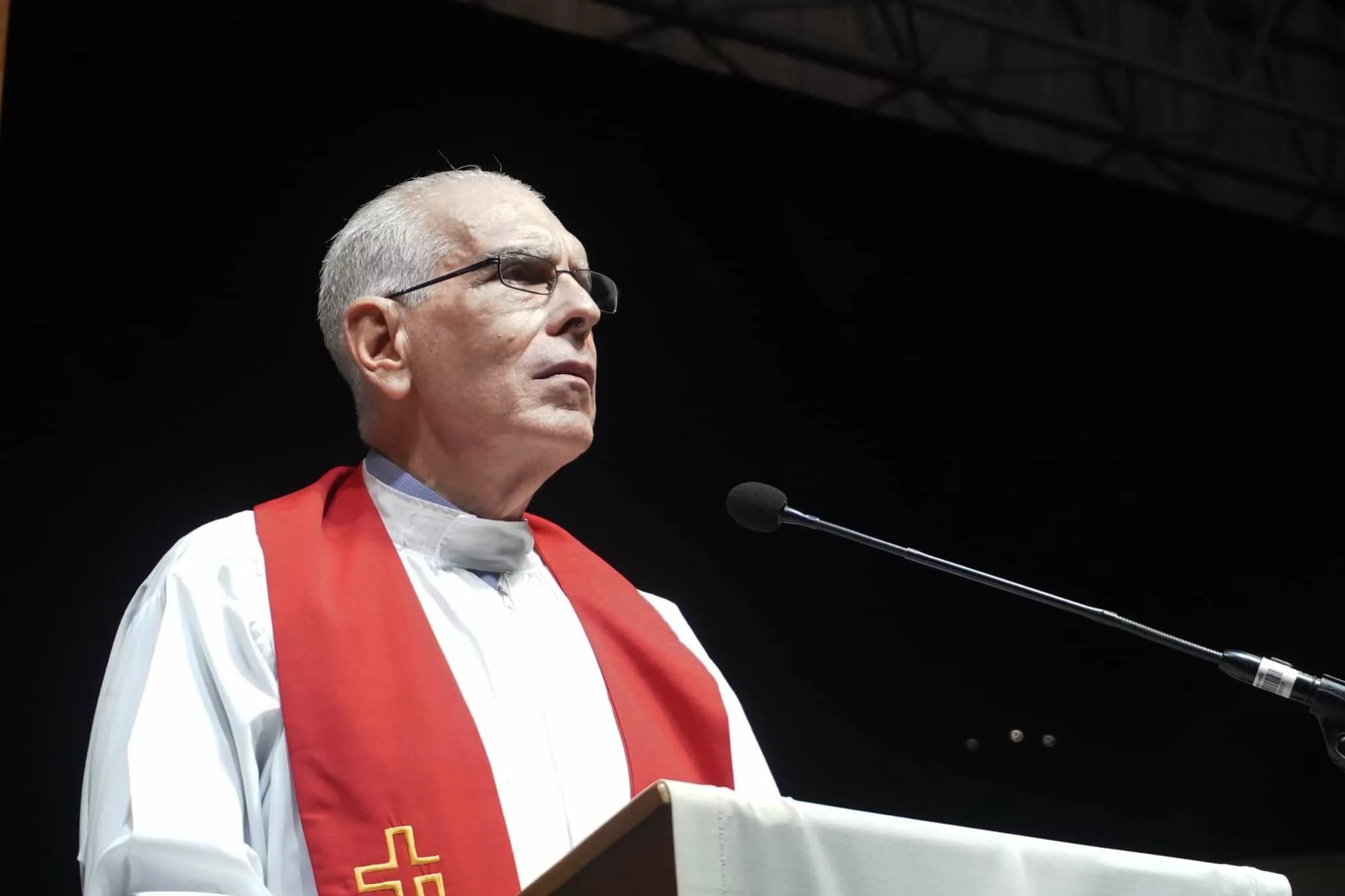
Rodolfo Cardenal, director of the Centro Monseñor Romero.
Noticias UCA: https://noticias.uca.edu.sv/articulos/cancion-de-amor-con-notas-falsas
Canción de amor con notas falsas
Por Rodolfo Cardenal
La canción de amor a la diáspora tiene notas falsas. En vísperas de las elecciones de 2027, Bukele ordenó concederle representación legislativa. La justificación es una declaración de amor. Le otorgó seis escaños en reconocimiento por sus “aportes” para “influir en temas graves como migración, inversión, derechos ciudadanos y vínculos con los países donde reside”. Además de canalizar las demandas de la diáspora, los legisladores que la representen le rendirán cuentas de su gestión.
El régimen, según su exposición de motivos, desea que los representantes de la diáspora participen en la elaboración de la legislación. Podrán opinar sobre la gestión gubernamental y discutir, reformar o rechazar los anteproyectos de ley de Casa Presidencial o presentar los propios. Bukele ofrece a la representación de menos de un millón de salvadoreños registrados unas libertades que niega a la de los seis millones residentes en el país. Incluso deberán rendir cuentas a sus electores, cosa que estos últimos no hacen. Ni siquiera tienen la cortesía de recibir sus peticiones.
El reconocimiento de la diáspora es una farsa. Es dudoso que el régimen tolere libertad de pensamiento y de expresión a sus diputados. No solo porque el poder absoluto sería puesto en entredicho, sino también porque algunos legisladores locales podrían seguir su ejemplo y, en ese caso, la Asamblea se le saldría de las manos. La diáspora está invitada a participar en “la construcción del futuro del país”. No en la que sus representantes pudieran desear, sino en la de Bukele, el único constructor. Esa es la respuesta a la pregunta por la agenda de los diputados de la diáspora.
Prueba de ello es la reforma de la Constitución para crear el llamado “Departamento 15”. La modificación no fue consultada, estudiada, ni mucho menos discutida. La aprobación fue inmediata y desde la ignorancia. Los diputados crearon la circunscripción sin conocer cuántos representantes le asignarían y de dónde procederían. Al final, redujeron la representación de los dos departamentos más poblados. Tampoco consideraron la espinosa cuestión de la representación proporcional. Detalles insignificantes para quienes su cometido es satisfacer los deseos de Bukele.
Una prueba adicional es la profundización partidista del órgano rector de las elecciones. Al igual que en la novedad anterior, el partido oficial, el único que cuenta, se adjudicó el control total de dicho órgano. Así, el oficialismo dejó pasar una oportunidad para separar las funciones administrativas y las jurisdiccionales de dicho tribunal, una reforma pedida desde hace tiempo. La institucionalidad no interesa, sino el control total para mantener las riendas del Estado en manos de la familia gobernante.
Esta es la razón de fondo de la inclusión de la diáspora en la legislatura. Bukele no tiene ningún interés en “ampliar y profundizar la participación política” de los expatriados. Tampoco aprecia sus experiencias en una sociedad del primer mundo. Desprecia su formación académica y su experticia en las nuevas tecnologías, su capacidad empresarial y su potencial para invertir, y su visión del desarrollo territorial, crucial para el bienestar de la familia que dejaron atrás.
A Bukele solo le interesa preservar la mayoría legislativa. La representatividad es una excusa. Prueba de ello es que los seis escaños asignados provienen de los dos únicos departamentos donde la oposición tiene representación en la actualidad. No es extraño tampoco que más de un diputado oficialista, no residente en el exterior, ya haya lanzado su candidatura para ocupar uno de esos escaños. La curul liberada será ocupada por otro alfil de Bukele.
Si acaso alguno se siente tentado y acepta la invitación con la idea de introducir novedades políticas, sociales o económicas en el país, pronto descubrirá su error. En todo caso, es poco probable que un expatriado bien establecido, aun con ambiciones políticas, esté dispuesto a abandonar sus comodidades para trasladarse al país y participar en las plenarias semanales solo para puyar un botón. El amor a Bukele no da para tanto.
Los salvadoreños residentes en Estados Unidos no necesitan esa representación. A ellos les afecta la legislación estadounidense, no la salvadoreña. Viven, trabajan, ahorran, invierten y pagan impuestos en Estados Unidos, no en El Salvador, a donde vienen de visita o deportados. La mayoría, amenazada por la deportación, que se desvive para sobrevivir y enviar remesas no está interesada en una política que la ignora. A pesar de las mutuas simpatías, Bukele no ha abogado por ella ante Trump. Solo negoció la repatriación de los líderes de las pandillas, esto es, de dirigentes terroristas.
En el mejor de los casos, la representación del Departamento 15 será sui generis. Bukele no está interesado en la diáspora, sino es impedir el avance de la oposición en la legislatura. Se ha vuelto hacia ella porque quizás presiente un descenso sensible en la simpatía y un aumento de la abstención. La lejanía la haría más receptiva a los cantos de sirena.
Rodolfo Cardenal, director del Centro Monseñor Romero.
Noticias UCA: https://noticias.uca.edu.sv/articulos/cancion-de-amor-con-notas-falsas