
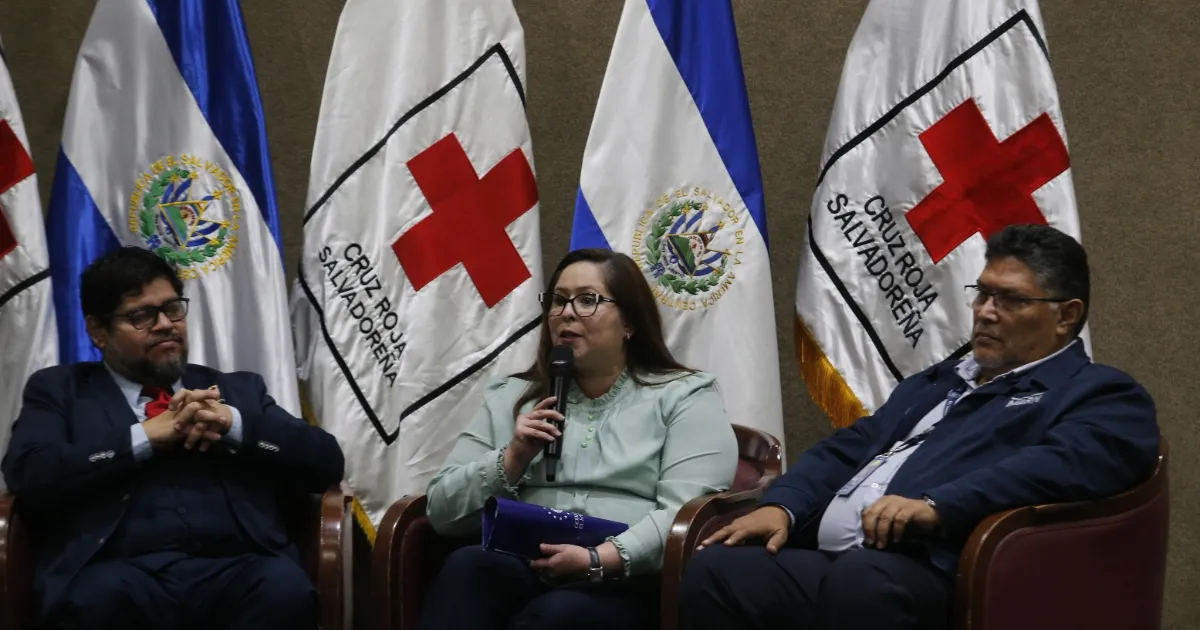
During the commemoration of the 141st anniversary of the Salvadoran Red Cross, the president of the movement in our country, José Benjamín Ruiz, addressed the possibility of expanding humanitarian assistance in El Salvador’s prisons in the context of the state of exception.
Ruiz stated that the international organization remains willing to collaborate on humanitarian assistance inside Salvadoran prisons, though he acknowledged there are limitations stemming from the current context.
“We’re currently in a period of exception, so there are certain limits; however, under international humanitarian law we are obligated to do it (help),” Ruiz said.
The representative also maintained that the organization will continue seeking mechanisms to support people deprived of liberty. “It’s not easy, but on our part there will always be a willingness, and everything we can do to help those who suffer and cry behind bars; we are here to serve, and not out of political interest. There are many things that can be done, there are many things happening in there; we are willing to help and we do so to the extent that we can,” he added.
In the country, the International Red Cross carries out humanitarian work through 15 community initiatives and the coordinated efforts of 60 branches, with the participation of more than 2,000 volunteers. The organization notes that its actions are focused on serving vulnerable populations, social inclusion programs, and assistance in response to suicide alerts and gender-based violence.
During the event held this Friday, the Salvadoran Red Cross noted that its work is carried out in an auxiliary humanitarian role, maintaining independence and neutrality, which “allows them to enter and provide assistance in contexts where other organizations face limitations.”
During the commemorative event, the institution also recognized the work of volunteers and technical staff who participate in emergencies and community crises, as well as those who died while carrying out humanitarian work in the country.
Situation in the prisons
According to the latest report from the Security Cabinet, presented during the approval of the 48th extension of the state of exception, 91,296 people were arrested under the measure between January 1 and February 15, 2026.
Meanwhile, relatives of detainees continue to report alleged human rights violations inside the prisons, a lack of information regarding the health status of inmates, and deaths in state custody.
Human rights organizations have also raised similar complaints. Last March, the Interdisciplinary Group of Independent Experts for El Salvador (GIPES) presented a report concluding that crimes against humanity have been committed during the implementation of the state of exception.
The document points to patterns of mass detentions, torture, forced disappearances, and deaths in prison, attributing responsibility to the state apparatus and recommending investigations.
El Comité Internacional de la Cruz Roja, dispuesto a brindar apoyo en cárceles de El Salvador
Laura Jordán
Durante la conmemoración del 141 aniversario de la Cruz Roja Salvadoreña, el presidente del movimiento en nuestro país, José Benjamín Ruiz, se refirió a la posibilidad de ampliar la asistencia humanitaria en los centros penitenciarios de El Salvador, en el contexto del régimen de excepción.
Ruiz afirmó que la organización internacional mantiene disposición para colaborar en atención humanitaria dentro de las cárceles salvadoreñas, aunque reconoció que existen limitaciones derivadas del contexto actual.
“Estamos ahora en un periodo de excepción, entonces hay ciertos límites; sin embargo, en el derecho humanitario internacional estamos obligados a hacerlo (ayudar)”, expresó Ruiz.
El representante también sostuvo que la organización continuará buscando mecanismos de apoyo para las personas privadas de libertad. “No es fácil, pero de parte nuestra siempre habrá disponibilidad y todo lo que esté para ayudar al que sufre y llora detrás de las rejas, nosotros estamos para servir y no con un interés político. Hay muchas cosas que se pueden hacer, hay muchas cosas que se están dando ahí, estamos dispuestos a ayudar y lo hacemos hasta donde podemos”, agregó.
En el país, la Cruz Roja Internacional desarrolla labores humanitarias mediante 15 iniciativas comunitarias y el trabajo coordinado de 60 seccionales con la participación de más de 2,000 voluntarios. La entidad destaca que sus acciones están enfocadas en atender a poblaciones en condición de vulnerabilidad, programas de inclusión social y asistencia ante alertas de suicidio y violencia de género.
Durante el evento desarrollado este viernes, la Cruz Roja Salvadoreña señaló que su trabajo se desarrolla bajo un rol auxiliar en materia humanitaria, manteniendo independencia y neutralidad, lo que les “permite ingresar y brindar asistencia en contextos donde otras organizaciones enfrentan limitaciones”.
Durante la actividad conmemorativa la institución también reconoció la labor de voluntarios y personal técnico que participan en emergencias y crisis comunitarias, así como a quienes fallecieron mientras realizaban labores humanitarias en el país.
Situación en las prisiones
Según el último informe del Gabinete de Seguridad presentado durante la aprobación de la prórroga número 48 del régimen de excepción, entre el 1 de enero y el 15 de febrero de 2026 fueron capturadas 91,296 personas en el contexto de la medida.
Mientras tanto, familiares de personas detenidas continúan denunciando presuntas violaciones a derechos humanos dentro de los centros penales, falta de información sobre el estado de salud de los reclusos y muertes bajo custodia estatal.
Organizaciones de derechos humanos también han señalado denuncias similares. El Grupo Interdisciplinario de Expertos Independientes para El Salvador (GIPES) presentó en marzo pasado un informe en el que concluyó que durante la implementación del régimen de excepción se han cometido crímenes de lesa humanidad.
El documento señala patrones de detenciones masivas, torturas, desapariciones forzadas y muertes en prisión, atribuyendo responsabilidad al aparato estatal y recomendando investigaciones.