
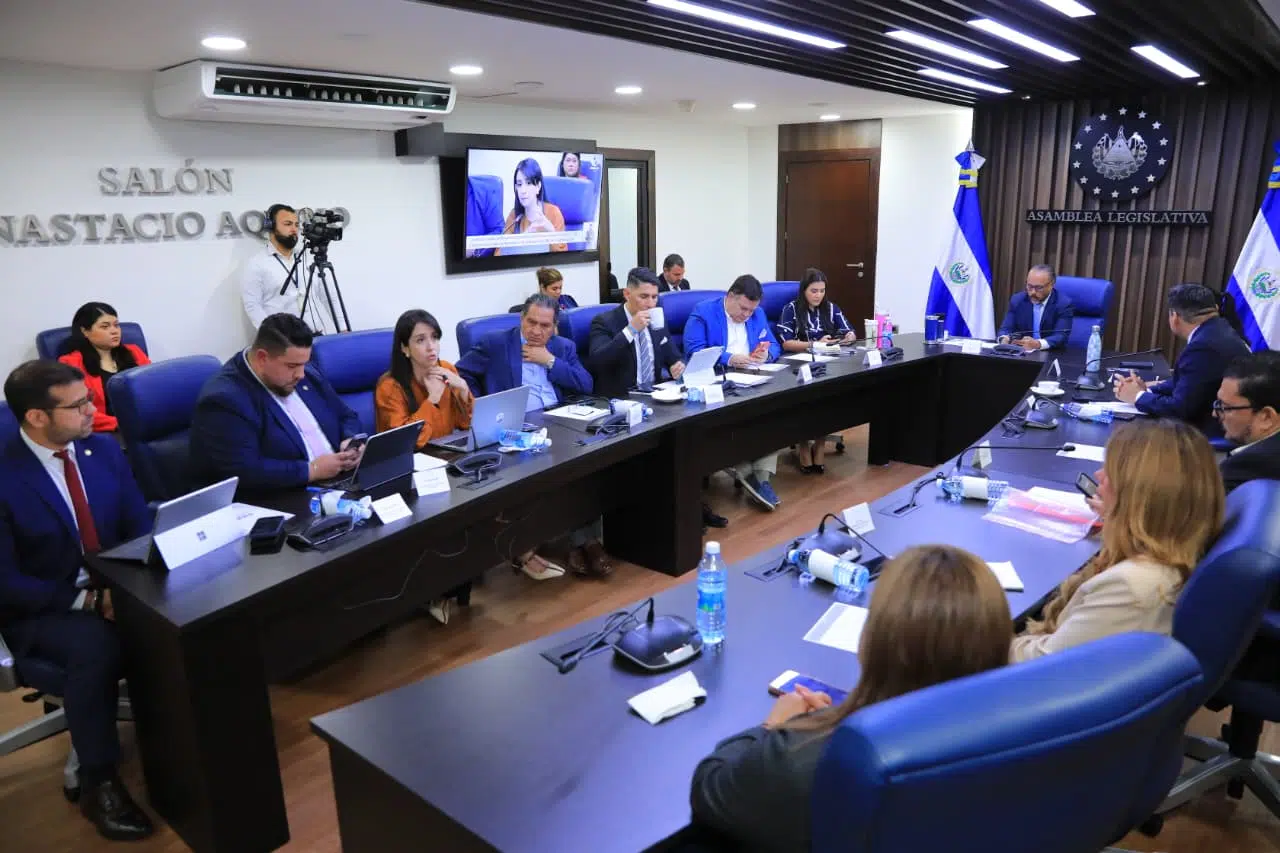
The Legislative Assembly is preparing to ratify a constitutional reform to create a special electoral district for the diaspora; reforms to secondary legislation will be taken up “later,” Ernesto Castro announced, while ARENA lawmaker Marcela Villatoro is calling for domestic residents not to lose representation.
The Political Commission has been studying the ratification of constitutional reforms to Article 79, which would create a 15th electoral district so that Salvadorans living abroad can directly elect their representatives, and to Article 208, which would “depoliticize” the Supreme Electoral Tribunal (TSE).
Regarding the first constitutional reform, there are questions that the ruling party has yet to clarify; for example: How many seats will the diaspora have? Will the number of lawmakers per department be reduced? And what would the formula look like? These questions were raised by Nationalist Republican Alliance (ARENA) lawmaker Marcela Villatoro.
“There are several questions, because to date we have only seen the constitutional reform but we have no clarity on the specifics of how many lawmakers there will be or where these lawmakers will come from,” Villatoro stated.
“What is established in the Constitution is that lawmakers are elected based on population, and depending on the size of the population, a department gets a total number of seats to represent it. For example, San Salvador has 16 lawmakers based on the department’s population, and since the law established that a department couldn’t have just one lawmaker, but had to have at least two; within this population count there are departments that are overrepresented, because there are departments that should only get one lawmaker based on their population, but since the law says they cannot have fewer than two, they have two, and there are other departments like La Libertad that are short one lawmaker.”
The reforms to the Electoral Code approved in mid-2023 established that “each department of the Republic shall constitute an independent electoral district for the election of its corresponding lawmakers.”
Article 13 states that “each district shall have at least two full lawmakers and an equal number of alternates.” The current number of lawmakers per department is as follows: San Salvador, 16. La Libertad, 7. Santa Ana, San Miguel, and Sonsonate, 5 each. Usulután, 4. Ahuachapán and La Paz, 3 each. Meanwhile, La Unión, Cuscatlán, Chalatenango, Cabañas, Morazán, and San Vicente have 2 lawmakers each.
“The legally correct thing is that if they are going to base it on people registered with a DUI abroad, they should be elected in a special district, without taking lawmakers away from other departments, because if I take even one lawmaker away from San Salvador, I am leaving that department’s population without representation. So, how does this work? I’m going to give a voice to some, but take it away from others?” the lawmaker questioned.
Villatoro clarified that she is not against the diaspora having representation; on the contrary, she stated it is a debt owed for years. “What we believe is that both they and the people living here need to have their representatives based on their population,” Villatoro explained.
The lawmaker added that another question is who would be eligible to run in the 15th district. “What makes sense is that if there is going to be a lawmaker coming from the diaspora, the candidate has to live abroad, because they are going to be addressing the needs of people abroad.” “Could a lawmaker from San Salvador, for example, run on the diaspora list? That doesn’t seem right to me, because they would be taking a spot from a lawmaker who actually comes from abroad; that is the idea, but it hasn’t been clarified yet.”
“There are several questions because, unfortunately, only the constitutional reform was passed, but the secondary reforms that should have come with it so we could have a clear picture of the issue were not brought forward; here, where there’s a law, there’s a loophole, always,” Villatoro stated.
In response to Villatoro’s comments, Assembly President Ernesto Castro stepped in, stating that now is not the time to have that discussion, since the reform must first be ratified: “That is an important discussion we are going to have afterward; next week, in the next 15 days, that is when we will define all of that.”
“Now a bunch of experts have come out with their formulas, saying — so many lawmakers. But that is something we are going to define ourselves when the time comes,” Castro said. He also noted that to run as a diaspora lawmaker candidate, “it can be any Salvadoran who simply meets the requirements; at the end of the day, they are the ones who are going to make the decision,” Castro said.
Castro considered the points raised by lawmaker Villatoro important, but said they “are not part of this reform, they are going to be an important complementary part, but that will come in the discussion once this is ratified, for us to reform the Electoral Code and the Political Parties Law, which has to be done; the way things are going, it will be in the next 15 days.”
Marcela Villatoro explained that she was raising these questions in the commission because Deputy Foreign Minister Adriana Mira and the head of the RNPN, Fernando Velasco, were at the working table explaining the benefits of this reform for the diaspora. Castro urged Villatoro to direct those questions to the TSE, since the individuals mentioned had nothing to do with the number of lawmakers. “The TSE only regulates elections, but they are the ones who have direct contact with Salvadorans abroad,” Villatoro explained. Neither Mira nor Velasco offered their opinions on Villatoro’s questions.
Meanwhile, TSE President Roxana Soriano emphasized that it is up to the Legislative Assembly to determine the number of lawmakers and the requirements that should be included in a reform to the Electoral Code.
Ernesto Castro stressed that he, in particular, has “never considered the idea of adding more lawmakers, because if we are not careful we will end up at 90; we will have more than we had three years ago. I think 60 is fine, including whatever representation our brothers living abroad end up with, and I think it would also be a bit unfair to take lawmakers away from departments that have two.”
“San Salvador has 16 lawmakers, there are other departments that have more than 5, 6, 7; so, I don’t know, maybe that is where we can look at how they are going to work out the formulas that are floating around right now,” Castro said.
Based on Castro’s statement, it is expected that the departments with the most representation, such as San Salvador and La Libertad, could see their number of representatives reduced to allocate seats to the diaspora.
Diario CoLatino: https://www.diariocolatino.com/nuevas-ideas-pospone-debate-sobre-escanos-de-la-diaspora-en-la-asamblea/
Nuevas Ideas pospone debate sobre escaños de la diáspora en la Asamblea
Por Redacción Nacionales @DiarioCoLatino
La Asamblea Legislativa se prepara para ratificar una reforma constitucional para habilitar una circunscripción especial para la diáspora; las reformas a las leyes secundarias se conocerán “más adelante”, informó Ernesto Castro; mientras que la diputada de ARENA, Marcela Villatoro, pide que no se les quite representación a los habitantes del territorio nacional.
En la Comisión Política ha estado en estudio las ratificaciones de reforma constitucional en sus artículos 79 para habilitar una circunscripción 15 para que los salvadoreños en el exterior puedan elegir directamente a sus representantes; y al 208 para “despartidizar” el Tribunal Supremo Electoral (TSE).
Sobre la primera reforma constitucional existen dudas que aún no han sido aclaradas por el oficialismo; por ejemplo: ¿cuántos escaños se tendrán para la diáspora?, ¿se reducirán los diputados por departamento? y ¿cómo sería la fórmula?, estas interrogantes fueron expuestos por la diputada de Alianza Republicana Nacionalista (ARENA), Marcela Villatoro.
“Hay varias dudas, porque hasta la fecha solo hemos visto la reforma constitucional pero no tenemos claridad de las definiciones de cuántos diputados van a ser, de dónde van a salir estos diputados”, expuso Villatoro.
“Lo que está establecido dentro de la Constitución: los diputados son electos basados en la población y según la cantidad de población van a tener la sumatoria de escaños que van a representar a ese departamento; por ejemplo, San Salvador tiene 16 diputados basado en la población del departamento y como la ley quedó que no se podía quedar solo un diputado en un departamento, sino que tenían que ser dos; dentro de este conteo de población hay departamento que están sobrerrepresentados, porque hay departamentos que le corresponde un diputado por la población que tiene, pero como la ley dice que no pueden tener menos de dos, tienen 2 y hay otros departamentos como La Libertad que le faltan un diputado”.
Las reformas al Código Electoral aprobadas a mediados de 2023, establecieron que “cada departamento de la República constituirá una circunscripción independiente para la elección de sus correspondientes diputados”.
El Art 13 señala que “cada circunscripción se integrará con al menos 2 diputados o diputadas propietarios e igual número de suplentes. Los diputados representantes por departamento son actualmente: San Salvador, 16. La Libertad, 7. Santa Ana, San Miguel y Sonsonate, 5 cada uno. Usulután, 4. Ahuachapán, y La Paz, 3 cada uno. Mientras que La Unión, Cuscatlán, Chalatenango, Cabañas, Morazán y San Vicente con 2 diputados cada departamento.
“Lo legalmente correcto es que si se van a basar en la gente duizada en el exterior deberían de elegirse en una circunscripción especial; sin quitarle diputado a otros departamentos, porque si yo le quito un solo diputado a San Salvador; dejo sin representación a la población de ese departamento. Entonces, ¿cómo es la cosa? les voy a dar voz a unos, ¿pero se las voy a quitar a otros?”, cuestionó la legisladora.
Villatoro aclaró que no está en contra que la diáspora tenga representación, sino al contrario, planteó que es una deuda desde hace años. “Lo que nosotros creemos es que tanto ellos como los que viven acá, tienen que tener sus representantes basados en su población”, explicó Villatoro.
La funcionaria sostuvo que otra de las interrogantes es sobre quiénes serán las personas que se sometan a la circunscripción 15. “Lo que se hace lógico es que si va ser un diputado que vendrá de la diáspora, el candidato tiene que vivir afuera porque él va a buscar las necesidades de los de afuera”. “¿Un diputado por ejemplo de San Salvador, va a poder correr por la lista de diputados de la diáspora?, a mi no me parece correcto, porque le está quitando lugar a un diputado que proviene de afuera; que esa es la idea, pero que no está esclarecido todavía”.
“Son varias dudas que lastimosamente, solo se hizo la reforma constitucional pero no se trajo las reformas que tendrían que venir al respecto, para tener una noción clara del tema; aquí hecha la ley, hecha la trampa, siempre”, expresó Villatoro.
Sobre los comentarios de Villatoro salió al paso el presidente Ernesto Castro, quien afirmó que no es el momento para tener dicha discusión, ya que primero, se debe ratificar la reforma: “Eso es una discusión importante que vamos a tener después; la otra semana, los próximos 15 días, allí vamos a definir eso”.
“Ahora han salido montón de expertos con sus fórmulas, diciendo – tantos diputados-. Pero eso, lo vamos a definir nosotros en su momento”, comentó Castro; a la vez, señaló que para postularse a una candidatura a diputado de la diáspora, “puede ser cualquier salvadoreño que simplemente cumpla con los requisitos; si al fin y al cabo es que son ellos los que van a tomar la decisión”, planteó Castro.
Castro consideró importantes los puntos expuestos por la diputada Villatoro, pero “no son parte de esta reforma, van a hacer una parte importante complementaria, pero va estar en la discusión, una vez ya ratificada esto, para nosotros reformar el Código Electoral y la Ley de Partidos Políticos, que tiene que hacerse, de acuerdo cómo vamos, será en los próximos 15 días”.
Marcela Villatoro explicó que hacía estas interrogantes en la comisión porque a la vicecanciller, Adriana Mira y al presidente del RNPN, Fernando Velasco, estaban en la mesa de trabajo explicando el beneficio de esta reforma para la diáspora. Castro instó a Villatoro a hacerle esas preguntas al TSE, ya que los anteriores mencionados no tenían que ver con el número de diputados. “El TSE únicamente regula las elecciones, pero son ellos los que tienen contacto directo con los salvadoreños en el exterior» explicó Villatoro. Ni Mira ni Velasco brindaron sus opiniones sobre las interrogantes de Villatoro.
Mientras que la presidenta del TSE, Roxana Soriano, enfatizó que le corresponde a la Asamblea Legislativa determinar el número de diputados y los requisitos que deben ir en una reforma al Código Electoral.
Ernesto Castro enfatizó que él, en particular “nunca he contemplado la idea de aumentar diputados porque si no tenemos cuidado vamos a llegar a 90; vamos a quedar más de lo que teníamos hace tres años. Yo creo que con 60 estamos bien, incluyendo la representación que quede de nuestros hermanos que viven en el exterior y yo creería que sería un poco injusto también, que le quitemos diputados que tienen 2”.
“San Salvador tiene 16 diputados, hay otros departamentos que tienen más de 5,6,7; entonces, no sé, quizás ahí es donde podemos ver como van a hacer las fórmulas que ahora andan en el aire”, sostuvo Castro.
Por la declaración de Castro se prevé que los departamentos que tengan mayor representación, como es el caso de San Salvador y La Libertad, puedan reducir el número de representantes para asignarlos a la diáspora.
Diario CoLatino: https://www.diariocolatino.com/nuevas-ideas-pospone-debate-sobre-escanos-de-la-diaspora-en-la-asamblea/