
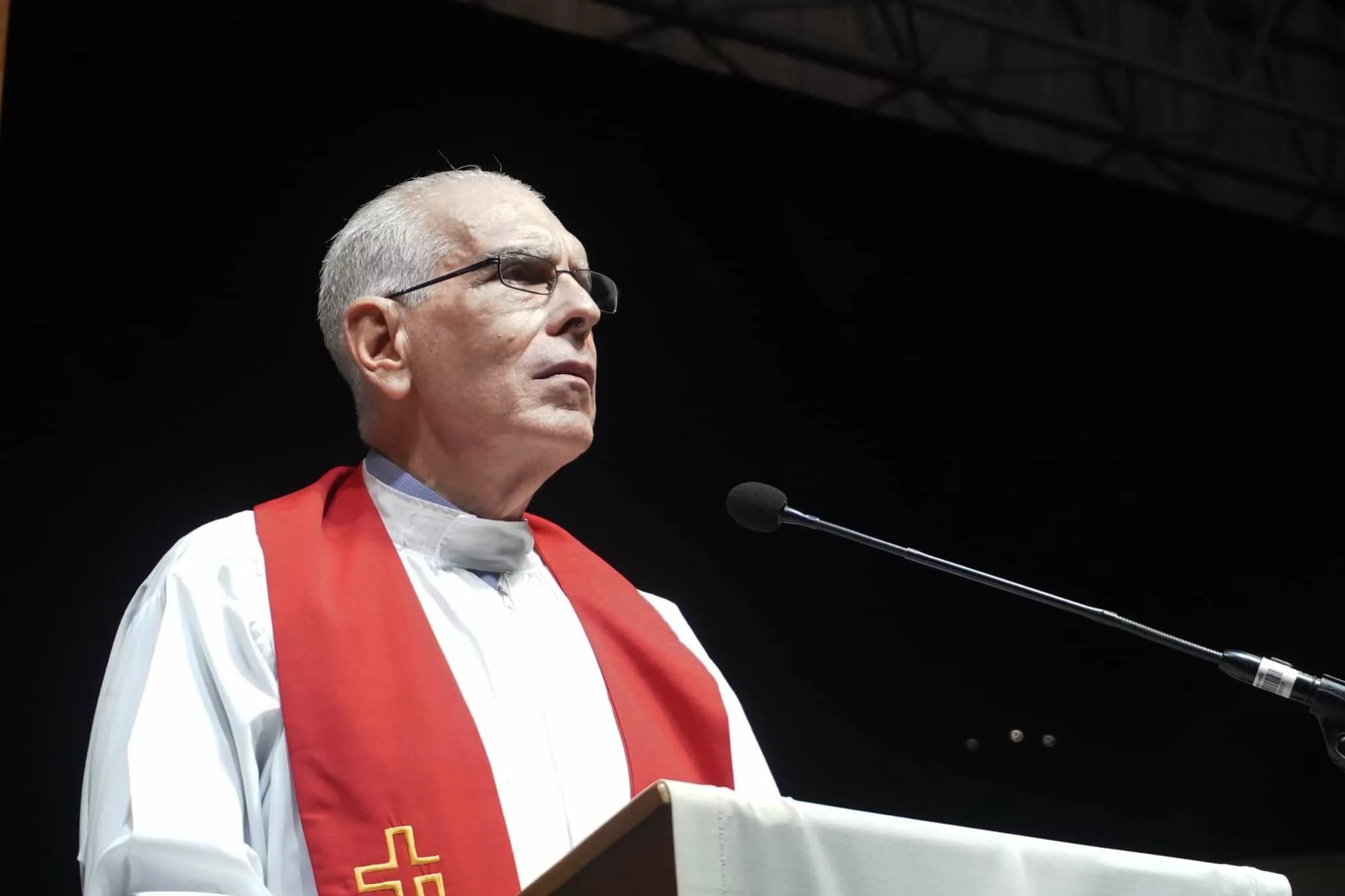
The human rights crisis has worsened and taken on new dimensions by unexpectedly drawing in the first lady. Bukele’s reaction was swift. He insists on conflating rights and justice with terrorism and insecurity, an unacceptable argument, except to his faithful. In a desperate effort to maintain an increasingly weak position, he cries out, almost begs people to watch the video that confirms his stance, to see clearly, not to be fooled, to look closely, because he isn’t the one saying it, the recording is, so that there is no doubt whatsoever. These expressions, gathered in the few lines of a post on X, reveal unease and impatience in the face of a crisis that seems unmanageable.
The indiscretion of one of his brothers compromised his wife’s image by claiming that her office is part of the ad hoc commission that decides the innocence of those detained under the state of exception and, therefore, who goes free and who doesn’t. Although it doesn’t implicate her directly, it’s hard to believe she is unaware of what her staff is doing.
The sudden imposition of life sentences on minors, on the other hand, placed the first lady in an awkward position. At various international forums linked to the UN system, she has presented her initiatives in support of families and children. The Scaling Up Nutrition Movement, sponsored by that organization, invited her to join its leadership in recognition of her work. And the United Nations Children’s Fund (UNICEF) actively participated in implementing her most prominent initiatives: “Nacer con Cariño” (Born with Love), “Crecer Juntos” (Growing Together), and “Amor Convertido en Alimento” (Love Turned into Nourishment).
Given this track record, Amnesty International turned to her as a key interlocutor with her husband, asking her to urge him to revise the legislation on life sentences to guarantee minors’ right to social reintegration. The organization takes the liberty of reminding her that imposing such a sentence on minors is at odds with international guidelines on juvenile justice and, in particular, with the principles of UNICEF, one of her strategic allies.
Additionally, it asked her to intercede on behalf of those whose homes were destroyed by the mass and arbitrary detentions under the state of exception. The mothers searching for their sons and daughters are asking to know where and how they are. They don’t question the need for security; they are asking to fulfill a basic need they cannot renounce, because motherhood binds them inseparably to their children. Amnesty suggests the first lady open a safe space to listen to them. This is not a debate about security, but about addressing the concerns of mothers anguished over their children, who have not been convicted of any crime, and over the conditions in which they are being prosecuted.
The crisis has placed the first lady in a dilemma. If she decides to pretend it doesn’t concern her, she discredits herself, not so much domestically as internationally. She will find it hard to appear again at the international forums where her contributions on family and children have been applauded. The loss of credibility will fall not only on her but also, and above all, on her husband’s regime. A very sensitive point, as shown by the barrages on X against the press and human rights organizations, some of which maintain a close relationship with his own wife.
If she advocates for the minors and the mothers, she’s likely to clash with her husband, for whom yielding to Amnesty International’s requests is an unacceptable capitulation. If her intercession is rejected, it will be clear that her influence is limited.
The human rights crisis reached a new level when it came before a U.S. congressional committee, which took note of the long list of violations and alleged crimes against humanity. Bukele’s reaction reveals his regime’s powerlessness to contain the spread of the accusations and the loss of prestige. On top of that, trying 486 gang members en masse hasn’t been received as a stroke of genius by the national justice system, but as a reprehensible act. Much to his chagrin, he increasingly fits the profile of a typical Latin American dictator from the 19th and 20th centuries.
Not all is lost. Turning to his wife’s intercession offers him an elegant way out. Amnesty International’s requests are easy to implement if there’s political will. Accepting them in her name, a woman devoted to family and children, would elevate her work as first lady and project him as a magnanimous leader who knows how to listen.
A gesture of this nature is more effective for beginning to contain the damage caused by the current crisis than the proliferation of provocative and insulting posts on X. Those might relieve some pressure, but they don’t convince anyone. It’s clear that the current approach only erodes the presidential image.
Noticias UCA: https://noticias.uca.edu.sv/articulos/crisis-aguda-de-prestigio-y-credibilidad
Crisis aguda de prestigio y credibilidad
Rodolfo Cardenal
La crisis de los derechos humanos se ha agravado y ha adquirido nuevas dimensiones al incluir, inesperadamente, a la primera dama. La reacción de Bukele no se hizo esperar. Insiste en confundir derechos y justicia con terrorismo e inseguridad, un argumento inaceptable, excepto para sus fieles. En un esfuerzo desesperado por sostener una posición cada día más débil, clama, casi implora, ver el video que confirma su postura, ver con claridad, no dejarse engañar, fijarse bien, porque no lo dice él, sino la grabación, que no quede duda alguna. Estas expresiones, reunidas en las pocas líneas de una publicación en X, revelan inquietud e impaciencia ante una crisis que parece inmanejable.
La indiscreción de uno de sus hermanos comprometió la imagen de su esposa, al asegurar que su despacho forma parte de la comisión ad hoc que decide la inocencia de los detenidos por el régimen de excepción y, por tanto, quién sale libre y quién no. Aunque no la implica directamente, es difícil que desconozca las actividades de sus colaboradores.
La intempestiva imposición de la cadena perpetua a los menores de dieciocho años colocó a la primera dama, por otro lado, en una posición embarazosa. En diversos foros internacionales vinculados al sistema de la ONU, ella ha expuesto sus iniciativas a favor de la familia y los menores. El Movimiento para el Fomento de la Nutrición, patrocinado por dicha organización, la invitó a formar parte de su dirección en reconocimiento de su labor. Y el Fondo de Naciones Unidas para la Infancia (Unicef) participó activamente en la implementación de sus iniciativas más destacadas: “Nacer con cariño”, “Crecer juntos” y “Amor convertido en alimento”.
Dado este historial, Amnistía Internacional recurrió a ella como “interlocutora clave” de su marido para que le pidiera revisar la legislación sobre la cadena perpetua de tal manera que garantice el derecho de los menores a la reintegración social. La organización se permite recordarle que imponer esa pena a los menores está reñido con las directrices internacionales sobre la justicia juvenil y, en particular, con los principios de la Unicef, uno de sus aliados estratégicos.
Adicionalmente, le solicitó interceder por aquellas personas cuyos hogares fueron destruidos por las detenciones masivas y arbitrarias del régimen de excepción. Las madres que buscan a sus hijos e hijas piden saber dónde y cómo están. No cuestionan la necesidad de la seguridad; solicitan satisfacer una necesidad básica a la cual no pueden renunciar, porque la maternidad las une indisolublemente con sus hijos e hijas. Amnistía le sugiere a la primera dama abrir un espacio seguro para escucharlas. No es un debate sobre seguridad, sino atender las inquietudes de madres angustiadas por sus hijos, que no han sido condenados por ningún delito, y por las condiciones en que son procesados.
La crisis ha colocado a la primera dama ante un dilema. Si decide no darse por aludida, se desprestigia, no tanto dentro del país como fuera. Difícilmente podrá comparecer de nuevo en los foros internacionales donde sus aportes sobre la familia y la niñez han sido aplaudidos. El descrédito no recaerá solo sobre ella, sino también, y sobre todo, en el régimen de su esposo. Un punto muy sensible, tal como muestran las andanadas en X contra la prensa y las organizaciones de derechos humanos, algunas de las cuales mantienen una relación estrecha con su propia esposa.
Si aboga por los menores y las madres es probable que choque con su marido, para quien ceder a las peticiones de Amnistía Internacional es una claudicación inaceptable. Si su intercesión es rechazada, será evidente que su influencia es poca.
La crisis de los derechos humanos alcanzó un nuevo nivel al llegar a una comisión del Congreso estadounidense, que tomó nota de la larga lista de violaciones y de presuntos crímenes de lesa humanidad. La reacción de Bukele desvela la impotencia de su régimen para contener la propagación de las denuncias y del desprestigio. A esto se suma que juzgar a 486 pandilleros en combo no ha sido recibido como una “genialidad” de la justicia nacional, sino como un hecho reprobable. Muy a su pesar se perfila cada vez más como un típico dictador latinoamericano de los siglos XIX y XX.
No todo está perdido. El recurso a la intercesión de su esposa le ofrece una salida elegante. Las peticiones de Amnistía Internacional son fáciles de implementar si hay voluntad política. Aceptarlas en su nombre, una mujer consagrada a la familia y a los menores, realzaría su trabajo como primera dama y a él lo proyectaría como un gobernante magnánimo que sabe escuchar.
Un gesto de esta naturaleza es más eficaz para empezar a contener el daño ocasionado por la crisis actual que la proliferación de publicaciones en X provocadoras e insultantes. Estas quizás alivien la presión, pero no convencen. Es claro que la aproximación actual solo desgasta la imagen presidencial.
Rodolfo Cardenal, director del Centro Monseñor Romero.
Noticias UCA: https://noticias.uca.edu.sv/articulos/crisis-aguda-de-prestigio-y-credibilidad