
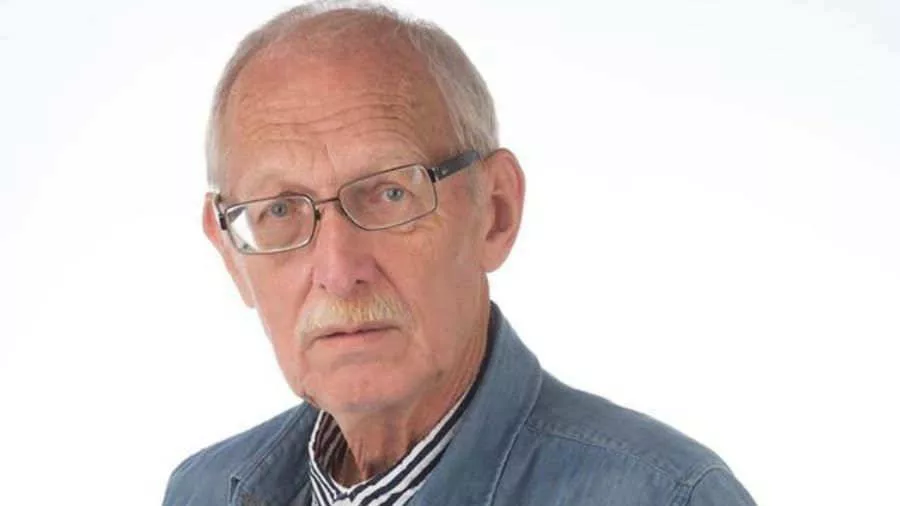
Paolo Luers, March 27, 2026
Today, more than ever in its recent history, the country needs a strong, economically solid, independent, and courageous press. It is a failure of civil society that it lacked the capacity to sustain a media outlet so obviously under pressure, under attack, and facing fiscal harassment from the government. These pressures include—it must be said—blackmail and extortion against the private sector, which for decades has been a partner of the country’s newspapers. Sadly, the extortion worked.
When we had to shut down Primera Plana in 1995—the weekly newspaper we had founded 10 months earlier—it was also because of the private sector’s unwillingness to sustain a media outlet created with the intention of giving the postwar period and the democratic transition the journalism it needed. In the final issue, the one with the bitter farewell, I wrote that a country usually gets the newspapers it deserves.
I wrote, angrily, that we had launched the project with international cooperation funds, but if Salvadoran society wasn’t willing to sustain a media outlet of this pluralistic, democratic, and investigative nature, it didn’t deserve the effort. We weren’t willing to give society something for free that it wasn’t prepared to support. The willingness society had to show to deserve a media outlet like Primera Plana meant businesses buying advertising, readers paying for subscriptions, domestic capital investing, academics making it their platform, and officials and politicians feeding it information.
Today, as I have to write about the closure of a print newspaper, I’ll say the same thing. Salvadoran society, as it’s currently configured, isn’t capable of sustaining the few media outlets that continue fulfilling their duty and their obligations to their own professional ethics, but above all, to civil society.
Why is our society so spineless when it comes to the media outlets that try to defend democracy, civil liberties, transparency, and public dialogue against a political regime doing everything possible to destroy these values?
Is it out of indifference to the dismantling of press freedom that businesses stop placing their advertising in the newspapers? Could it be that they agree with the government’s attempt to suffocate professional and independent journalism and replace it with its propaganda and disinformation outlets? It’s probably a bit of both, plus a huge dose of caution and fear in the face of government blackmail. Few dared to side with a media outlet the government has declared an enemy of the state. Those few deserve to be congratulated.
Whatever the reasons, the Diario is suspending its print run because on its own, without the support of society and with a government bent on breaking it, it’s no longer viable. El Diario de Hoy announced today that it will continue publishing as a digital newspaper on its site eldiariodehoy.com. It’s a brave decision. I hope you have the capacity to sustain this effort without ceasing to produce the journalism this government detests and is trying to wipe out.
I hope to keep seeing Alecus’s cartoons, reading the brave columns by Mario Vega and others, and receiving the reports on political prisoners, government corruption, and the dismantling of democracy that have earned the Diario the vengeance of Nayib Bukele. If it does, the Diario will remain in the crosshairs of Nayib Bukele’s vengeance. The threat remains active.
The government wants to break the Diario by subjecting it to fiscal harassment. It’s applying an unconstitutional interpretation of the Press Law, which grants newspapers tax exemptions. At any moment, the government can collect on an alleged debt that, with fines and interest, would reach an unpayable amount.
I hope society and the private sector realize what they would lose with the total closure of a newspaper. Hopefully in time to prevent the same thing from happening to La Prensa Gráfica, which will now be the only print newspaper circulating in the streets, in offices, and in the markets. Because MAS, EDH’s sister newspaper, is also stopping its print run tomorrow.
MAS was the newspaper where Paolo’s Letters and Alecus’s cartoons made their debut. Too many media outlets have stopped practicing critical, independent journalism. Some survive, but on their knees. They’ll only survive if they adapt to the rules of the dictatorship.
With the closure of MAS and the print edition of the Diario, Bukele has come closer to his goal of creating a society without dialogue, establishing a monologue with his propaganda and disinformation. It’s what dictatorships do. They detest pluralism the way vampires detest the light…
When I joined El Diario de Hoy in 2007, it was at the invitation of Fabricio Altamirano, who had just taken over as director of the EDH and MAS newspapers. When I asked him why he was inviting a left-wing journalist and former guerrilla fighter to write for his newspaper, he told me: I’m not just inviting you to write; I’m inviting you to help us transform the Diario into a truly pluralistic, open, democratic media outlet. How could I turn down that opportunity?
El Diario de Hoy has transformed itself into the democratic and pluralistic media outlet that Nayib Bukele cannot tolerate. The Diario has subjected every government, right and left, to critical scrutiny; it has exposed acts and schemes of corruption and abuses of power by Bukele; it has defended the rights of social movements; it has promoted dialogue, consensus-building, and free expression.
The Diario, true to the legacy of its founders, who used it to oppose the dictatorship of General Martínez and his insistence on presidential reelection, has consistently opposed the unconstitutional reelection of Nayib Bukele. The Diario has been relentless in exposing the systematic corruption of Tony Saca and Mauricio Funes, and it acts the exact same way in the face of the corruption that is part of the DNA of the Bukele model. The reporters, editors, columnists, cartoonists, and photographers at El Diario de Hoy can be proud of the dignified role we’ve played despite all the obstacles.
El Diario de Hoy hasn’t failed. It would have failed if it had submitted to the rules of the dictatorship—rules of submission and silence in the face of injustice.
That’s why I repeat: the Diario didn’t fail. The society that wasn’t willing to sustain an independent and uncomfortable newspaper—that’s what failed.
Regards,
Paolo Luers: https://www.paololuers.com/cartas-de-paolo/carta-a-los-colegas-de-el-diario-de-hoy-no-se-rindan-de-paolo-luers
Carta a los colegas de El Diario de Hoy: ¡NO SE RINDAN!
Paolo Luers, 27 de marzo de 2026
Hoy, más que nunca en su reciente historia, el país necesita una prensa fuerte, económicamente sólida, independiente y valiente. Es un fracaso de la sociedad civil que no tuvo la capacidad de dar sustento a un medio que tan obviamente está bajo presión, ataques, acosos fiscales del gobierno. Estas presiones incluyen -hay que decirlo- chantajes y extorsiones al sector privado que por décadas ha sido socio de los periódicos del país. Lastimosamente, las extorsiones tuvieron éxito.
Cuando en 1995 tuvimos que cerrar Primera Plana, el periódico semanal que habíamos fundado 10 meses antes, también fue por falta de disposición del sector privado de sostener un medio creado con la intención de dar a la posguerra y la transición democrática el periodismo que necesitaba. En el último número, el de la amarga despedida, escribí que un país suele tener los periódicos que merece.
Escribí, con enfado, que habíamos lanzado el proyecto con fondos de cooperación internacional, pero si la sociedad salvadoreña no estaba dispuesta a sostener un medio de esta característica plural, democrática e investigativa, no merecía el esfuerzo. No estábamos dispuestos de regalar a la sociedad algo que no estaba dispuesta a sostener. La disposición que tenía que mostrar la sociedad para merecer un medio como Primera Plana incluía que empresas pauten publicidad, que lectores paguen suscripciones, que capitales nacionales inviertan, que académicos lo hagan tribuna suya, que funcionarios y políticos lo nutren de información.
Hoy que me toca escribir sobre el cierre de un periódico impreso, diré lo mismo. La sociedad salvadoreña, como ahora está configurada, no es capaz de sostener a los contados medios que siguen cumpliendo su deber y sus obligaciones ante su propia ética profesional, pero sobre todo ante la sociedad civil.
¿Por qué nuestra sociedad es tan pusilánime con los medios de comunicación que tratan de defender la democracia, las libertades civiles, la transparencia y el diálogo público ante un régimen político que hace lo posible para destruir estos valores?
¿Será por indiferencia ante el desmontaje de la libertad de prensa que las empresas dejan de pautar su publicidad con los periódicos? ¿Será que están de acuerdo con el intento del gobierno de ahogar al periodismo profesional e independiente y sustituirlo con sus medios de propaganda y desinformación? Habrá de las dos cosas, más una enorme porción de cautela y miedo ante los chantajes del gobierno. Pocos se atrevieron a ponerse del lado de un medio de comunicación que el gobierno ha declarado enemigo del Estado. A estos pocos hay que felicitarlos.
Sean cuales sean las razones, el Diario suspende sus impresiones porque solo, sin sustento de la sociedad y con un gobierno empeñado a quebrarlo, ya no es viable. El Diario de Hoy anunció hoy que va seguir publicando como periódico digital en su sitio eldiariodehoy.com. Es una decisión valiente. Deseo que ustedes tengan la capacidad de sostener este esfuerzo sin dejar de producir el periodismo que este gobierno detesta y trata de desaparecer.
Espero seguir viendo las caricaturas de Alecus, leer las columnas valientes de Mario Vega y otros, recibir las notas sobre los presos políticos, la corrupción gubernamental y el desmontaje de la democracia, que le han valido al Diario la venganza de Nayib Bukele. Si lo hace, el Diario seguirá en la mira de venganza de Nayib Bukele. La amenaza sigue vigente.
El gobierno quiere quebrar al Diario aplicándole el acoso fiscal. Hace una interpretación inconstitucional de la Ley de Imprenta que otorga exención de impuestos a los diarios. En cualquier momento, el gobierno puede ejecutar una supuesta deuda que con las multas y los intereses llegaría a un monto impagable.
Ojalá que la sociedad y la empresa privada se den cuenta de lo que perderían con el cierre total de un periódico. Ojalá a tiempo para evitar que lo mismo pase con La Prensa Gráfica, que ahora será el único periódico impreso que circulará en las calles, en las oficinas, en los mercados. Porque el MAS, el periódico hermano de EDH, también deja de imprimirse mañana.
El MAS fue el periódico en el cual se estrenaron las Cartas de Paolo y las caricaturas de Alecus. Demasiados medios han dejado de ejercer periodismo crítico e independiente. Algunos sobreviven, pero de manera postrada. Sobrevivirán solo si se adaptan a las reglas de la dictadura.
Con el cierre del MAS y de la versión impresa del Diario, Bukele ha llegado más cerca de su meta de crear una sociedad sin diálogo, estableciendo un monólogo con su propaganda y desinformación. Es lo que las dictaduras hacen. Detestan la pluralidad como los vampiros a la luz…
Cuando me uní al Diario de Hoy, en el 2007, fue por invitación de Fabricio Altamirano que recién había asumido la dirección de los periódicos EDH y MAS. Cuando le pregunté por qué invitaba a un periodista de izquierda y exguerrillero a escribir en su periódico, me dijo: No te estoy solamente invitando a escribir, sino a ayudarnos a transformar el Diario en un medio verdaderamente plural, abierto, democrático. ¿Cómo iba a rechazar esta oportunidad?
El Diario de Hoy se ha transformado en el medio democrático y plural que Nayib Bukele no puede tolerar. El Diario ha realizado un escrutinio crítico a cada uno de los gobiernos, de derecha y de izquierda, ha revelado actos y esquemas de corrupción y de abusos de poder de Bukele, ha defendido los derechos de los movimientos sociales; ha promovido el diálogo, la concertación y la libre expresión.
El Diario, fiel a la trayectoria de sus fundadores que lo usaron para oponerse a la dictadura del General Martínez y su insistencia en la reelección presidencial, se opuso consecuentemente a la reelección inconstitucional de Nayib Bukele. El Diario ha sido implacable al revelar la corrupción sistemática de Tony Saca y Mauricio Funes e igual actúa frente a la corrupción que es parte del ADN del modelo Bukele. Los reporteros, editores, columnistas, caricaturistas y fotógrafos de El Diario de Hoy podemos estar orgullosos del papel digno que hemos jugado a pesar de todos los obstáculos.
El Diario de Hoy no ha fracasado. Habría fracasado si se hubiera sometido a las reglas de la dictadura, reglas de sumisión y silencio ante las injusticias.
Por eso repito: el Diario no fracasó, fracasó la sociedad que no está dispuesta a sostener un periódico independiente e incómodo.
Saludos,
Paolo Luers: https://www.paololuers.com/cartas-de-paolo/carta-a-los-colegas-de-el-diario-de-hoy-no-se-rindan-de-paolo-luers