
The “people” want considerably more than the state of exception. The vice president’s vision — currently touring Europe in search of investors — is shortsighted and distorted. His argument, seemingly airtight, is self-serving. He informed the press that punitive populism reflects the will of the people and will therefore be suspended whenever the people so decide. This is utterly false. It will continue until the de facto powers behind the Bukele family determine it no longer serves their interests.
Invoking the popular will as the raison d’être of the state of exception sells well. But if that will were truly valued, the Bukele family would move swiftly to address the socioeconomic and environmental demands the public has articulated clearly in recent opinion polls. The ruling party manipulates the population’s genuine need for public safety to serve selfish interests, carefully concealed because they are scandalously obscene.
In business circles, it is well known that public tenders and contracts are rigged — from the pandemic face masks to this year’s school uniforms and the mega-infrastructure projects in between. That is why mask costs were inflated, why the uniforms did not fit and had to be reordered from regional suppliers, and why construction projects drag on past deadline or are left half-finished. Were internal and external oversight mechanisms in place, these irregularities would be reduced to a minimum and taxpayer dollars put to better use. Before creating a specialization in criminal investigation, the question to ask is how much political will exists to actually investigate crime. Otherwise, the program squanders resources that would be better spent elsewhere.
If the state of exception truly served the will of the people, its lawmakers would hear the grievances and petitions of ordinary citizens; its judges would administer justice in scrupulous adherence to the law; its ombudsmen would respond swiftly and effectively to the thousands of aggrieved individuals who turn to them for help; its municipal governments would be wholly devoted to their communities. The institutional framework of the current state does not serve the people or the common good. Complaints and petitions go unanswered at government offices. Those who file them slam into a wall of indifference and contempt. The doors are shut to them.
In any event, when ruling party officials visit low-income communities, it is to put on a show — not to listen or resolve demands, but to toss candy and hand out calendars or other trinkets, much as the conquistador once sought to buy the goodwill of Indigenous peoples. Today, the currency is cheap votes. The priority is not the residents of these communities but the audiovisual production later showcased as proof that the rulers identify with the ruled.
Incoherence is one of the most conspicuous hallmarks of the state of exception. The vice president is the latest case in point. On his recent tour, he denied persecuting freedom of expression yet acknowledged the existence of exiled journalists — exiled not for voicing opinions, he claimed, but for being “linked to opposition groups.” Thus, the compliant enjoy rights; those who irritate and anger are harassed, threatened, and, in the worst cases, imprisoned on whatever charge is at hand.
Another gem was his presentation of the regime’s judicial proceedings as “innovative” for trying and sentencing defendants en masse while purportedly assigning charges and penalties individually. This senior official, well versed in law, did not explain how these courts manage to establish individual responsibility for each person processed as part of a group. The regime finds it increasingly difficult to pass itself off as an unprecedented stroke of genius.
Public safety is a convenient pretext for smuggling in illicit enrichment and the thirst for power. Ironically, it also scares investors away. The dense opacity in which the regime operates offers no guarantees for their capital; at the least expected moment, it fleeces them. Reports on the country’s investment climate say as much. Yet the regime insists on courting investors by dispatching emissaries armed with an incoherent pitch. It is difficult to recover what is fundamentally lost at its root.
The state of exception is governed neither by reason nor by ethics. Nor does it answer to the will of the people, but to the will of Bukele, who stumbled upon the state of exception as a powerful instrument for retaining power. The state of exception holds the people in contempt. It regards them as naïve and ignorant. Childish and immature, irrational and unruly — a populace that only learns the hard way. If “the lesson must be beaten in,” as the old saying goes, then the state of exception is the ideal tool.
The will of the people deserves respect. If there is no willingness to listen to it, it should not be invoked — much less manipulated. The people are patient, but they are not gullible. They are wise and formidable once set in motion. Placating them with trifles, immobilizing them with fear, and belittling them are signs of weakness, insecurity, and, ultimately, dread. So why not heed their will?
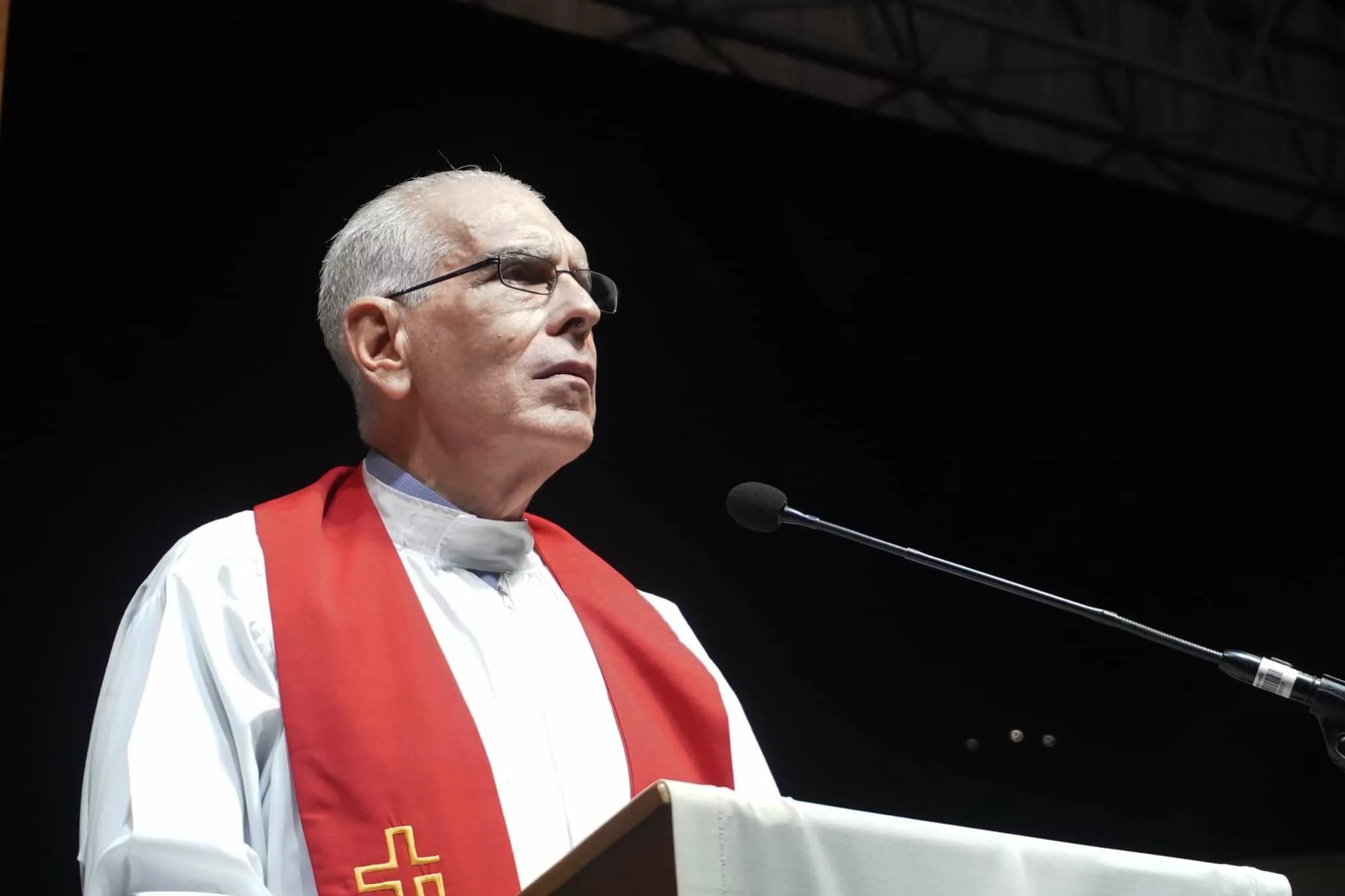
* Rodolfo Cardenal, director of the Centro Monseñor Romero.
UCA: https://noticias.uca.edu.sv/articulos/voluntad-popular
¿Voluntad popular?
El “pueblo” quiere bastante más que el régimen de excepción. La visión del vicepresidente, en gira por Europa en busca de inversionistas, es corta y distorsionada. Su argumento, aparentemente impecable, es interesado. Informó a la prensa que el populismo punitivo es voluntad popular y, por tanto, será suspendido cuando así lo decida el pueblo. Esto es totalmente falso. Continuará hasta que los poderes fácticos detrás de la familia Bukele encuentren que ya no conviene a sus intereses.
Invocar la voluntad popular como razón de ser del régimen de excepción se vende bien. Pero si esa voluntad fuera estimada, la familia Bukele atendería con presteza sus demandas socioeconómicas y medioambientales, expresadas con claridad en las últimas encuestas de opinión pública. El oficialismo manipula la necesidad real de seguridad pública de la población para servir intereses egoístas, cuidadosamente ocultados por ser escandalosamente obscenos.
En los círculos empresariales es bien sabido que las licitaciones y las contrataciones públicas están amañadas. Desde las mascarillas de la pandemia hasta los uniformes escolares de este año, pasando por las megainfraestructuras. De ahí que el costo de las mascarillas haya sido inflado, que los uniforme no tallen y haya habido que ordenarlos de nuevo a proveedores regionales, y que las obras duren más de lo acordado o queden a medias. Si hubiera controles internos y externos, estas anomalías se reducirían al mínimo y los dólares estarían mejor empleados. Antes de crear una especialización en investigación criminal habría que determinar cuánta voluntad política existe para investigar el delito. De lo contrario, el programa desperdicia unos recursos que estarían mejor empleados en otros rubros.
Si el régimen de excepción estuviera al servicio de la voluntad popular, sus legisladores escucharían las quejas y peticiones de la gente; sus jueces administrarían justicia apegados escrupulosamente a la ley; sus procuradores responderían rápida y eficazmente a las peticiones de los miles de agraviados que acuden a ellos pidiendo auxilio; las alcaldías estarían volcadas a las comunidades. La institucionalidad del Estado actual no está al servicio de la gente ni del bien común. Las quejas y las peticiones no son recibidas en las dependencias gubernamentales. Los quejosos y los demandantes chocan con un muro de indiferencia y desprecio. Las puertas están cerradas para ellos.
En cualquier caso, el oficialismo visita las comunidades populares para mostrarse. No para escucharlas y resolver sus peticiones, sino para lanzarles dulces y repartir calendarios u otras baratijas como en otro tiempo el conquistador quiso ganarse la buena voluntad de los pueblos originarios. Hoy busca votos rebajados. La prioridad no son los habitantes de las comunidades, sino la producción audiovisual exhibida luego como prueba de la identificación de los gobernantes con los gobernados.
La incoherencia es una de las notas más destacadas del régimen de excepción. El vicepresidente es el último caso. En su reciente gira, negó que persiga la libertad de expresión, pero aceptó la existencia de periodistas exilados. No por opinar, sino por estar “vinculados a grupos de oposición”. Así, pues, el complaciente goza de derechos; el que irrita y enoja es acosado, amenazado y, en el peor de los casos, encarcelado, acusado de cualquier cosa.
Otra perla fue presentar los procesos judiciales del régimen como “innovadores”, por juzgar y condenar en grupo, al mismo tiempo que imputan los delitos y las penas correspondientes de forma individual. No explicó este alto funcionario, versado en leyes, cómo se las arreglan esos tribunales para atribuir la responsabilidad a cada uno de los que ha procesado en grupo. El régimen encuentra cada vez más dificultad para presentarse como una genialidad nunca vista.
La seguridad pública es una buena excusa para meter de contrabando el enriquecimiento ilícito y la ambición de poder. Irónicamente, también ahuyenta a los inversionistas. La densa oscuridad en la que se desenvuelve no ofrece garantías a sus capitales. En el momento menos pensado los despluma. Así lo advierten los informes sobre el clima de inversión del país. A pesar de ello, insiste en seducirlos enviándoles emisarios con un discurso incoherente. No es fácil recuperar lo que desde su raíz está perdido.
El régimen de excepción no se rige por la razón y la ética. Tampoco responde a la voluntad popular, sino a la de Bukele, que, por casualidad, descubrió en aquel un poderoso medio para retener el poder. El régimen de excepción desprecia al pueblo. Lo considera ingenuo e ignorante. Infantil e inmaduro, irracional e indómito, solo entiende por las malas. Si “la letra con sangre entra”, como decían los antiguos, el régimen de excepción es ideal.
La voluntad popular merece respeto. Si no hay disposición para escucharla, no debiera ser invocada y mucho menos manipulada. El pueblo es paciente, pero no crédulo. Es sabio y poderoso cuando se pone en movimiento. Halagarlo con naderías, inmovilizarlo con el miedo y menospreciarlo son indicios de debilidad, de inseguridad y, en definitiva, de temor. Entonces, ¿por qué no escuchar su voluntad?
* Rodolfo Cardenal, director del Centro Monseñor Romero.