
Despite the squandering of millions to dismantle democracy, the Salvadoran people have reached the stage of identifying their allies from 2026 onward—a task for their civil society organizations, both inside and outside the country, and their citizen diplomacy.
Those who feign compliance with the law while in truth flouting our legal framework and international law are not our partners. Neither are war criminals; internationally condemned human rights violators; accomplices in the ruin of our already degraded natural environment; nor the jailers and expellers of our honest, hardworking migrants.
This is no game of Russian roulette: the tyrant Vladimir Putin—under an arrest warrant from The Hague for his four-year-long aggression against Ukraine—and the Chinese Communist Party—which ignores the population’s plea not to devastate the San Salvador volcano, an indifference consistent with the 1989 Tiananmen Square massacre of students and the ongoing genocide against the Uyghurs—are not our allies.
We must admit it: the historic U.S.–El Salvador ties, forged between the fall of the Berlin Wall and the peace negotiations of 1989 to 1992, have faded. The CECOT contract stands as one of the painful setbacks. The civilians sent to CECOT—hundreds of Venezuelans and the Salvadoran Kilmar Abrego, none of whom were ever proven guilty of any crime—have traveled the path from torture and demonization to the protection of justice. On February 12, a federal court in the District of Columbia ordered the government to return to the United States the civilians handed over to Nicolás Maduro by Nayib Bukele. Three days later, a Maryland court ruled that Abrego can no longer be imprisoned and deported by U.S. Immigration and Customs Enforcement (ICE).
Regarding President Trump’s tariff offensive: it is legitimate for any economy to seek to rebalance or rectify its foreign trade if its government considers it asymmetric or operating at a deficit. However, there are more than just oceans separating Europe/Asia-Pacific and Central America. Those powers, alongside Canada and Mexico, account for nearly 70% of U.S. foreign trade. Central America sets no global prices nor supplies any key commodities; the United States enjoys a chronic surplus with us; and we export products not grown in the United States, such as coffee and certain legumes and fruits. Nonetheless, the Trump administration stripped us of the zero-tariff status enshrined in the Central America Free Trade Agreement (CAFTA), and to restore it, subjected us to “reciprocal” tariffs that were, in reality, a contract of adhesion to unilateral conditions dictated by the White House.
The Supreme Court ruling of February 20 carries many lessons, chief among them that President Trump has acted outside the Constitution since that “Liberation Day” ten months ago, as he lacks the authority to impose tariffs under the emergency regulation he invoked. All his actions lack legal validity. An unconstitutional process generates no “new legalities” in the United States or in El Salvador. Republican lawmakers held their tongues, fully aware that the power to levy taxes and tariffs is a legislative prerogative.
History will record the words—”unpatriotic,” “disloyal,” “a disgrace”—that the president hurled at the six justices who signed the ruling, two of whom he appointed himself. I remain astonished after hearing him declare: “I can destroy trade, I can destroy a country. I am even allowed to impose a destructive embargo on a foreign country. I can do whatever I want, but I cannot collect a dollar.” Immediately thereafter—invoking other regulations—he decreed a universal 10% tariff, which hours later he raised to 15%, the legal basis for which will surely be challenged in court.
Judicial rulings, several state governors, and the voices of reason in Congress are our allies. The counterweight between voters and institutions has produced significant shifts in recent local elections, but the national verdict will be delivered in November. One can only hope that, beginning in January, a Democratic majority in one or both chambers will honor the sovereign will of the people and gradually return the United States to the international community, with all that this entails.
Every polling cycle reaffirms the unstoppable distrust toward the president, hovering around 60% (AP-NORC reported 62%), running parallel to the condemnation of agencies like ICE that violate due process and civil liberties. Furthermore, Rasmussen, a pollster within the Republican sphere, revealed that a majority believes the government is concealing facts and key figures from the Epstein files, in which the name Donald Trump appears repeatedly.
In Davos, Switzerland, the Prime Minister of Canada declared that we all possess “the capacity to build a new order that incorporates our values, such as respect for human rights, sustainable development, solidarity, sovereignty, and the territorial integrity of states,” and he concluded: “The power of the less powerful begins with honesty.” The Salvadoran people must be part of this new order so that we may find—in justice and truth—our genuine partners.
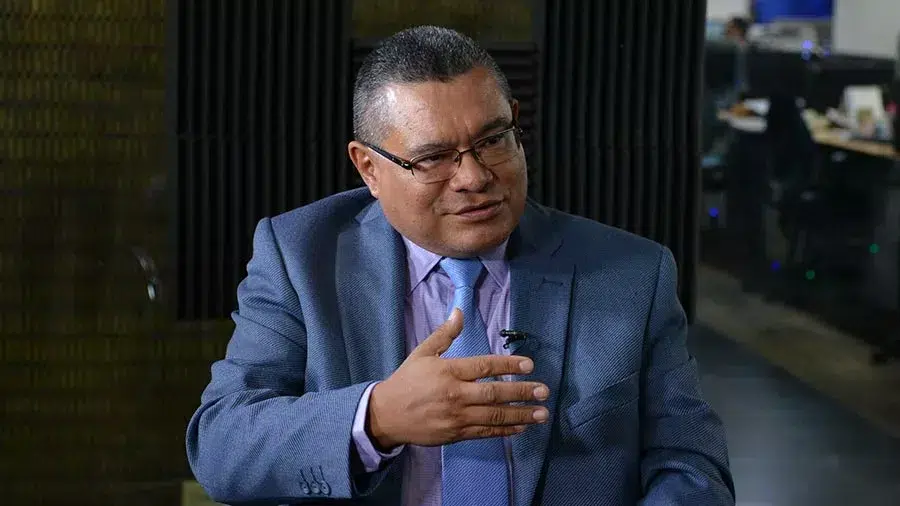
*Napoleón Campos. Salvadoran specialist in international relations, regional integration, and migration
EDH: https://www.eldiariodehoy.com/opinion/se-buscan-socios/63028/2026/
Se buscan socios
A pesar del despilfarro millonario para anular la democracia, el pueblo salvadoreño alcanzó la etapa de identificar a sus aliados del 2026 en adelante. Una tarea de sus organizaciones civiles, dentro y fuera del país, y su diplomacia ciudadana.
Quienes aparentan obedecer la ley pero en realidad irrespetan nuestras normativas y el Derecho Internacional no son nuestros socios. Criminales de guerra; violadores a los derechos humanos internacionalmente señalados; los cómplices de la ruina de nuestra naturaleza ya de por sí degradada; los carceleros y expulsores de nuestros migrantes honrados y trabajadores, tampoco.
No es ruleta rusa: el tirano Vladimir Putin -con orden de captura desde La Haya por la agresión contra Ucrania que lleva cuatro años- y el Partido Comunista de China -que desoye el ruego de la población de no devastar el volcán de San Salvador, indiferencia coherente con la masacre de 1989 contra estudiantes en Tiananmen y el genocidio actual contra los uigures- no son nuestros aliados.
Debemos admitirlo: los nexos históricos EE. UU.-El Salvador, labrados desde la caída del Muro de Berlín y las negociaciones de paz entre 1989 y 1992, se han desdibujado. El contrato del CECOT es uno de los retrocesos dolorosos. Los civiles enviados al CECOT -cientos de venezolanos y el salvadoreño Kilmar Abrego, a quienes nunca les probaron crimen alguno- han recorrido el trayecto desde la tortura y la demonización hasta el amparo de la justicia. Este 12 de febrero, un tribunal federal del Distrito de Columbia ordenó al gobierno que los civiles entregados a Nicolás Maduro por Nayib Bukele deben regresar a EE. UU. Tres días después, un tribunal de Maryland resolvió que Abrego no puede ser más encarcelado y deportado por ICE.
Sobre la ofensiva arancelaria del presidente Trump: es legítimo que cada economía busque equilibrar o rectificar su comercio exterior si su gobierno lo considera asimétrico o deficitario. Sin embargo, entre Europa/Asia-Pacífico y Centroamérica existen no sólo océanos de por medio. Aquellas potencias, más Canadá y México, comprenden casi el 70 % del comercio exterior estadounidense. Centroamérica no define ningún precio global o mercancía clave, EE. UU. goza un crónico superávit con nosotros, exportamos productos que no se producen en EE. UU. como café, ciertas legumbres y frutas. No obstante, la Administración Trump nos arrebató el arancel cero consagrado en el CAFTA y para devolverlo nos sometió a aranceles “recíprocos” que fueron más bien un contrato de adhesión a condiciones unilaterales de la Casa Blanca.
La sentencia de la Corte Suprema de este 20 de febrero tiene muchas lecciones, entre ellas que el presidente Trump actuó desde aquel “Día de la Liberación”, hace 10 meses, fuera de la Constitución pues carece del poder para establecer aranceles bajo la regulación de emergencia que invocó. Todo lo actuado no tiene valor jurídico. Un proceso inconstitucional no genera “nuevas legalidades” en EE. UU. ni en El Salvador. Los congresistas republicanos callaron aun a sabiendas de que la fijación de impuestos y aranceles es potestad legislativa.
Queda para la historia las palabras –“antipatriotas”, “desleales”, “una desgracia”- que el mandatario lanzó contra los seis magistrados que suscribieron la sentencia, dos nombrados por el propio Trump. Yo sigo perplejo tras oírle: «Puedo destruir el comercio, puedo destruir un país. Incluso se me permite imponer un embargo destructivo a un país extranjero. Puedo hacer lo que quiera, pero no puedo cobrar un dólar”. Inmediatamente -apelando a otras regulaciones- decretó un arancel universal del 10 %, que horas después elevó a 15 %, cuyo fundamento seguramente será cuestionado en tribunales.
Las resoluciones judiciales, varios gobernadores estatales y las voces sensatas desde el Congreso, son nuestros aliados. El contrapeso entre votantes e instituciones ha establecido significativos giros en recientes elecciones locales, pero el veredicto nacional lo dará en noviembre. Será de confiar que a partir de enero una mayoría demócrata en una o ambas Cámaras honre al soberano y retornen a EE. UU., paulatinamente, a la comunidad internacional con todas sus consecuencias.
Cada ciclo de sondeos reafirma la imparable desconfianza hacia el mandatario en torno al 60 % (AP-NORC reportó 62%) concurrente a la condena a agencias como ICE que vulneran el Debido Proceso y las libertades civiles. Además, Rasmussen, encuestadora del entorno republicano, reveló que la mayoría cree que el gobierno oculta hechos y protagonistas de los archivos Epstein en los que el nombre Donald Trump es repetitivo.
Dijo en Davos, Suiza, el Primer Ministro de Canadá que todos tenemos “la capacidad de construir un nuevo orden que integre nuestros valores, como el respeto de los derechos humanos, el desarrollo sostenible, la solidaridad, la soberanía y la integridad territorial de los Estados”, y concluyó: “El poder de los menos poderosos comienza con la honestidad”. De este nuevo orden debe ser parte el pueblo salvadoreño para encontrarnos -en la justicia y la verdad- con nuestros genuinos socios.
*Napoleón Campos. Especialista salvadoreño en Relaciones Internacionales, integración regional y migraciones
EDH: https://www.eldiariodehoy.com/opinion/se-buscan-socios/63028/2026/