
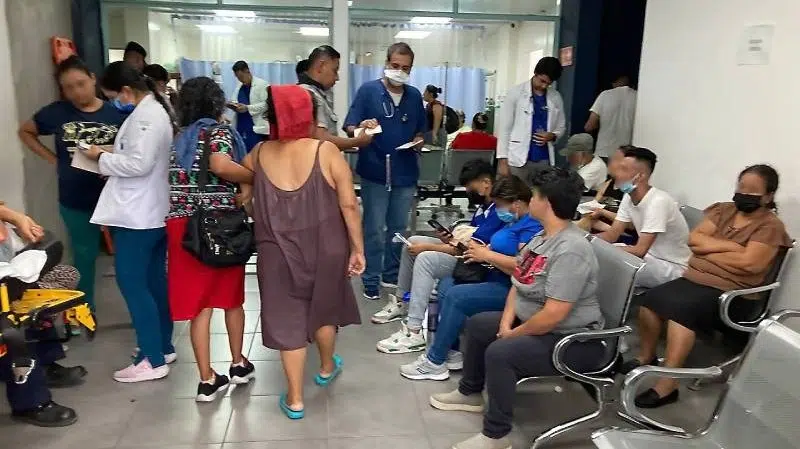
Shortages at the Instituto Salvadoreño del Seguro Social (Salvadoran Social Security Institute, ISSS) are reaching critical levels, leaving healthcare staff without the basic supplies needed to treat beneficiaries, according to a complaint filed Friday by the Sindicato de Médicos Trabajadores del ISSS (Union of Physicians Employed by the ISSS, SIMETRISSS).
The union’s secretary, Dr. Rafael Aguirre, said, “Fifteen days ago there were no surgical staples, casting material, or drainage catheters. Lacking these supplies jeopardizes the quality of patient care and their quality of life.”
The crisis, which began in 2023 with a shortage of basic medications at the ISSS, has yet to be resolved by authorities, and the problem has been compounded by a lack of treatments for chronic diseases.
“It is not acceptable that, given the financial resources—because our ISSS contribution is deducted every month—we are told there are no medications. What is the explanation? If the issue is the pharmaceutical companies, what are we doing to keep this from happening every year?” Aguirre asked during a radio interview.
In 2024, the Social Security Institute’s budget was around $839 million, and it is currently $901 million for the institution’s operations. Despite the increase in available funds, “Why are medications not available on time? Why are there no medical supplies, such as syringes for diabetic patients, or surgical supplies?” the specialist added.
ISSS authorities previously stated that the lack of medications was due to delayed deliveries by pharmaceutical companies that were breaching their contracts.
“What we have been told is that in 70% of medication shortage cases, it is the pharmaceutical companies that are not complying with their contracts,” said the SIMETRISSS representative regarding the complaint, adding, “at least two of the companies have admitted to this situation. We are talking about basic and essential medications.”
Patients Referred to Private Pharmacies
In late February of this year, the union explained that patients receiving care via telemedicine through the “Dr. ISSS” app were being referred to private pharmacies to pick up their medications, lab tests, and other services.
One of the most frequent complaints at the time was the lack of insulin in ISSS inventory, especially at the Unidad Médica Santa Anita (Santa Anita Medical Unit) in San Salvador and in Ilobasco, leading dozens of patients to be referred to private pharmacies under an agreement to meet the need.
Eight months later, this dynamic has not changed, and union members continue to question how private pharmacies have had access to the medications when the Social Security Institute has been unable to procure its own supply.
“It is paradoxical that when prescriptions are issued through the Dr. ISSS en Línea (Dr. ISSS Online) telemedicine platform, medications are available at the pharmacies with which agreements have been signed. How is it that if medications are available at private pharmacies, there are none at the institution?” Aguirre added.
When patients complain about the lack of medications, they are told to use the app to submit their case, but “if one searches for the app to download, it is no longer available. What alternative is being offered to patients?” the specialist warned.
For the union, it is inconceivable that the Social Security Institute attributes the delays to suppliers while local pharmacies, which serve a smaller clientele, remain stocked.
To date, there is no clear information about the agreement between the Social Security Institute and the private pharmacies. Physicians have questioned whether the products are being purchased at market prices or at a special rate.
Seguro Social sin grapas quirúrgicas, yeso y catéteres, según SIMETRISSS
El desabastecimiento en el Instituto Salvadoreño del Seguro Social (ISSS) está llegando a niveles críticos donde el personal de salud no cuenta con los insumos básicos para atender a los derechohabientes, según una denuncia realizada este viernes por el Sindicato de Médicos Trabajadores del ISSS (SIMETRISSS).
El secretario del sindicato, doctor Rafael Aguirre, señaló que “hace 15 días no había grapas quirúrgicas, yeso, ni catéteres para drenajes. No contar con estos insumos atenta contra la calidad de atención al paciente y su calidad de vida”.
La crisis que inició con la falta de medicamentos básicos en el ISSS desde 2023 aún no ha podido ser solventada por las autoridades, incrementando el problema con la falta de tratamientos para enfermedades crónicas.
“No es posible que, teniendo los recursos económicos, porque cada mes se nos descuenta la cuota del ISSS, nos digan que no hay medicamentos. ¿Cuál es la explicación? Si son las farmacéuticas, ¿qué estamos haciendo para que esto no se repita cada año?”, cuestionó Aguirre durante una entrevista de radio.
En 2024, el presupuesto del Seguro Social rondaba los $839 millones y en la actualidad es de $901 millones para el funcionamiento de la institución. A pesar del incremento en los fondos disponibles “¿Por qué no hay medicamentos a tiempo? ¿Por qué no hay insumos médicos, como jeringas para pacientes diabéticos, o insumos quirúrgicos?”, agregó el médico especialista.
Previamente las autoridades del Seguro Social indicaron que la falta de medicamentos respondía a un retraso en la entrega por parte de las empresas farmacéuticas quienes estaban incumpliendo los contratos.
“Lo que nos han mencionado es que, en el 70% de los casos de desabastecimiento de medicamentos, son las farmacéuticas las que no están cumpliendo con los contratos”, dijo el representante de SIMETRISSS sobre la denuncia de “al menos dos de las empresas han aceptado esta situación. Estamos hablando de medicamentos básicos y necesarios”.
Pacientes referidos a farmacias privadas
A finales de febrero de este año, el sindicato explicó que los pacientes atendidos a través de telemedicina en la aplicación “Dr. ISSS” estaban siendo referidos a farmacias privadas para retirar sus medicamentos, exámenes y otros.
Una de las denuncias más frecuentes en esa fecha era la falta de insulina en los almacenes del ISSS, principalmente en la Unidad Médica Santa Anita en San Salvador y en Ilobasco, por lo que decenas de pacientes fueron referidos a farmacias privadas con las que se firmó un convenio para cubrir la necesidad.
Ocho meses después, esta dinámica no ha desaparecido y los sindicalistas siguen cuestionando cómo las farmacias privadas han tenido acceso a los medicamentos, pero el Seguro Social no ha tenido la misma capacidad de abastecerse.
“Es paradójico que cuando dan recetas mediante la plataforma de telemedicina Dr. ISSS en Línea, sí se encuentran medicamentos en las farmacias donde se ha hecho convenio. ¿Cómo es que si hay medicamentos en las farmacias privadas, no hay en la institución?”, agregó Aguirre.
Cuando los pacientes se quejan por la falta de medicamentos se les indica que se dirijan a la aplicación para exponer su caso, pero “si uno busca la aplicación para descargar ya no la encuentra. ¿Qué alternativa se les ofrece a los pacientes?”, advirtió el especialista.
Para el sindicato, resulta inconcebible que el Seguro Social argumente que los proveedores han generado retrasos, mientras que farmacias locales, que tienen un volumen menor de clientes, sí cuentan con los medicamentos.
Hasta la fecha no se tiene información clara sobre el acuerdo entre el Seguro Social y la farmacia privada. Los médicos han cuestionado si los productos se están comprando a precio de mercado o si se les ha proporcionado un precio especial.